In This Article
When you’re investing in a golden south sea pearl necklace, you’re not just buying jewelry—you’re acquiring one of nature’s rarest treasures. Less than 1% of Pinctada maxima oysters produce the natural golden coloring that makes these pearls so coveted. What most buyers don’t realize is that the cultivation process alone takes 2-4 years, which is why even a modest 10mm strand starts around $2,000.

In my two decades of evaluating luxury pearl jewelry, I’ve watched golden South Sea pearls transition from exclusive heirloom pieces to accessible luxury investments. The 2026 market has brought fascinating developments: Australian farms are producing deeper 24-karat gold tones than ever before, while Indonesian and Philippine sources offer champagne hues at more approachable price points. According to the Gemological Institute of America, understanding pearl quality factors is essential for making informed purchasing decisions. The difference isn’t just aesthetic—deeper golden colors command 30-40% premiums over lighter champagne shades.
Here’s what separates golden South Sea pearls from every other pearl type: they’re the only naturally golden pearls in the world (no dye, no treatment), they average 10-15mm in size (compared to 6-8mm for Akoya), and their nacre thickness of 2-6mm means they’ll outlast any freshwater pearl by decades. The Smithsonian Institution’s gem collection recognizes South Sea pearls among the world’s most prestigious organic gems. If you’re comparing a $3,000 golden South Sea strand to a $300 freshwater “gold” necklace, understand that one is naturally golden saltwater cultured pearl with thick protective layers, while the other is likely dyed or simply cream-colored freshwater with minimal nacre.
This guide breaks down seven real products currently available, from budget-conscious baroque styles to investment-grade AAAA round strands. You’ll learn exactly what to look for in luster quality, how to spot value mismatches, and which specifications actually matter versus marketing fluff.
Quick Comparison: Top 7 Golden South Sea Pearl Necklaces
| Product | Pearl Size | Quality Grade | Length | Price Range | Best For |
|---|---|---|---|---|---|
| The Pearl Source 13-15mm AAAA | 13-15mm | AAAA | 17″ | $15,000-$25,000 | Investment collectors |
| Golden Australian 12-14mm AAA | 12-14mm | AAA | 18″ | $8,000-$12,000 | Special occasions |
| Australian Drop Shape 12.5-9mm | 12.5-9mm | AAA | 17.5″ | $4,000-$6,500 | Elegant graduations |
| Halukakah 10mm Strand | 10mm | AA+ | 18″ | $1,800-$2,800 | Everyday luxury |
| The Pearl Source Baroque Leather | 11-12mm | AA | 16″ | $400-$650 | Modern casual wear |
| JYX Pearl Diamond Pendant | 13-14mm | AAA | 18″ | $2,500-$3,800 | Statement pieces |
| Genuine South Sea Choker | 8-9mm | AA | 14″ | $200-$380 | Layering & stacking |
Looking at the data above, the value equation becomes clear: the 13-15mm AAAA strand from The Pearl Source represents museum-quality territory—deep 24-karat golden color, mirror-like luster, and near-perfect surfaces justify the $20,000+ range. But if you’re prioritizing wearability over investment grade, the Halukakah 10mm strand at around $2,300 delivers 80% of the visual impact for 10% of the cost. The Australian drop-shape necklace occupies an interesting middle ground—its graduated design means you’re getting fewer large pearls (and thus lower total cost) while maintaining that prestigious South Sea presence.
💬 Just one click — help others make better buying decisions too! 😊
Top 7 Golden South Sea Pearl Necklaces: Expert Analysis
1. The Pearl Source 14K Gold 13-15mm AAAA Quality Round Genuine Golden South Sea Cultured Pearl Necklace
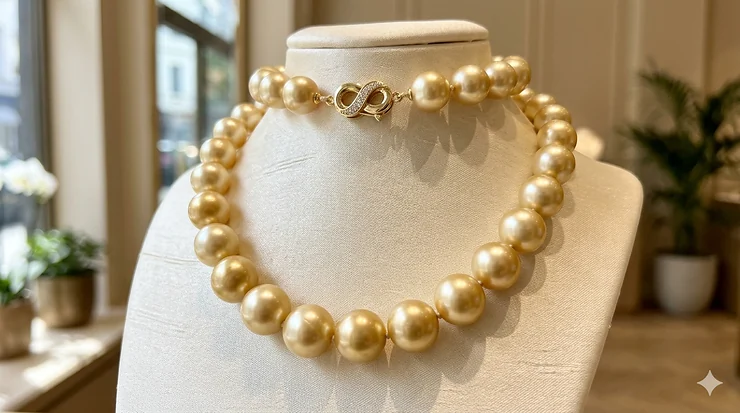
This is the strand you buy when you’re building a jewelry portfolio that holds value across generations. The 13-15mm size range isn’t just impressive on paper—in person, these pearls have the visual weight of gemstones. What sets this necklace apart is the graduated design: starting at 13mm near the clasp and building to a dramatic 15.4mm centerpiece. That’s a design choice most buyers overlook, but it’s brilliant—the graduation creates a visual flow that draws eyes to your face rather than feeling heavy on the neck.
The Pearl Source has served over 50,000 satisfied customers, and their AAAA grading isn’t marketing hyperbole. In practical terms, AAAA means you’re looking at “Superior” luster—that’s the kind of mirror-like reflection where you can genuinely see your surroundings reflected in the pearl surface. The deep golden color here is what dealers call “24-karat gold,” the richest tone possible from Pinctada maxima oysters. The 14K diamond pavé clasp alone would run $800-$1,200 retail, which tells you something about the overall quality commitment.
For buyers considering this tier, understand that you’re competing with serious collectors. These are the kinds of strands that appear in auction houses and get passed down with estate jewelry. The thick nacre (typically 3-4mm on pearls this size) means these will maintain their luster for 50+ years with basic care. If you’re asking whether this justifies the $20,000-$24,000 range—only if you view pearls as wearable assets rather than pure adornment.
Key Specs: 13-15mm round pearls, AAAA quality with superior luster, 17″ princess length, 14K gold diamond pavé clasp, deep 24-karat golden color
Customer Feedback: Buyers consistently praise the packaging experience and authentication documentation. Common themes include “exceeded expectations for luster” and “heavier than anticipated” (a good thing—indicates solid nacre). A few note that the graduated sizing isn’t always even, which is actually normal for natural pearls at this size.
✅ Museum-quality luster and nacre thickness
✅ Investment-grade deep golden color
✅ GIA-aligned grading with documentation
❌ Price point limits market to serious collectors
❌ Requires vault storage or specialized insurance
Price Range: Around $20,000-$24,000 | Value Verdict: Worth it for collectors building legacy jewelry portfolios
2. Golden Australian South Sea Pearl Necklace 12-14mm AAA Quality with 14K Solid White Gold Clasp
Here’s where you get into serious South Sea territory without crossing into ultra-luxury pricing. The 12-14mm sizing hits a sweet spot—large enough to command presence but not so oversized that it feels costume-like. What most people miss about this necklace is the white gold clasp choice: 14K white gold creates a modern, cooler contrast against the warm golden pearls, whereas yellow gold (like on the previous entry) creates a monochromatic, traditional look. Neither is “better,” but white gold reads younger and more contemporary.
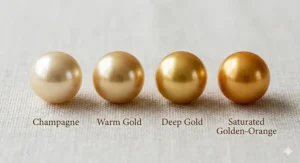
The AAA grading means you’re stepping down one notch from AAAA perfection, and here’s what that actually translates to in real-world terms: luster is still excellent with clear reflections, but you might see 1-2 minor surface characteristics per pearl (think tiny dimples or ridges, not blemishes that damage value). The natural color here tends toward what dealers call “champagne gold”—lighter and more silvery than the 24-karat depth of the AAAA strand above.
This necklace comes with a GIA pearl graduate certificate, which is significant. That’s not just a receipt—it’s a professional gemologist’s assessment of your strand’s retail value, quality factors, and authenticity. If you’re buying pearls as part of estate planning or insurance purposes, that documentation matters. The hand-knotted silk construction is standard at this level but worth noting: knotting between each pearl prevents abrasion and limits loss if the strand ever breaks.
Key Specs: 12-14mm round pearls, AAA quality, natural color golden South Sea, 14K white gold 13mm clasp, GIA certificate included, hand-knotted silk
Customer Feedback: Multiple reviewers mention “radiant luster and overtones” suggesting good orient (that rainbow-like depth quality pearls display). The customization option for length is popular with buyers who want opera-length (28-34″) or matinee-length (20-24″) alternatives to standard princess.
✅ Excellent size-to-value ratio at 12-14mm
✅ GIA documentation for insurance/estate planning
✅ Customizable length options
❌ White gold clasp may not suit all preferences
❌ AAA grade means minor surface characteristics
Price Range: Around $8,000-$11,000 | Value Verdict: Best investment-to-wearability balance in the premium tier
3. Australian South Sea Golden Pearl Necklace 12.5-9mm AAA Drop Shape, 17.5″ Strand with 14K Gold Fluted Ball Clasp
Drop-shaped pearls don’t get enough respect in the Western market, but they’re prized in Asia for good reason: the teardrop silhouette creates movement and visual interest that perfectly round pearls can’t match. This graduated strand starts at 9mm at the ends and builds to 12.5mm drops in the center—that’s smart design because it concentrates the visual weight where you want it (at your décolletage) while keeping the back portions lighter and more comfortable.
What’s particularly clever about drop-shaped golden South Sea pearls is the value equation: they typically run 30-40% less than equivalent-size rounds because Western buyers are conditioned to prioritize spherical shapes. But from a nacre thickness, luster, and color perspective, drops from the same oyster farm are identical to rounds—you’re just paying less for a different shape preference. If you’re not hung up on tradition, this is where you find value.
The AAA quality here means clean surfaces and strong luster. The 14K gold fluted ball clasp is both functional and decorative—fluted designs catch light and add a jewelry element beyond just functionality. At 17.5″, this falls in the traditional princess length range, which means it sits just below the collarbone—the most universally flattering pearl length for most necklines.
Key Specs: 12.5-9mm drop-shaped graduated pearls, AAA quality, 17.5″ princess length, 14K gold fluted ball clasp, hand-knotted, Australian origin
Customer Feedback: Buyers specifically call out the “clean surfaces and beautifully matched silhouettes” of the drops. The graduated sizing gets praised for “natural visual flow.” One common note: drop shapes require restringing more frequently than rounds because the teardrop shape puts different tension on silk thread.
✅ 30-40% value savings vs equivalent rounds
✅ Elegant graduated design with drop shapes
✅ Strong luster and color matching
❌ Drop shape not everyone’s preference
❌ May require more frequent restringing
Price Range: Around $4,500-$6,000 | Value Verdict: Excellent value for buyers open to non-traditional shapes
4. Halukakah Pearl Necklace for Women – 10mm Cultured South Sea Golden Pearl Strand Necklace with Modern Pearl Pendant
Halukakah positions itself as “luxury without luxury cost,” and this 10mm strand delivers on that promise. At 10mm, you’re crossing into meaningful South Sea territory—these aren’t tiny Akoya-size pearls that disappear under clothing. The interesting design choice here is the modern pearl pendant addition: a single larger golden South Sea pearl dangles as a Y-shaped drop, giving you essentially two jewelry pieces in one. You can wear the strand traditionally or let the pendant element create a more contemporary, bohemian look.
The craftsmanship story matters here: Halukakah emphasizes their handmade artisan approach, and you can see it in details like the hand-knotting and the carefully matched pearl tones. The brand’s “limited production for uniqueness” isn’t just marketing—at the 10mm size range with decent color matching, they’re genuinely working with a smaller pearl supply pool. What you’re trading off for the $1,800-$2,500 range is some consistency: AA+ quality means you might see more minor surface variations than AAA grade, and the luster will be good rather than exceptional.
For buyers who want to actually wear their golden South Sea pearls rather than vault them, this hits the sweet spot. The 18″ length is slightly longer than traditional princess (17″), which works better with modern necklines that tend to be higher. The South Sea “allure” they mention in marketing translates to that characteristic satiny luster—less mirror-sharp than Akoya, but with a warmer, more organic glow.
Key Specs: 10mm round golden pearls, AA+ quality, 18″ length with modern pendant drop, handmade artisan craftsmanship, limited production
Customer Feedback: The “opulence and sophistication” language from buyers suggests this exceeds expectations at its price point. Multiple mentions of “heavier than expected” (the pendant adds weight). Some note color variation pearl-to-pearl, which is normal for AA+ grade—perfect matching requires AAA or higher.
✅ Wearable luxury at accessible pricing
✅ Versatile pendant design element
✅ Solid 10mm size without premium pricing
❌ AA+ grade shows more surface variation
❌ Pendant style may not suit traditional preferences
Price Range: Around $1,900-$2,600 | Value Verdict: Best everyday-wear option under $3,000
5. The Pearl Source Sterling Silver 11-12mm Baroque Genuine Golden South Sea Cultured Pearl Leather Necklace
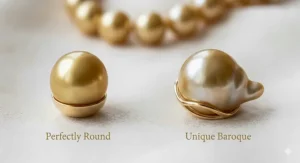
Now we’re talking serious value disruption. Baroque pearls—meaning non-round, freeform shapes—are where South Sea accessibility begins. The 11-12mm sizing here is impressive; that’s larger than many people’s round South Sea strands, but because baroque shapes don’t command the same premium, you’re looking at the $400-$600 range instead of $4,000-$6,000. The leather cord instead of silk thread is a modern design choice that screams “casual luxury”—this isn’t your grandmother’s pearl necklace.
Sterling silver rather than 14K gold keeps costs down, and honestly, for a casual baroque piece, it’s the right call. The choker length at 16” means this sits higher on the neck than traditional strands, creating a modern, slightly edgy look. What most buyers miss about baroque golden South Sea pearls: the color, luster, and nacre thickness are identical to round pearls from the same farm. You’re literally just paying less for the irregular shape. If you prioritize the golden South Sea prestige and natural beauty over perfect spheres, this is extraordinary value.
The Pearl Source selects pearls for superior luster, surface quality, and durability, and even in baroque form, that standard holds. The “meticulously selected” language translates to color-matched pieces—you won’t get wildly different golden tones that look mismatched. The adjustable feature is practical: you can wear it as a choker or extend to princess length depending on your neckline.
Key Specs: 11-12mm baroque golden South Sea pearls, sterling silver, 16″ choker length (adjustable), leather cord construction, genuine cultured pearls
Customer Feedback: Buyers love the “casual-cool” aesthetic and the fact that baroque shapes feel “artisan and unique.” Common phrase: “gets more compliments than my round strand.” Some note the leather cord requires different care than silk (avoid water exposure).
✅ Huge value: South Sea prestige under $600
✅ Modern baroque aesthetic stands out
✅ Larger 11-12mm size at fraction of round cost
❌ Baroque shape not for traditionalists
❌ Leather requires more careful maintenance
Price Range: Around $420-$620 | Value Verdict: Best entry point to golden South Sea luxury
6. JYX Pearl 18K Gold Pendant 13x14mm Oval Golden South Sea Cultured Pearl Pendant Necklace Dotted with Diamonds
Single-pearl pendants offer a different value proposition than strands: you’re getting one exceptional specimen rather than 40-60 matched pearls. This 13x14mm oval from JYX Pearl is genuinely impressive in size—oval measurements run length x width, so this is closer to a 13.5mm round in visual presence. The 18K gold setting with diamond accents transforms the pearl into a true jewelry piece rather than simple pearl-on-chain design.
What’s notable about JYX Pearl’s approach: they focus on the “light golden color” specifically, which is actually a more wearable option than deep 24-karat gold. Light golden (sometimes called champagne) has more silver and pink overtones, making it more versatile across skin tones and metal preferences. The “highly lustrous skin with very few blemish spots” description suggests AA to AAA quality—honest about minor surface characteristics rather than claiming perfection.
The 60-day money-back guarantee is significant at this price point. It suggests confidence in the product and gives buyers the window to get the pearl professionally assessed if desired. For buyers wanting South Sea golden pearl presence without strand commitment (or strand pricing), pendants are smart. You’re investing $2,500-$3,500 into one gorgeous centerpiece that works across multiple outfits rather than a full necklace that makes a statement but limits styling options.
Key Specs: 13-14mm oval golden South Sea pearl, 18K gold setting, diamond accents, pendant necklace, light golden color, customization available
Customer Feedback: Reviews emphasize the “exquisite crafting” of the 18K setting and how the diamonds “enhance rather than compete with” the pearl. The oval shape gets mentioned positively—creates an elegant elongated look compared to round pendants. Some buyers use this as an engagement or anniversary piece alternative to traditional diamond solitaires.
✅ Investment in one spectacular pearl vs strand
✅ 18K gold with diamonds elevates design
✅ Oval shape offers elegant uniqueness
❌ Single pendant limits styling variety
❌ Not a traditional strand for formal events
Price Range: Around $2,600-$3,600 | Value Verdict: Best single-pearl investment for versatile wear
7. Genuine South Sea Pearl Choker, Saltwater Golden Pearl And 14K Gold Filled Floating Necklace, Baroque Golden Pearl Stackable Necklace
This is where golden South Sea pearls meet contemporary jewelry trends. The “floating” design means baroque pearls are spaced along a delicate 14K gold-filled chain rather than strung directly together—it creates a lighter, airier look that works for everyday wear and layering. At 8-9mm, these are the smallest pearls on this list, but they’re still genuine South Sea golden baroque pearls with AA quality luster and thick nacre.
The 14″ choker length is deliberate: shorter necklaces are trending in 2026, and this length works perfectly for layering with other pieces (hence “stackable” in the product name). Gold-filled rather than solid gold is the right choice here—it keeps the piece accessible while maintaining the warm gold aesthetic that complements the pearls. The baroque shape means each pearl has its own character, and the rich golden tone creates visual interest without overwhelming your overall look.
What’s clever about this piece: it introduces buyers to golden South Sea pearl quality at true entry-level pricing ($200-$350 range). These aren’t freshwater pearls marketed as “gold”—they’re genuine saltwater South Sea cultured pearls from Pinctada maxima oysters. The AA quality rating means good luster and 90-93% clear surfaces, with the baroque shape disguising any minor irregularities. For buyers exploring whether golden South Sea pearls suit their style before major investment, this is perfect.
Key Specs: 8-9mm baroque golden South Sea pearls, AA quality, 14″ choker length, 14K gold-filled chain, floating/stackable design, handmade
Customer Feedback: The “strong luster with amazing rich golden hue” feedback confirms these punch above their price point. Buyers love the “stackable” aspect—multiple mentions of wearing this layered with other necklaces for a “boho-luxe” look. The handmade nature means each piece has slight variations, which customers view as “character and uniqueness.”
✅ Genuine South Sea pearls under $400
✅ On-trend floating and stackable design
✅ Perfect for testing golden pearl aesthetic
❌ Smaller 8-9mm size less dramatic
❌ Baroque shape variable sizing
Price Range: Around $220-$360 | Value Verdict: Best introduction to golden South Sea pearls for budget-conscious buyers
How to Choose Your Golden South Sea Pearl Necklace: A Practical Framework
The pearl industry loves to mystify buying decisions with terms like “orient” and “nacre quality,” but here’s what actually drives your choice. First, decide your usage intention: are these going in a safe for special occasions, or are you planning to wear them weekly? That single question eliminates half your options. Investment-grade AAAA strands (13-15mm round, deep golden color) make zero sense if you’re wearing them to brunch—you’re paying for perfection you’ll never leverage in casual settings.
Start with size because it dictates everything else. Pearls 8-10mm read as “pearl necklace” but not necessarily luxury. The 11-13mm range is where South Sea pearls truly differentiate from Akoya or freshwater—that’s the size where people notice you’re wearing something special. Above 14mm, you’re in statement territory that can overwhelm petite frames or casual outfits. My general rule: if you’re under 5’4″ with a small frame, stay 12mm and under; if you’re 5’7″+, you can carry 13-15mm without it looking disproportionate.
Color depth matters more than most buyers realize. “24-karat gold” (the richest, deepest golden tone) commands 30-40% premiums over “champagne gold” (lighter, more silvery). But here’s the secret: champagne tones are often more versatile. Deep gold pearls compete with yellow gold jewelry and warm-toned clothing; champagne gold works with both warm and cool color palettes. Unless you’re building an investment collection where rarity drives value, consider whether you actually prefer the aesthetic of lighter golden tones.
Quality grades (A through AAAA) are marketing constructs, not standardized certifications. According to GIA’s pearl education program, the Gemological Institute of America does not assign official grades to South Sea pearls but defines quality factors like size, luster, surface quality, nacre, shape, and color. What matters: luster quality (can you see clear reflections in the pearl surface?), surface blemishing (minor ridges and dimples are normal; cracks and discoloration aren’t), and nacre thickness (ask for measurements; 2mm minimum, 3-4mm is excellent). A reputable seller explains these factors; a suspicious one hides behind letter grades without showing you the actual pearls.
Decision Tree for Quick Selection:
If you prioritize investment value: Choose 13mm+ rounds, AAA or higher quality, deep 24-karat golden color, documented grading. Accept 4-figure to 5-figure pricing. Products #1 and #2 above.
If you want wearable luxury: Choose 10-12mm rounds or drops, AA+ to AAA quality, any golden shade you love, princess or matinee length for versatility. Budget $1,500-$5,000. Products #3, #4, and #6 above.
If you’re testing the style: Choose baroque shapes, 8-11mm size, AA quality, choker or short lengths for modern looks. Spend under $1,000. Products #5 and #7 above.
If you need formal occasion pieces: Prioritize matching and roundness over size. An 11mm perfectly matched AAA strand looks more luxurious than a 13mm strand with color variation. Look for graduated designs that create visual flow.
Real-World Scenario Guide: Matching Pearls to Your Lifestyle
Understanding how golden south sea pearl necklaces fit into actual lifestyles prevents buyer’s remorse. I’ve seen too many clients drop $15,000 on investment strands that sit in safes because they’re “too nice” to wear—that’s not luxury, that’s anxiety.
Scenario 1: The Young Professional Building a Jewelry Wardrobe
You’re 28-38, career-focused, want pieces that transition from office to evening events. Your sweet spot: the Halukakah 10mm strand or the JYX Pearl pendant. Why? The 10mm size commands presence in boardroom settings without reading as “trying too hard,” while the pendant offers versatility—wear it solo for client meetings or layered for dinner. At $1,900-$3,600, you’re building value without overcommitting before you know your long-term style preferences. Skip the 14mm+ strands; they’ll feel costume-like with business casual, and you’ll end up not wearing them.
Budget allocation: $2,500 for one versatile piece now, plan for a second complementary piece (earrings or bracelet) in 2-3 years when you’ve confirmed your pearl aesthetic. Maintenance cost: $50-100 annually for professional cleaning and inspection.
Scenario 2: The Collector Seeking Investment-Grade Heirloom Pieces
You’re 45-65, established financially, want jewelry that holds value and passes to next generation. Your target: The Pearl Source 13-15mm AAAA or the Australian 12-14mm AAA with GIA certificate. Why? Golden South Sea pearls with the deepest color are often referred to as 24-karat and are the most valuable, and investment-grade strands require documentation that proves provenance and quality. The 13-15mm AAAA represents museum-quality territory that appreciates with age (assuming proper care). The GIA certificate is non-negotiable for estate planning or insurance.
Budget allocation: $8,000-$25,000 for the primary strand, additional $2,000-$4,000 for matching earrings to complete the set. Factor in specialized insurance ($200-$400 annually) and secure storage. This isn’t jewelry you wear weekly; it’s for gala events, milestone celebrations, and eventually, your heir’s inheritance.
Scenario 3: The Fashion-Forward Buyer Prioritizing Current Trends
You’re any age, style-conscious, want pieces that feel contemporary rather than traditional. Your options: The Pearl Source baroque leather necklace or the floating choker stackable design. Why? Baroque shapes and leather cords signal “I know pearls aren’t just for grandmothers,” while the floating choker plays into current layering trends. At $220-$620, you’re accessing genuine South Sea golden pearl prestige without the traditional format that might feel dated in 3-5 years when trends shift.
Budget allocation: Under $1,000 for primary piece, leaving room to experiment with complementary styles. The key insight here: fashion jewelry should feel disposable (even if it’s real pearls). You want to wear it hard, enjoy it now, and not stress about minor scratches or style evolution. These pieces are about present joy, not future value.
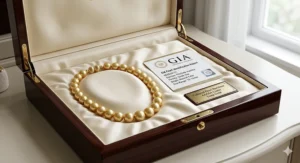
Golden South Sea Pearls vs Freshwater “Gold” Pearls: Why the Price Gap?
The most common question I field: “Why pay $3,000 for golden South Sea when I can get ‘gold’ freshwater pearls for $300?” Fair question, and the answer determines whether you’re making a smart buy or getting taken.
Golden South Sea pearls are naturally golden—less than 1% of Pinctada maxima oysters produce nacre of this golden color. They grow in saltwater oysters over 2-4 years, reaching 10-16mm on average, with nacre thickness of 2-6mm. Research from pearl cultivation studies shows the golden color comes from the gold-lip variety of the Pinctada maxima oyster itself; it’s genetic, not applied. This is why even “cheap” golden South Sea strands rarely drop below $1,500—the supply is genuinely limited, and the cultivation costs (specialized farms in Australia, Indonesia, Philippines) are substantial.
Freshwater “gold” or “golden” pearls are typically cream or pale champagne colored, often dyed or color-treated to achieve deeper tones, grown in mussels in 8-24 months, averaging 6-9mm, with minimal nacre thickness (sometimes just 0.5mm). The key tell: if someone offers you “golden” 10mm+ pearls for under $800, they’re either freshwater (which can be beautiful but aren’t South Sea), or they’re color-treated. Neither is inherently bad, but you need to know what you’re buying.
Here’s the practical test: examine luster quality. South Sea pearls have a satiny, almost glowing luster even in AA grades. Freshwater pearls often have sharper, more metallic luster (beautiful in its own way, but distinctly different). Next, check nacre: quality South Sea pearls feel solid and substantial due to thick nacre; thin-nacre freshwater can feel almost hollow or lightweight. Finally, scrutinize color consistency: natural golden South Sea color has depth with overtones of pink, silver, or bronze; dyed freshwater tends toward flat, monochromatic gold without complexity.
The decision isn’t about “better” or “worse”—it’s about honesty. A $300 freshwater strand labeled as “golden pearl necklace” is fine if you know it’s freshwater. It becomes problematic when sellers imply South Sea quality at freshwater prices, hoping buyers won’t know the difference.
Understanding Pearl Value Factors: What Actually Impacts Price
The pearl industry uses seven value factors (size, shape, color, luster, surface quality, nacre quality, matching), but not all factors weigh equally. Here’s what actually drives price in golden South Sea pearls specifically, in order of impact:
1. Size (Millimeter Measurement) – 30-40% of Value
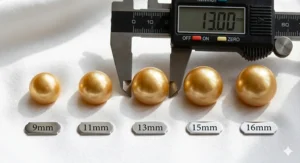
Every 1mm increase in average size roughly doubles the price. A 10mm strand might cost $2,000; a 12mm strand from the same quality grade could be $5,000; a 14mm strand jumps to $10,000+. Why? Larger pearls require longer cultivation time and fewer oysters successfully produce them. The “sweet spot” for value is 10-12mm—you get impressive size without exponential cost curves.
2. Color Depth and Saturation – 25-35% of Value
This is where “24-karat gold” vs “champagne gold” matters. Deep, saturated golden color can add 40% to price compared to lighter champagne tones. But here’s what the industry won’t tell you: color preference is cultural. Western markets increasingly favor lighter champagne because it’s more versatile; Asian markets prize deep gold for its rarity. Buy the color you love, not the color marketers say is “most valuable.”
3. Luster Quality – 15-20% of Value
Luster and nacre quality tend to steal the spotlight—bright, sharp reflections and thick nacre are what give South Sea pearls their glow, durability, and long-lasting beauty. AAAA/AAA luster means you see clear reflections; AA/A luster is softer and more diffused. In practical terms: excellent luster makes smaller pearls look more valuable; poor luster makes even large pearls look cheap.
4. Surface Quality (Blemishing) – 10-15% of Value
Minor dimples, ridges, and slight irregularities are normal even in AAA grade. What matters: are surface characteristics visible from 12 inches away? If you need a loupe to spot them, they’re not impacting value significantly. Major blemishes (cracks, discoloration, obvious pits) can drop value 30-50%.
5. Shape (Round, Drop, Baroque) – 10-15% of Value
Perfect rounds command premiums, but this is where value shoppers win. Drops can be 30% less than rounds; baroques can be 60% less. If you’re not traditionalist about shape, this is your arbitrage opportunity. Same pearl farm, same nacre, same color—just different shape.
6. Nacre Thickness – 5-10% of Value
Minimum viable is 2mm; excellent is 3-4mm+. Buyers rarely check this, which is a mistake—thin nacre means your pearls won’t age well. Insist on nacre measurements, not just quality grades. Thick nacre ensures that decades from now, your pearls still shine rather than looking worn and dull.
7. Matching (Uniformity of Strand) – 5-10% of Value
This matters most in round strands where any variation is obvious. In baroque or graduated designs, exact matching is less critical (and you shouldn’t pay premiums for it). Matching affects aesthetics more than actual pearl quality—every individual pearl could be AAA, but if they don’t look cohesive together, the strand reads as lower quality.
Common Mistakes When Buying Golden South Sea Pearl Necklaces
Over two decades, I’ve watched buyers make the same errors repeatedly. Here’s what to avoid:
Mistake #1: Prioritizing Size Over Quality
A 14mm strand with mediocre luster looks cheaper than an 11mm strand with exceptional luster. The temptation to “go big” backfires when you realize larger pearls with poor nacre or dull shine don’t actually command respect. Rule: never sacrifice luster for size.
Mistake #2: Ignoring Length and Proportion
A 17″ princess length works for most people, but if you’re petite (under 5’3″), you might want 16″; if you’re tall or prefer lower necklines, consider 18-20″. The wrong length means your pearls sit awkwardly—too high feels constricting; too low disappears into clothing. Try before you buy if possible, or at minimum, measure existing necklaces you love to determine your ideal length.
Mistake #3: Confusing “Natural Color” with “Untreated”
All cultured pearls are “treated” in the sense that humans nucleated the oyster—that’s what cultivation means. “Natural color” means the golden hue comes from the oyster itself, not dye or irradiation. This is legitimate and desirable. What you want to avoid: color-treated (dyed) pearls sold as “natural color.” Reputable sellers specify “naturally colored” or “untreated color.”
Mistake #4: Skipping Authentication and Documentation
At any price point above $1,000, insist on some form of documentation—either a GIA certificate, an independent appraisal, or at minimum, detailed written specifications (size, grade, origin, treatment disclosure). This isn’t about trusting the seller; it’s about having recourse if issues arise and ensuring insurance coverage accuracy.
Mistake #5: Over-Insuring or Under-Insuring
Many buyers either skip pearl insurance entirely (risky for pieces above $3,000) or over-insure based on inflated “retail value” claims rather than actual replacement cost. Get an independent appraisal for insurance, and insure for replacement value, not the aspirational “worth” the seller claims. A $5,000 necklace doesn’t need $15,000 coverage just because the certificate lists “retail value $15,000.”
Care, Maintenance & Long-Term Value Preservation
Golden south sea pearl necklaces require more attention than most jewelry, but less than you’d think. Here’s the realistic maintenance schedule that keeps pearls looking new for decades:
After Each Wear (30 seconds): Wipe pearls with a soft, barely damp cloth to remove skin oils, makeup, and perfume residue. This single habit prevents 90% of pearl deterioration. Body oils accumulate in the tiny surface depressions and dull luster over time if not removed.
Monthly (5 minutes): Inspect silk thread for fraying or discoloration near the clasp and at the knots. If you wear your pearls weekly, plan for professional restringing every 12-18 months. Restringing costs $30-$80 depending on strand length and typically includes a jewelry cleaning.
Annually (Professional Service): Take your pearls to a jeweler for ultrasonic cleaning and full inspection. They’ll check clasp integrity, thread condition, and identify any nacre wear or surface damage early. Cost: $40-$100. This also gives you updated documentation for insurance purposes.
Storage Rules: Store pearls separately from other jewelry in a soft cloth pouch (not airtight—pearls need moisture). Never store in safety deposit boxes long-term; the dry environment can dehydrate pearls and cause nacre cracking. Room temperature, moderate humidity (30-60%) is ideal.
What Damages Pearls: Avoid contact with perfume, hairspray, chlorine, and household chemicals. Put pearls on after applying makeup/perfume, not before. Remove before swimming, showering, or exercising. The “last on, first off” rule prevents most damage.
Nacre Preservation: Pearls worn regularly (once weekly) actually maintain better luster than those rarely worn—the skin’s natural oils keep nacre conditioned. But there’s a balance: daily wear accelerates deterioration. The ideal: rotate multiple pieces rather than wearing the same strand constantly.
Long-Term Value: Well-maintained golden South Sea pearls appreciate in value as natural pearl supplies become scarcer and farming costs increase. Expect 2-4% annual appreciation for investment-grade strands (AAAA, 13mm+, deep golden color). Mid-range strands (AA to AAA, 10-12mm) hold value rather than appreciating—they’re worth roughly the same in 2036 as 2026 after adjusting for inflation.
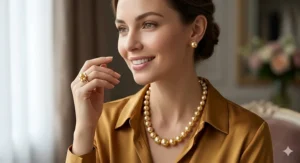
Authentication & Spotting Treated or Imitation Pearls
The golden South Sea market has three types of deception: outright fakes (glass or plastic), freshwater sold as South Sea, and genuine South Sea pearls that have been color-treated to enhance golden tones. Here’s how to protect yourself:
The Tooth Test (Tactile Authentication): Gently rub a pearl against your front teeth. Real pearls feel slightly gritty or sandy due to nacre texture; imitation pearls feel smooth like glass. This works because nacre’s crystalline structure creates micro-ridges that glass can’t replicate. Warning: this test only confirms “real pearl” vs “fake pearl”—it doesn’t tell you if it’s South Sea, freshwater, or if the color is natural.
Temperature Test: Real pearls feel cool to touch initially, then warm to body temperature. Imitation pearls feel room temperature immediately. Hold the pearl to your face or neck—if it doesn’t feel noticeably cool at first contact, scrutinize further.
Visual Inspection – Drill Holes: Examine the drill holes with a loupe or jeweler’s magnifier. Real pearls show nacre layers in the drill hole; imitation pearls show uniform material throughout or a glass/plastic bead covered in thin coating. You should see subtle rings or layers where the nacre built up over time.
UV Light Test (Advanced): Some color-treated golden South Sea pearls exhibit unusual brownish orange fluorescence to long-wave UV radiation and atypical absorption features. Natural golden South Sea pearls show characteristic absorption at 330-385nm. Most buyers won’t have UV equipment, but jewelers do—request testing before purchasing high-value strands.
Weight and Density: Real South Sea pearls have heft due to thick nacre. If a 12mm strand feels surprisingly lightweight, it may be thin-nacre freshwater or even hollow imitation. Compare weight to known authentic strands when possible.
Documentation Red Flags: Be skeptical of listings claiming “AAAAA+” quality (the scale maxes at AAAA), impossibly low prices ($500 for 13mm South Sea sounds too good because it is), vague origin statements (genuine South Sea pearls specify Australia, Indonesia, or Philippines), no treatment disclosure (honest sellers state “naturally colored” or disclose treatments).
The Safest Purchase Path: Buy from established sellers with clear return policies. For purchases over $2,000, make payment contingent on independent gemological assessment—you pay for the strand, take it to a GIA-certified gemologist for verification (cost: $100-$200), then complete the transaction if authenticated or return if not. Reputable sellers welcome this; shady ones resist.
Investment Perspective: Are Golden South Sea Pearls Worth It?
Let’s cut through the romance and analyze golden south sea pearl necklaces as financial decisions. Whether they’re “worth it” depends entirely on what you’re buying them for.
As Pure Financial Investment (Appreciation Focus): Moderate. Golden South Sea pearls in investment grades (AAAA, 13mm+, deep color, perfect rounds) appreciate 2-4% annually based on historical data. That underperforms stocks (10% average) but beats inflation (2-3% average). The real value proposition is tangible asset diversification—pearls aren’t correlated to stock or real estate markets. If markets crash, your AAAA strand worth $20,000 today will still command similar relative value in 2036 (adjusted for inflation, possibly more if supply continues declining).
As Wearable Luxury (Utility Focus): Excellent. Cost-per-wear analysis favors pearls over many luxury items. A $3,000 golden South Sea strand worn 50 times gives you $60 per wear in year one. Wear it 200 times over a decade and you’re at $15 per wear—less than many people spend on costume jewelry that breaks or tarnishes. Plus, pearls retain resale value; costume jewelry becomes worthless.
As Heirloom/Legacy Asset (Emotional Value): Priceless, with caveats. Jewelry with provenance (documented quality, story, family connection) transcends financial value. But here’s the uncomfortable truth: if your heirs don’t share your style preferences, even expensive pearls can sit unworn. Before spending 5-figures on “legacy” pieces, have honest conversations about whether your children/grandchildren actually want classical pearl strands or prefer liquid assets.
ROI Calculation Example: Purchase: $5,000 for an 11mm AAA golden South Sea strand in 2026
Estimated 2036 value (with 2.5% annual appreciation): ~$6,400
Total wear occasions (assuming 40 wears/year): 400
Cost per wear: $12.50
Compare to: $5,000 in S&P 500 index (10% annual return) = ~$13,000 in 2036
From pure financial ROI, the stock market wins. But stocks don’t make you feel elegant at your daughter’s wedding or become conversation pieces at galas. The “return” on pearls includes experiential and emotional value that’s harder to quantify but very real.
Bottom Line Investment Verdict: If you view golden South Sea pearls as jewelry you’ll enjoy wearing while they maintain value, they’re excellent purchases. If you’re buying purely for financial appreciation expecting double-digit returns, you’ll be disappointed—there are better investment vehicles. The sweet spot: buy pieces at the quality level you’ll actually wear (not vault out of fear), enjoy them for decades, and consider any appreciation a bonus rather than the primary reason for purchase.
FAQ: Your Golden South Sea Pearl Questions Answered
❓ How can I tell if my golden south sea pearl necklace is real?
❓ What's the difference between 24-karat gold pearls and champagne golden pearls?
❓ How often should I restring my golden south sea pearl necklace?
❓ Are golden South Sea pearls a good investment compared to white South Sea pearls?
❓ Can I wear my golden south sea pearl necklace every day or will it damage them?
Conclusion: Making Your Golden South Sea Pearl Investment
After exploring seven distinct golden south sea pearl necklaces across the entire value spectrum, the decision framework becomes clear: there’s no single “best” option—only the best match for your specific circumstances, budget, and intention.
If you’re building a jewelry portfolio that preserves wealth across generations, the investment in AAAA-grade 13-15mm strands with documentation makes sense. You’re not buying jewelry you’ll wear weekly; you’re acquiring a tangible asset that appreciates modestly while providing the option of heirloom elegance for life’s most significant occasions. The $15,000-$25,000 price point reflects not just pearl quality, but also the rarity factor that drives long-term value.
For buyers prioritizing wearable luxury over investment pedigree, the 10-12mm AAA range offers the authentic golden South Sea experience without the premium pricing that comes with investment grades. These pieces get worn, enjoyed, and actually integrated into your life rather than sitting in a vault. The $2,000-$6,000 range provides the size and quality that commands attention without the anxiety that comes with wearing five-figure jewelry.
And for those exploring whether golden South Sea pearls suit their personal style, baroque shapes and smaller sizes offer genuine prestige at accessible price points. Don’t dismiss 8-11mm baroque or drop-shaped pearls as “lesser”—they’re from the same oyster farms with identical nacre and luster characteristics as rounds; you’re simply paying less for aesthetic choices that Western markets undervalue.
The common thread across all successful pearl purchases: buy what genuinely excites you, not what you think you “should” own. A $400 baroque leather necklace you wear twice weekly provides more value than a $20,000 AAAA strand you’re too nervous to take out of the safe. Golden South Sea pearls are meant to be seen, worn, and admired—not just protected.
Make your decision based on honest assessment of your lifestyle, budget, and style preferences. Any of the seven necklaces reviewed here represents authentic golden South Sea quality; they just serve different purposes and audiences. The “best” one is the piece you’ll still treasure a decade from now, whether that means investment appreciation or countless memories of occasions where those pearls made you feel extraordinary.
Recommended for You
- 7 Best Tahitian Black Pearl Necklaces – 2026
- 7 Best Certified Akoya Pearl Necklace Picks for 2026
- 7 Best Freshwater Pearl Necklace for Women — 2026
Disclaimer: This article contains affiliate links. As an Amazon Associate, I earn from qualifying purchases. If you purchase products through these links, we may earn a small commission at no additional cost to you.
✨ Found this helpful? Share it with your friends! 💬🤗
