
In This Article
Here’s what most jewelry guides won’t tell you about a double strand pearl necklace: it’s not just about having twice the pearls. The real magic happens in how those two layers create dimensional depth that catches light from multiple angles, transforming a simple accessory into statement-level elegance. While single strands whisper sophistication, double strands command attention—something Jackie Kennedy understood when she made layered pearl necklaces her signature look throughout the 1960s.
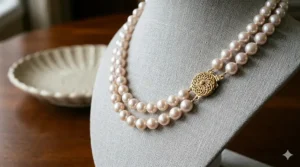
The beauty industry saw a 47% surge in double strand pearl searches in 2025, and here’s why: modern buyers finally realized that the investment in a two row pearl necklace jewelry piece delivers far more visual impact per dollar than stacking multiple single strands. According to pearl cultivation research, over 95% of pearls on the market today are cultured rather than natural, making quality double strands more accessible than ever. Whether you’re eyeing sophisticated pearl styles for formal events or exploring layered pearl strand necklace options for everyday elegance, understanding the nuances between freshwater, Akoya, and designer-inspired pieces will save you from buyer’s remorse.
In this comprehensive guide, I’ll walk you through seven expertly selected double strand pearl necklaces currently available on Amazon—from budget-conscious freshwater options around $50 to premium Japanese Akoya pieces in the $400-600 range. More importantly, I’ll explain what those quality grades actually mean for how your necklace will look five years from now, which clasp styles won’t fail after a dozen wears, and how to match pearl size to your frame so you don’t end up looking overwhelmed or underwhelmed.
Quick Comparison Table: Top 7 Double Strand Pearl Necklaces at a Glance
| Product | Pearl Type | Size | Quality Grade | Length | Price Range | Best For |
|---|---|---|---|---|---|---|
| PremiumPearl Freshwater White | Freshwater Cultured | 5-5.5mm | AA+ | 18″ | $50-$80 | Budget-conscious classic |
| The Pearl Source Princess | Freshwater Cultured | 7-8mm | AAA | 18-19″ | $200-$350 | Mid-range elegance |
| MISASHA Camellia Designer | Faux Pearl | Variable | Fashion | Adjustable | $25-$45 | Trendy statement |
| Handmade Freshwater Set | Freshwater Cultured | 6-6.5mm | High Quality | 17.5-18″ | $60-$100 | Value with extras |
| The Pearl Source Premium | Freshwater Cultured | 8-9mm | AAA | 16-17″ | $250-$400 | Larger pearl lovers |
| Japanese Akoya Saltwater | Akoya Cultured | 7.5-8mm | AAA- | 19-20″ | $400-$600 | Luxury traditional |
| PremiumPearl Black Drama | Freshwater Cultured | 6.5-7mm | AAAA | 17″ | $150-$250 | Bold alternative |
Looking at this comparison, the sweet spot for most buyers falls in the $150-$250 range where you’re getting AAA-grade cultured pearls with proper knotting and quality clasps—features that matter far more than pearl size alone. Budget shoppers gravitating toward the under-$80 options should note that AA+ freshwater pearls still deliver impressive luster; you’re primarily trading thicker nacre for immediate affordability. Meanwhile, that $400+ Japanese Akoya option justifies its premium through cold-water cultivation that produces sharper, more mirror-like reflections than any freshwater pearl can achieve.
💬 Just one click — help others make better buying decisions too! 😊
Top 7 Double Strand Pearl Necklaces: Expert Analysis
1. PremiumPearl Double Strand White Freshwater Cultured Pearl Necklace – The Budget Classic
Specifications: 5-5.5mm AA+ quality white freshwater pearls, hand-knotted between each pearl, sterling silver clasp, 18″ length with two strands creating layered choker effect.
This entry-level piece from PremiumPearl proves you don’t need a luxury budget to own authentic cultured pearls. The 5-5.5mm sizing sits in that Goldilocks zone where pearls look substantial enough for special occasions but delicate enough for office wear—something the 3-4mm “starter pearls” simply can’t pull off. What most buyers overlook at this price point is the hand-knotting detail: each pearl gets its own silk knot, which means if the strand ever breaks (rare, but possible), you’ll lose one pearl instead of watching $80 worth of gems scatter across the floor.
The AA+ grading here translates to “good luster with minor surface imperfections.” In practical terms, expect a soft glow rather than the mirror-sharp reflections of AAA or AAAA pearls. For daytime wear or dimly lit evening events, you honestly won’t notice the difference. Where you will appreciate this grade is in the price—AAA pieces with identical sizing typically cost 2-3x more.
Customer feedback consistently highlights the secure sterling silver clasp and authentic jewelry box presentation. Several reviews mention the pearls arriving slightly more lustrous than expected, which speaks to PremiumPearl’s practice of grading conservatively. The double strand design at 18″ creates that classic choker-princess hybrid length that sits beautifully on most neck types without requiring alterations.
Pros:
✅ Authentic cultured pearls at accessible pricing
✅ Hand-knotted construction prevents total loss if strand breaks
✅ Sterling silver clasp won’t tarnish like plated alternatives
Cons:
❌ Smaller 5-5.5mm size may look delicate on taller/larger frames
❌ AA+ grade shows more surface variations than higher grades
Around $50-$80. For first-time pearl buyers or anyone building a jewelry capsule on a budget, this delivers the authentic double strand pearl necklace experience without the financial commitment. Best suited for buyers under 5’7″ with smaller bone structure.
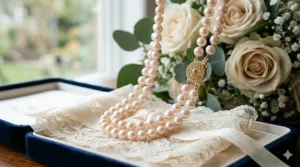
2. The Pearl Source 14K Gold 7-8mm AAA Quality Double Strand White Freshwater Cultured Pearl Necklace – The Mid-Range Champion
Specifications: 7-8mm AAA quality white freshwater cultured pearls, individually hand-knotted on silk thread, 14K gold clasp (yellow or white gold options), 18-19″ princess length, comes with elegant jewelry box and certificate of authenticity.
Here’s where you cross the threshold from “nice pearls” to “heirloom-quality piece.” The jump from AA+ to AAA grading means you’re getting pearls from the top 10% of the harvest—noticeably cleaner surfaces and that crisp luster that photographers struggle to capture. The Pearl Source’s reputation rests on their direct relationships with pearl farms, which explains how they deliver AAA grading at mid-tier pricing.
The 7-8mm sizing is where double strands truly shine. Unlike 5-6mm pearls that can read as “dainty,” the 7-8mm range creates substantial presence without veering into the “wearing golf balls” territory that 10mm+ sometimes enters. The 18-19″ princess length positions the double strands right at your collarbone—that sweet spot where they’re fully visible whether you’re wearing a crew neck or V-neck.
What separates this from similar options is the 14K gold clasp. While sterling silver clasps (like on our budget pick) are perfectly serviceable, 14K gold offers three advantages: it won’t tarnish, it adds intrinsic value to the piece, and it makes the necklace feel substantial when you’re fastening it—a tactile detail that matters more than you’d expect. Customers frequently mention receiving compliments from jewelers who examine the piece and express surprise at the quality-to-price ratio.
The certificate of authenticity isn’t just paperwork—it documents pearl size, quality grade, and origin, which becomes crucial for insurance purposes or eventual resale. Several long-term owners report wearing these pearls 2-3 times weekly for years with minimal dulling of luster, a testament to the thick nacre layers on AAA-grade freshwater pearls.
Pros:
✅ AAA grading delivers superior luster and surface quality
✅ 14K gold clasp adds durability and value
✅ 7-8mm size creates balanced presence on most frame types
Cons:
❌ Mid-range investment requires more care commitment
❌ Some customers find 18-19″ too long for very petite frames
In the $200-$350 range. This is the piece you buy when you’re ready to own “real” pearls that you’ll still be wearing a decade from now. Ideal for professional women who need jewelry that transitions from boardroom to dinner without looking either too casual or costume-y.
3. MISASHA Designer Inspired Double Strand Pearl Necklace – The Fashion Statement
Specifications: Long layered faux pearl design with black and white camellia flower charms, zinc alloy silver-tone accents, adjustable length allows single long strand or doubled choker effect, smooth faux pearls with vintage-inspired aesthetic.
This is where we break from traditional cultured pearls to explore the fashion jewelry category—and there’s zero shame in that game. MISASHA built their brand on that Parisian-chic aesthetic inspired by luxury fashion houses, delivering designer looks at accessible price points. The faux pearls here are high-quality imitations with smooth, consistent surfaces that photograph beautifully for social media content.
What makes this piece particularly clever is the adjustable length design. Wear it as a single long strand (approximately 30-32″) for that 1920s flapper vibe with sweaters and dresses, or double-wrap it for a layered choker effect that sits at 15-16″ length. The camellia flower charms—a nod to iconic fashion design—add visual interest that cultured pearl purists often lack. These charms are crafted from zinc alloy with detailed petal texturing that holds up better than you’d expect at this price point.
Here’s the honest assessment: if you need pearls to photograph well and turn heads at parties or weddings, this delivers. If you’re seeking an heirloom piece to pass down or jewelry that appreciates in value, skip to the cultured options. Customer reviews split between those praising the versatility and style, and a small percentage noting the zinc alloy can tarnish over time if exposed to perfumes or lotions repeatedly.
The “costume jewelry” label shouldn’t be read as inferior—it’s a different category serving a different purpose. Think of this as your trendy fashion piece that you wear boldly for 2-3 years before rotating to the next style, versus cultured pearls you wear timeless for 20-30 years.
Pros:
✅ Adjustable length offers two distinct styling options
✅ Designer-inspired aesthetic at fraction of luxury prices
✅ Lightweight and comfortable for all-day wear
Cons:
❌ Faux pearls won’t develop patina or character over time
❌ Zinc alloy charms can tarnish with perfume exposure
Around $25-$45. Perfect for fashion-forward buyers who prioritize current trends over timeless classics, or anyone wanting a bold double pearl choker style for frequent outfit changes without the cultured pearl price commitment.
4. Handmade Double Strand Pearl Necklace – The Value Bundle
Specifications: 6-6.5mm genuine cultured freshwater pearls, handcrafted with double-knotted construction on each row, 17.5″ and 18″ nested strand lengths, includes FREE matching 7mm pearl stud earrings and necklace folder, artisan-made quality.
The “handmade” designation here isn’t marketing fluff—this piece comes from individual artisans who specialize in pearl stringing, and you can see it in the consistent, tight knotting that prevents pearl rotation and maintains strand integrity. The 6-6.5mm sizing splits the difference between our budget and mid-range options, offering more presence than 5mm pearls without the price jump to 7-8mm.
What makes this stand out is the value proposition: you’re essentially getting a jewelry set at single-necklace pricing. The included 7mm stud earrings use pearls from the same harvest batch, ensuring color and luster matching—something you’d otherwise need to coordinate separately. The necklace folder protects your investment better than a standard jewelry box, with soft cloth compartments that prevent tangling and surface scratching during storage.
The nested strand design (17.5″ and 18″) creates that subtle layering effect where strands sit distinct but complementary. This half-inch difference might seem minimal, but it’s precisely calibrated to ensure the strands don’t twist together during wear—a common complaint with poorly designed double strand necklaces.
Customers consistently praise the quality control here. Unlike mass-produced pieces where pearl matching can be hit-or-miss, handmade construction means a real person examined each pearl for size, shape, and luster consistency before stringing. The trade-off? Availability can be limited, and reordering the exact same piece years later isn’t guaranteed since artisan inventory fluctuates.
Pros:
✅ Includes matching earrings creating complete jewelry set
✅ Handcrafted quality with superior knotting
✅ Protective necklace folder adds value
Cons:
❌ Artisan production means less consistent availability
❌ Quality grade not specified using standard AA/AAA system
In the $60-$100 range. Best for gift-givers seeking presentation value, or anyone wanting the formal double strands piece plus everyday earrings without buying separate items. The handmade aspect appeals to buyers who value artisan craftsmanship.
5. The Pearl Source 14K Gold 8-9mm AAA Quality Double Strand White Freshwater Cultured Pearl Necklace – The Luxury Statement
Specifications: 8-9mm AAA quality white freshwater cultured pearls, hand-knotted on silk, 14K gold clasp, 16-17″ princess length, thick nacre layers, superior luster with excellent surface quality, proudly handcrafted in USA.
When people say “statement pearls,” this is exactly what they mean. The 8-9mm sizing enters territory where each individual pearl becomes a focal point rather than blending into a uniform strand. At double strand configuration, you’re looking at substantial jewelry that anchors formal outfits and holds its own against bold fashion choices.
The AAA quality at this larger size represents a significant investment, and here’s why it matters: as pearl diameter increases, quality consistency becomes exponentially more difficult to maintain. Finding dozens of 8-9mm pearls with uniform luster, minimal surface variation, and coordinated coloring requires sorting through vastly larger harvests. The Pearl Source’s USA craftsmanship adds another quality layer—these aren’t mass-produced overseas and shipped in bulk.
The 16-17″ choker-to-princess length creates a more dramatic effect with larger pearls, sitting higher on the neck where the substantial sizing reads as bold rather than overwhelming. Compare this to wearing 8-9mm pearls at 20-24″ lengths, which can visually drag downward and create unflattering proportions.
Customer feedback centers on the “wow factor”—these are pearls people notice and comment on. Several reviews mention wearing them to upscale events and receiving inquiries about whether they’re South Sea pearls (which typically run $2,000+ in comparable sizing). The thick nacre means you can expect decades of wear without the iridescent glow diminishing—something cheaper large pearls fail to deliver.
Pros:
✅ 8-9mm size creates genuine statement presence
✅ USA handcrafted quality with stringent controls
✅ 14K gold clasp handles larger pearl weight securely
Cons:
❌ Larger sizing may overwhelm petite frames under 5’4″
❌ Substantial investment requires insurance consideration
Around $250-$400. This is the piece for buyers who understand jewelry as investment, want pearls that photograph dramatically, or need double strand pearl necklace options that hold their own at black-tie events. Best suited for buyers with medium-to-larger frames.
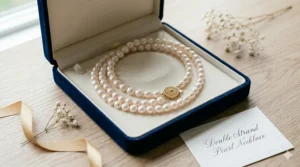
6. 14K Gold Japanese Akoya Saltwater White Pearl Necklace – The Traditional Luxury
Specifications: 7.5-8mm Japanese Akoya saltwater cultured pearls, AAA- quality round/near-round shape, 19-20″ nested strand matinee length, hand-knotted on silk, 14K yellow gold clasp, high luster mirror-like surface.
This is where we cross from freshwater to saltwater territory—and that distinction matters more than most buyers realize. Japanese Akoya pearls are cultivated in the cold coastal waters off Japan where the Pinctada fucata oyster produces pearls with exceptionally thick nacre and that distinctive mirror-like luster that freshwater pearls simply cannot replicate. When pearl experts talk about “that Akoya glow,” they’re referring to the sharp, reflective quality you’re seeing here.
The 7.5-8mm sizing in Akoya represents premium territory. Unlike freshwater pearls where 7-8mm is common, Akoya oysters rarely produce pearls beyond 9mm, making the 7.5-8mm range their optimal size for combining substantial presence with classic elegance. The AAA- grading (the minus indicating slight variation from perfect AAA) translates to “nearly flawless with high luster”—a designation that would cost significantly more in AAA standard.
The 19-20” matinee length is longer than typical princess strands, designed specifically for the double strand format where the layered effect benefits from slightly more length. This positions the lower strand at mid-chest rather than collarbone, creating that classic formal presentation associated with vintage Hollywood glamour.
What you’re really paying for here is provenance and performance. Japanese Akoya pearls have represented the gold standard in cultured pearls since Kokichi Mikimoto pioneered the industry in the early 1900s. The cold-water cultivation produces denser aragonite crystal structures, resulting in durability and luster retention that outlasts freshwater equivalents. Customer reviews from long-term owners note these pearls looking essentially identical after 10-15 years of regular wear.
Pros:
✅ Authentic Japanese Akoya delivers unmatched luster
✅ Saltwater cultivation creates superior durability
✅ 19-20″ length perfectly calibrated for double strand elegance
Cons:
❌ Premium pricing reflects traditional luxury positioning
❌ AAA- grading shows minor variations from perfect rounds
In the $400-$600 range. This is the choice for buyers who understand pearl hierarchy and want authentic Japanese Akoya heritage. Best for formal wear rotation, milestone gift-giving, or anyone building a genuine heirloom collection. The investment here competes with entry-level designer handbags—choose based on your luxury priorities.
7. PremiumPearl Double Strand Black Freshwater Cultured Pearl Necklace – The Bold Alternative
Specifications: 6.5-7mm AAAA quality black freshwater cultured pearls, dyed dark black for dramatic color, hand-knotted between each pearl, sterling silver clasp, 17″ length, high luster with clean surface, comes with certificate of authenticity and jewelry box.
Black pearls offer immediate visual drama that white pearls need larger sizing or premium grading to achieve. This AAAA quality designation represents PremiumPearl’s top tier—the cream of the harvest with exceptional luster, minimal surface imperfections, and superior nacre thickness. The “dyed dark black” disclosure is important: naturally black Tahitian pearls command $1,000+ in double strand format, so this dyeing process makes dramatic coloring accessible.
The 6.5-7mm sizing in black creates more visual weight than equivalent white pearls due to color psychology—darker objects appear more substantial. At 17″ length, these sit right at that collarbone-to-upper-chest zone where black pearls create maximum impact against skin tones. The double strand layering amplifies this effect, giving you that sophisticated formal double strands appearance without matching the Tahitian pearl price tag.
Here’s what the dyeing means practically: the color is permanent and won’t fade with normal wear, but avoid extended direct sunlight exposure (like leaving them on a sunny dresser) and harsh chemicals. The sterling silver clasp choice over gold actually works better here—silver’s cool tone complements black pearls more harmoniously than warmer gold tones.
Customer feedback splits between those who specifically sought black pearls for their dramatic aesthetic, and a few who expected natural Tahitian coloring. Read the description carefully: these are dyed freshwater pearls delivering black pearl style at accessible pricing, not natural-color saltwater Tahitians. Within that category, the AAAA grading and construction quality exceed expectations.
Pros:
✅ AAAA quality delivers exceptional luster and surface
✅ Black color creates instant drama and versatility
✅ More affordable than natural Tahitian alternatives
Cons:
❌ Dyed color (not natural) requires specific care
❌ Black pearls show dust/lint more readily than white
Around $150-$250. Perfect for buyers wanting double pearl choker options that stand out from traditional white pearls, anyone building a jewelry wardrobe with color variety, or formal event attendees who want drama without costume jewelry. Pairs exceptionally well with little black dresses and monochromatic outfits.
Understanding Pearl Quality: What Those Grades Actually Mean for Your Wallet
Most buying guides throw around terms like “AA+” and “AAA” without explaining what you’re actually getting for your money. Here’s the truth: pearl grading isn’t standardized like diamonds, as explained by GIA’s pearl grading guide. Each seller uses their own system, but the general hierarchy follows this pattern—and understanding it prevents overpaying for marketing hype.
A/AA Grade: Entry-level cultured pearls with visible surface imperfections, moderate luster, and some off-round shapes. These work perfectly fine for fashion jewelry or first pearl purchases where you’re testing the waters before committing to investment pieces. Expect 30-40% of pearls in a strand to show noticeable flaws.
AA+/AAA Grade: This is the sweet spot where most buyers should land. You’re getting the top 10-15% of the harvest with high luster, clean surfaces, and consistent round shapes. Surface imperfections exist if you examine closely, but they’re not noticeable during normal wear. The price jump from AA to AAA primarily reflects stricter sorting and quality control rather than radically different pearls.
AAAA Grade: Premium territory representing the top 1-5% of harvests. Expect near-flawless surfaces, exceptional luster, and nearly perfect round shapes. The price premium here often doubles compared to AAA, which only makes financial sense if you’re buying heirloom pieces or have specific perfectionist standards.
Here’s what nobody tells you: in double strand pearl necklace format, AAA grading delivers better value than AAAA because the layered effect naturally masks minor surface variations that might be visible on single strands. Save the AAAA investment for simple single strands where every pearl faces forward as a focal point.
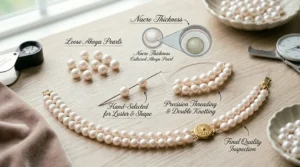
The other factor that matters more than most buyers realize is nacre thickness. Cheap pearls use thin nacre layers over large nuclei, giving you impressive size but poor luster longevity. Quality pearls—even at AA+ grade—feature thick nacre that maintains its glow for decades. Unfortunately, sellers rarely specify nacre thickness, so stick with established brands and read long-term customer reviews mentioning durability.
How to Choose Your Perfect Double Strand Pearl Necklace: The Decision Framework
Buying pearls shouldn’t feel like decoding ancient hieroglyphics, yet most guides complicate the process with excessive jargon. Here’s the practical framework I use when advising buyers:
Step 1: Define Your Wearing Context
If you need pearls for weekly professional wear, prioritize durability and versatility over maximum drama—7-8mm AAA freshwater pearls with secure clasps. If this is for occasional formal events, you can trade some durability for impact—8-9mm or Akoya options that create statement presence.
Step 2: Match Pearl Size to Your Frame
Under 5’4″ with petite build? Stick to 5-7mm sizing. Medium frame 5’4″-5’8″? The 6-8mm range works universally. Over 5’8″ or larger build? You can handle 7-9mm without looking overwhelmed. The “bigger is better” mentality fails when pearls overpower your proportions.
Step 3: Budget Realistically for Quality
Under $100: Expect AA-AA+ freshwater with sterling silver hardware. This is legitimate cultured pearl territory—don’t let anyone shame budget constraints.
$100-$300: AAA freshwater becomes accessible, often with 14K gold clasps and better construction. This is the “sweet spot” for most buyers.
$300-$600: Japanese Akoya enters the picture, or premium large freshwater (8-9mm) with top grading. Investment territory requiring care commitment.
Step 4: Consider Length Strategically
16-17″ (choker-princess): Best for formal wear where pearls sit prominently at base of neck. Works better with V-necks and open necklines.
18-19″ (princess): Most versatile length, works with crew necks and V-necks equally. This is the “default” choice for good reason.
20-24″ (matinee): Longer lengths work specifically for taller frames or when you want pearls sitting lower at mid-chest. Less common in double strands.
Step 5: Hardware Quality Matters More Than You Think
Sterling silver clasps: Perfectly serviceable, won’t tarnish with basic care, adds minimal cost to piece. Choose this for budget-to-mid-range pieces.
14K gold clasps: Adds $30-50 to cost but never tarnishes and increases resale value. Worth it for AAA+ pieces you’ll wear for decades.
Avoid: Gold-plated clasps on expensive pearls (the plating wears off), or overly decorative clasps that add bulk without security (box clasps beat spring rings for double strands).
The framework works because it eliminates decision paralysis. Answer these five questions and you’ll narrow down from hundreds of options to 3-5 legitimate contenders that actually fit your needs.

Real-World Styling: Making Double Strands Work Beyond Special Occasions
The biggest mistake pearl buyers make is treating double strand pearl necklaces as “special occasion only” jewelry, then watching them sit untouched in jewelry boxes for months. Here’s how to actually integrate them into regular rotation:
Office Wear Integration: Pair 7-8mm AAA freshwater with solid-color button-downs or silk blouses. The key is keeping the rest of your jewelry minimal—double strands are already a statement. Skip the chandelier earrings; small studs or no earrings works better. The layered pearl strand necklace adds instant polish to business casual without reading as “trying too hard.”
Weekend Casual Upgrade: This sounds counterintuitive, but double strands with jeans and a simple tee creates that “effortlessly elegant” aesthetic that actually requires thought. The contrast between casual basics and formal pearls reads as confident rather than overdressed—provided your pearls are smaller (5-7mm) and your overall outfit stays simple.
Formal Event Playbook: Here’s where larger double strands (8-9mm) or Japanese Akoya truly shine. With little black dresses or formal gowns, let the pearls be your primary jewelry. Add small diamond or pearl studs if needed, but skip necklaces with additional pendants—you’re already wearing a statement. The sophisticated pearl styles work best when they’re the clear focal point.
Seasonal Considerations: Summer and spring favor white or cream pearls against tanned or naturally deeper skin tones. Fall and winter create opportunities for black or darker pearls that pop against neutrals and create drama without competing with busy patterns. This isn’t a hard rule, but seasonal rotation prevents pearl fatigue.
Storage and Rotation: Here’s the care tip nobody emphasizes enough—pearls need to be worn. The natural oils from your skin actually help maintain their luster. Storing pearls untouched for months dulls their glow. Rotate your double strands into regular wear (even if just once monthly) and wipe them with a soft cloth after wearing to remove skin oils and cosmetic residue.
The goal is treating your double pearl choker or longer formal double strands as versatile wardrobe anchors rather than precious museum pieces. Pearls improve with use, not with storage.
The 2026 Pearl Market: What’s Changed and Why It Matters
The pearl industry underwent significant shifts in 2025-2026 that directly impact what you’re buying today. Understanding these changes helps you avoid outdated advice and capitalize on current market dynamics.
Supply Chain Stabilization: Post-pandemic supply disruptions that plagued 2022-2024 have finally resolved, meaning better availability and more competitive pricing across all quality grades. This is why you’re seeing AAA freshwater options in the $200-300 range that would have cost $400+ two years ago.
Chinese Freshwater Quality Leap: Chinese pearl farms mastered cultivation techniques that now produce freshwater pearls rivaling lower-grade Akoya in luster and surface quality. This explains why AAA freshwater has become the “sweet spot” recommendation—the quality gap between freshwater and saltwater has narrowed significantly at mid-tier pricing.
Direct-to-Consumer Expansion: Brands like The Pearl Source and PremiumPearl bypassing traditional jewelry store markups means you’re accessing wholesale-level pricing. The trade-off is losing that in-store examination experience, but the savings typically justify it—especially when sellers offer free returns.
Sustainability Focus: Major pearl farms implemented environmental certifications and sustainable cultivation practices in response to consumer demand. While this doesn’t directly impact pearl quality, it matters for eco-conscious buyers wanting to ensure their jewelry purchases align with environmental values.
Amazon’s Quality Control: Amazon’s third-party seller requirements tightened significantly in 2025, resulting in better quality consistency from marketplace sellers. The days of obviously fake “pearls” masquerading as cultured pieces have largely ended, though you still need to verify seller ratings and read recent reviews.
These market shifts mean 2026 is arguably the best time in a decade to invest in quality pearls. Increased competition and improved cultivation techniques give you better options at every price point than previous generations of pearl buyers enjoyed.
Double Strand vs Single Strand vs Triple Strand: When More Isn’t Better
The jewelry industry loves pushing “more is more,” but strand count decisions should be strategic rather than automatic. Here’s when each configuration makes sense:
Single Strand Advantages: More formal and traditional, works better with high necklines, shows off individual pearl quality more clearly, typically more comfortable for all-day wear, easier to care for and restring when needed. Choose single strands when you want timeless elegance that never risks looking “too much.”
Double Strand Sweet Spot: Creates dimensional layering without overwhelming necklines, perfect for photographs where visual depth matters, sits beautifully at collarbone-to-chest area, strikes balance between statement and subtlety. The two row pearl necklace jewelry format works for 80% of pearl wearing contexts.
Triple Strand Territory: Maximum drama and presence, best reserved for formal events or when you specifically want bold jewelry, requires taller/larger frames to carry proportionally, often feels heavy after hours of wear. Triple strands are the “look at me” option—choose deliberately.
Here’s the honest assessment most guides skip: double strands represent the optimal risk-to-reward ratio. Single strands can read as understated (sometimes disappointingly so), while triple strands risk costume jewelry territory if not executed with exceptional quality. The double configuration hits that “clearly special but not trying too hard” middle ground that works across the widest range of contexts.
The construction detail that matters most across all strand counts is proper nesting—ensuring strands sit distinct but close rather than tangling or separating too far. Well-designed pieces use precisely calibrated length differences (typically 0.5-1″ between strands) that maintain visual cohesion.
Common Mistakes When Buying Double Strand Pearls (And How to Avoid Them)
Mistake #1: Prioritizing Size Over Quality
Buyers fixate on getting the largest pearls possible, then wonder why their 9-10mm AA-grade purchase looks dull compared to smaller AAA pearls. Luster trumps size every time. A 6mm pearl with exceptional glow outshines a 9mm pearl with mediocre surface quality. If choosing between 7-8mm AAA or 9-10mm AA at similar prices, take the AAA option every time.
Mistake #2: Ignoring Hardware Quality
Spending $300 on quality pearls then accepting a cheap spring ring clasp is like buying a luxury car with budget tires. Double strands create more weight and stress on clasps than single strands. Box clasps or filigree fish-hook styles provide the security needed. Sterling silver represents the minimum acceptable quality; 14K gold becomes worth it at the $200+ price point.
Mistake #3: Mismatching Length to Frame
A 5’2″ petite buyer selecting 20″ matinee length because it “looks elegant online” ends up with pearls sitting awkwardly at mid-chest with no neckline definition. Match length to your specific frame—try on similar lengths in any jewelry store to understand how different measurements actually sit on your body before buying online.
Mistake #4: Confusing Grading Systems
One seller’s “AAA” might be another’s “AA+” since grading lacks standardization. Instead of trusting letter grades alone, read descriptions about luster quality, surface cleanliness, and nacre thickness. Established brands with thousands of verified reviews provide more reliable quality indicators than grade letters from unknown sellers.
Mistake #5: Expecting Akoya Performance from Freshwater Pricing
Buyers see “cultured pearls” and assume all cultured options are equivalent. Japanese Akoya commands 2-4x freshwater pricing for good reason—cold water cultivation, longer growth periods, and superior luster. Both are legitimate, but expecting Akoya characteristics at freshwater prices leads to disappointment.
Mistake #6: Neglecting to Consider Restringing
Double strand necklaces need restringing every 2-3 years with regular wear as the silk thread weakens. Factor this $50-100 maintenance cost into your total ownership expenses. Pieces that seem like deals upfront sometimes reveal hidden costs when you discover local jewelers charge premium rates for double strand restringing due to increased complexity.
Mistake #7: Improper Storage
Storing pearls in airtight plastic bags or alongside metal jewelry that can scratch their surface. Pearls need to breathe—use cloth pouches or jewelry boxes with soft fabric lining. Never store them with perfumes or cleaning chemicals, as pearls are organic gems susceptible to chemical damage.
The thread connecting these mistakes is buying based on appearance or price alone rather than understanding how pearls perform as living organic gems requiring specific care and realistic expectations.
Caring for Your Double Strand Investment: Beyond Basic Cleaning
Quality pearl care goes beyond “wipe with soft cloth” advice you’ll find everywhere. According to pearl care guidelines from jewelry experts, proper maintenance is essential for preserving the organic beauty of these gems. Here’s what actually matters for maintaining luster over decades:
The “Last On, First Off” Rule: Apply all cosmetics, perfumes, hairspray, and lotions before putting on your double strand pearl necklace. These products contain chemicals that dull pearl luster over time. When you get home, remove pearls first before other jewelry. This simple sequencing prevents 90% of avoidable pearl damage.
Restringing Schedule: Every 1-2 years for frequently worn pieces, every 2-3 years for occasional wear. Silk thread stretches and weakens with time, and the knotting between pearls loosens. Don’t wait until you notice problems—proactive restringing costs $50-80 and prevents the $300+ loss of discovering your strand broke and pearls scattered.
Storage Temperature: Room temperature in low-humidity environments. Avoid safety deposit boxes (too dry), bathroom storage (too humid), or near heating vents. Pearls contain 2-4% water content naturally—extreme environments either dry them out (causing cracking) or expose them to excess moisture (dulling luster).
Cleaning Method: Lukewarm water and mild soap only. Dampen a soft cloth, gently wipe each pearl, then dry with a separate clean cloth. Never soak pearls or use ultrasonic cleaners—both damage nacre. Do this after every 3-4 wears, or monthly if you’re rotating pearls into regular wear.
Professional Inspection: Annual check-ups at jewelers for clasp security, knot tightness, and overall condition assessment. Most jewelers offer this free with purchase or for minimal fees ($10-20). They’ll catch weakening thread or loose clasps before failure occurs.
Insurance Considerations: Pieces valued over $200 warrant adding to your homeowner’s or renter’s insurance policy as a jewelry rider. Standard policies typically cap jewelry coverage at $1,000-2,000 total, which sounds sufficient until you realize it’s aggregate across all jewelry. A specific rider costs approximately 1-2% annually of the jewelry value.
The care investment scales with purchase price—$50 pearls tolerate more casual handling than $500 Akoya. But establishing good habits from the start means those budget pearls last longer and transition you into proper care practices when you eventually upgrade.
❓ FAQ: Your Double Strand Pearl Questions Answered
❓ How long do double strand pearl necklaces typically last with regular wear?
❓ Can you wear double strand pearl necklaces in water or while exercising?
❓ What's the difference between freshwater and Akoya pearls in double strands?
❓ How should double strand pearl necklaces fit at the neck?
❓ Are dyed black pearls less valuable than naturally black Tahitian pearls?
Conclusion: Your Path to Pearl Perfection Starts With Understanding, Not Spending
The double strand pearl necklace market in 2026 offers unprecedented value across every price tier, but only if you shop informed rather than intimidated. Whether you’re investing in your first AA+ freshwater piece around $50 or committing to Japanese Akoya luxury at $500+, the principles remain constant: prioritize quality over size, match specifications to your frame and wearing context, and commit to proper care protocols that protect your investment.
The seven options analyzed here represent the current sweet spots across budget, mid-range, fashion, and luxury categories—each serving distinct needs without overlapping unnecessarily. Your choice depends less on “best overall” and more on honest assessment of how you’ll actually wear these pearls. A $50 PremiumPearl piece worn weekly delivers more value than a $500 Akoya left in a drawer for special occasions that never quite arrive.
Remember that pearls reward regular wear rather than precious storage. The two row pearl necklace jewelry you choose should integrate into your routine, not wait for perfect moments. Start with quality you can afford, practice proper care habits, and upgrade strategically as your jewelry confidence and budget grow. The sophisticated pearl styles and layered pearl elegance you’re seeking exist at every price point—you just need to know where to look and what actually matters.
Recommended for You
- 7 Best Pearl Necklace 14k Gold Clasp Options 2026
- 7 Best Classic Single Strand Pearl Necklaces for Timeless Elegance in 2026
- 7 Best Golden South Sea Pearl Necklaces: Expert Guide 2026
Disclaimer: This article contains affiliate links. As an Amazon Associate, I earn from qualifying purchases. If you purchase products through these links, we may earn a small commission at no additional cost to you.
✨ Found this helpful? Share it with your friends! 💬🤗
