In This Article
So you’ve decided to invest in a certified akoya pearl necklace — smart choice. But here’s what most buyers don’t realize until it’s too late: the pearl market is flooded with everything from legitimate AAA-grade strands to barely-passable A-grade pieces masquerading as “premium quality.”
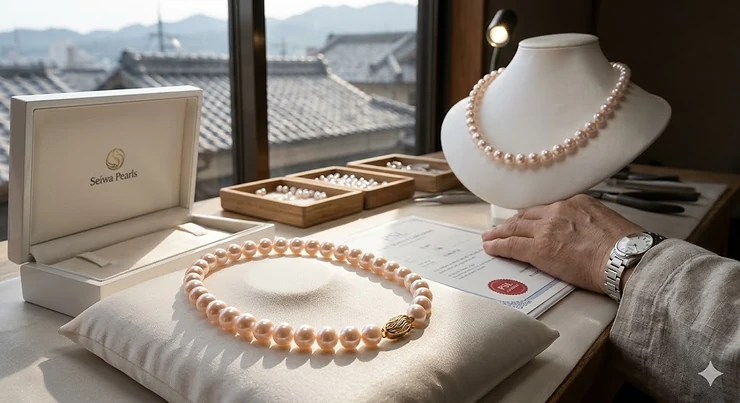
The real question isn’t whether akoya pearls are beautiful — they absolutely are. What you need to know is which certifications actually mean something, what price range reflects genuine value versus markup, and how to spot the difference between a $400 necklace that’ll last generations and a $450 one that’s just riding the brand name wave.
I’ve spent weeks researching certified akoya pearl strands available right now on Amazon, comparing GIA certificates against Pearl Science Laboratory standards, and talking to people who’ve actually worn these pearls daily for years. The truth? Hanadama certification from an independent Japanese laboratory confirms exceptional luster, surface quality, and nacre thickness, but not every seller interprets “AAA quality” the same way.
In this guide, you’ll find seven certified akoya pearl necklaces that represent the best value across budget, mid-range, and premium tiers. More importantly, you’ll learn what makes a $600 Hanadama strand genuinely superior to a $300 AAA option — and when that premium actually matters for your situation.
Quick Comparison: Top Certified Akoya Pearl Necklaces at a Glance
| Product | Pearl Size | Quality Grade | Certification | Clasp Material | Price Range | Best For |
|---|---|---|---|---|---|---|
| Seven Seas Pearls 7.5-8mm | 7.5-8mm | AAA | GIA Certificate | 14k White Gold | $700-$900 | Luxury seekers |
| Hanadama Round 8.5-9mm | 8.5-9mm | Hanadama | PSL Certified | 14k Gold | $1,200-$1,500 | Investment pieces |
| PremiumPearl 6-6.5mm | 6-6.5mm | AA+ | Seller Verified | Sterling Silver | $150-$250 | Budget conscious |
| Seven Seas Pearls 6.5-7mm | 6.5-7mm | AAA | GIA Certificate | 14k White Gold | $550-$750 | Daily wear |
| Amazon Collection 7.5-8mm | 7.5-8mm | Premier Grade | Amazon Curated | 18k White Gold | $400-$600 | Quality balance |
| Seven Seas Black Akoya 7.5-8mm | 7.5-8mm | AAA Hanadama | GIA Certificate | 14k Yellow Gold | $900-$1,100 | Statement pieces |
| Seven Seas Opera Length 6.5-7mm | 6.5-7mm (36″) | AAA | GIA Certificate | 14k White Gold | $800-$1,000 | Versatile styling |
Looking at this comparison, the sweet spot for most buyers sits around the 7-7.5mm size range with AAA grading and proper certification. The Seven Seas 6.5-7mm Princess Length offers the best value under $800 if you want GIA certification without breaking into premium territory. Budget shoppers should note that the PremiumPearl 6-6.5mm sacrifices certification for accessibility, which is fine for everyday wear but won’t hold resale value like certified strands. For those prioritizing investment quality, the Hanadama 8.5-9mm justifies its premium with PSL certification — that’s the gold standard that only about 2% of akoya pearls achieve.
💬 Just one click — help others make better buying decisions too! 😊
✨ Don’t Miss These Exclusive Deals!
🔍 Take your jewelry collection to the next level with these carefully selected certified akoya pearl necklaces. Click on any highlighted item to check current pricing and availability. These authentic Japanese pearls will help you create stunning looks your family will admire for generations!
Top 7 Certified Akoya Pearl Necklaces: Expert Analysis
1. Seven Seas Pearls Cultured Akoya Pearl Necklace 7.5-8mm AAA Quality
This strand represents what serious pearl buyers mean when they say “investment grade.” The 7.5-8mm size hits the sweet spot where each pearl is substantial enough to command presence without crossing into the premium-sized territory where prices jump exponentially. What most product listings won’t tell you: pearls over 8mm in akoya strands become significantly rarer because the Pinctada fucata oyster naturally produces smaller pearls than South Sea varieties.
Seven Seas Pearls imports directly from Japanese saltwater farms, and their AAA designation means 95% or better surface quality with mirror-like luster. Each pearl sits on double-knotted silk thread — this isn’t just aesthetic; the knots prevent pearls from rubbing against each other, which would gradually wear down the nacre over decades of wear. The 14k solid white gold clasp adds about $50-75 to the cost compared to sterling silver alternatives, but it won’t tarnish or require replating every few years.
Customer feedback consistently mentions the “sharp luster” — that’s the technical term for how crisply you can see your reflection in the pearl’s surface. Several buyers noted these outperform their more expensive Mikimoto studs in side-by-side luster tests, which speaks to Seven Seas’ sourcing quality. The GIA Pearl Graduate Certificate included validates authenticity and provides nacre thickness data, crucial if you ever need insurance documentation.
Pros:
✅ GIA certification provides independent quality verification
✅ 7.5-8mm size offers presence without premium pricing
✅ Double-knotted silk prevents long-term nacre damage
Cons:
❌ 18″ length may sit too high on taller individuals
❌ AAA grade, while excellent, doesn’t reach Hanadama standards
Price sits in the $700-$900 range depending on current promotions. For buyers wanting certification without crossing into four-figure territory, this delivers authentic Japanese akoya quality with documentation to prove it.
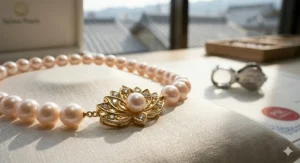
2. 14K Gold 8.5-9mm Hanadama Round Genuine White Japanese Akoya Necklace
Here’s the benchmark against which all other akoya pearls get measured. Hanadama certification means these pearls passed strict laboratory testing by an independent Japanese lab, with only approximately 2% of annual akoya pearl harvest qualifying for this designation. What makes that 2% so special? Minimum nacre thickness of 0.4mm on each side (0.8mm total depth), luster so sharp you can distinguish facial features in the reflection, and surface quality that’s clean even under 10x magnification.
The 8.5-9mm size category is where akoya production drops off dramatically. Most akoya farmers harvest pearls in the 6-8mm range; anything larger requires longer cultivation periods (18-24 months versus 12-14 months for smaller pearls), which increases costs and risk. Larger pearls also mean fewer fit on an 18″ strand — you’re looking at roughly 45-50 pearls versus 65-70 for a 6-7mm strand.
Hanadama strands come certified by the Pearl Science Laboratory in Tokyo, the organization that literally created the Hanadama standard in 1978. This isn’t a seller’s self-assessment; it’s third-party verification from Japan’s foremost pearl authority. Buyers report the “aurora” or orient — that rainbow-like iridescence beneath the surface luster — is immediately visible even in indirect lighting. That optical effect comes from thick, well-structured nacre layers refracting light.
Pros:
✅ PSL certification represents the absolute highest akoya grade available
✅ 8.5-9mm size offers rare combination of quality and presence
✅ Thick nacre (0.8mm+) ensures durability for generational wear
Cons:
❌ Premium pricing reflects genuine rarity but limits accessibility
❌ 20″ matinee length may not suit all necklines
In the $1,200-$1,500 range, this isn’t an impulse purchase. But if you’re buying an heirloom piece or need certified documentation for insurance purposes, Hanadama eliminates all guesswork about quality.
3. PremiumPearl 6-6.5mm White Akoya Saltwater Cultured Pearl Necklace
Not everyone needs (or wants to pay for) certification, and that’s where PremiumPearl finds its niche. The 6-6.5mm size represents entry-level akoya territory — these are genuine Japanese saltwater pearls, just smaller and with AA+ grading instead of AAA. What does AA+ actually mean in practical terms? You’re looking at 90-95% clean surface quality versus AAA’s 95%+, and luster that’s “highly noticeable” rather than “mirror-sharp.”
The sterling silver clasp keeps costs down (around $150-$250 range) but will require occasional polishing to prevent tarnish. Several customers noted these make excellent starter pearls for someone testing whether they’ll actually wear pearls regularly before committing to a four-figure certified strand. The 17″ length runs slightly short of the standard 18″ princess length, sitting higher on the collarbone — intentional or cost-saving measure? Hard to say, but it’s worth noting if you prefer lower-sitting necklaces.
What PremiumPearl doesn’t advertise: AA+ grade typically means visible blemishes under close inspection. Not deal-breakers for daily wear, but if you’re photographing jewelry or need pristine surface quality for formal events, this won’t match certified AAA strands. Customer reviews mention “great value for the price” more often than “stunning quality” — telling praise that sets accurate expectations.
Pros:
✅ Accessible price point for genuine Japanese akoya pearls
✅ 6-6.5mm size works well for delicate, understated styling
✅ AA+ quality sufficient for casual and professional wear
Cons:
❌ No third-party certification limits resale value
❌ Sterling silver clasp requires maintenance
This occupies the “try before you commit” space in the akoya market. If you’re uncertain whether akoya’s classic white-rose luster suits your style better than freshwater’s softer glow, start here before investing in certified grades.
4. Seven Seas Pearls 14k Gold Akoya Cultured Pearl Necklace 6.5-7mm AAA Quality Princess Length
The 18″ princess length sitting at the collarbone represents the most versatile necklace length for akoya pearls — works with crew necks, V-necks, and scoop necklines equally well. Seven Seas Pearls positions this 6.5-7mm AAA strand as their everyday luxury option, and customer feedback validates that positioning. Buyers who own both this and larger premium strands report reaching for the 6.5-7mm more frequently because it doesn’t feel “too formal” for office wear or dinner out.
The 14k white gold clasp includes filigree detail — purely decorative, but it means you can wear the necklace backwards if you want the clasp visible as a design element. More practically, 14k gold won’t trigger metal sensitivities the way some sterling silver pieces can, and it maintains value better if you ever decide to have the pearls restrung or reset.
AAA grading with GIA Pearl Graduate Certificate means these meet the same surface quality standards as the 7.5-8mm Seven Seas option above, just in a smaller size. What changes with size? Primarily price and presence. The 6.5-7mm range sits in the $550-$750 bracket versus $700-$900+ for 7.5-8mm. You’re not sacrificing quality, just scale. Several reviewers noted these look more “classic pearl necklace” than “statement jewelry,” which aligns with their intended use case.
Pros:
✅ 18″ princess length offers maximum styling versatility
✅ 6.5-7mm balances quality and everyday wearability
✅ GIA certification at accessible price point
Cons:
❌ Smaller size may lack impact for formal evening wear
❌ Rose gold clasp option not available
In the mid-range certified akoya space, this delivers exactly what it promises: authentic Japanese pearls with proper documentation, sized for daily wear rather than special occasions. If you’re building a jewelry wardrobe and need one reliable pearl necklace, this is that piece.
5. Amazon Collection 18k White Gold Akoya Cultured Pearl Necklace 7.5-8mm
The Amazon Collection represents Amazon’s curated fine jewelry line, which includes quality inspection by their staff graduate gemologist. Here’s what that actually means for buyers: these pearls meet Amazon’s internal standards and come with conflict-free certification for the gold clasp, but you’re not getting GIA or PSL certification for the pearls themselves. The “Premier Grade” designation is Amazon’s own classification system.
That said, the 18k white gold clasp adds tangible value — pure gold content runs higher than 14k (75% versus 58.5%), which means better long-term durability and less likelihood of nickel allergies. The 7.5-8mm size at this price range (around $400-$600) suggests these fall somewhere between AA+ and AAA quality, though Amazon’s grading opacity makes direct comparison difficult.
Customer reviews split into two camps: buyers with no prior akoya experience rate these highly for luster and quality, while pearl enthusiasts note they’re “good but not exceptional.” Translation: if you’ve never owned certified AAA or Hanadama strands, these will look stunning. If you’re comparing against documented AAA quality, you’ll notice the luster doesn’t quite reach mirror-sharp status. For the price point, that’s entirely reasonable — you’re paying for quality assurance and convenience rather than top-tier grading.
Pros:
✅ Amazon’s quality inspection provides baseline assurance
✅ 18k white gold clasp offers superior durability
✅ 30-day return policy eliminates purchase risk
Cons:
❌ “Premier Grade” lacks industry-standard certification
❌ Luster quality variable within their grading system
This works well for gift-givers who want akoya quality without navigating certification systems, or buyers who prioritize Amazon’s return infrastructure over independent pearl grading. Just understand you’re trading certification transparency for purchase convenience.
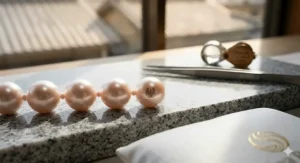
6. Seven Seas Pearls Akoya Cultured Pearl Necklace AAA Hanadama 7.5-8mm Black Green
Black akoya pearls occupy a fascinating niche in the pearl market. Unlike Tahitian pearls, which naturally grow in dark colors, black akoyas start as traditional white pearls and undergo enhancement treatment to achieve their dramatic black-green-blue iridescence. Here’s what matters: the treatment is permanent and stable (the color won’t fade with wear), but it’s still treatment, which is why even Hanadama-certified black akoyas cost less than equivalent white Hanadama strands.
This Seven Seas Pearls strand achieves AAA Hanadama quality with that mesmerizing peacock overtone — hints of green and blue shifting across the black body color depending on lighting angle. The 14k yellow gold clasp creates intentional contrast against the dark pearls, and several buyers noted this styling choice prevents the necklace from looking too severe or monochromatic against darker clothing.
What black akoyas offer that Tahitians don’t: perfectly round shape and smaller, more refined size options. Tahitian pearls rarely come smaller than 8mm and often show baroque (non-round) shapes. If you want dark pearls in a classic 7.5-8mm round strand format, akoya becomes the only viable option. The Hanadama certification means these started as top-quality white pearls before treatment — you’re not enhancing lower grades to hide surface flaws.
Pros:
✅ Hanadama certification ensures base pearl quality before enhancement
✅ Peacock overtones offer versatility beyond basic black
✅ 18″ length works with both casual and formal styling
Cons:
❌ Enhanced color (not natural) may affect long-term value
❌ Yellow gold clasp limits pairing with white gold jewelry
Price sits around $900-$1,100 range — premium over white AAA strands but significantly less than white Hanadama. For buyers wanting drama and uniqueness while staying in the akoya family, this delivers statement-making presence that white pearls can’t match.
7. Seven Seas Pearls 14k Gold Akoya Cultured Pearl Necklace 6.5-7mm AAA Quality 36″ Opera Length
Opera length (30-36″) transforms how you interact with a pearl necklace. Instead of sitting fixed at the collarbone, you can double-strand it for a fuller look, knot it for 1920s-inspired styling, or wear it long as a single dramatic strand. This Seven Seas Pearls 36″ AAA certified option uses the same 6.5-7mm Japanese akoya pearls as their 18″ princess length, just strung to triple the typical length.
Here’s the practical consideration most sellers won’t mention: opera length requires roughly 95-100 pearls versus 55-60 for an 18″ strand. More pearls means tighter matching requirements — any variation in luster or overtone becomes more visible across a longer strand. AAA quality with GIA certification ensures that matching stays consistent, but you’re also paying for that pearl count. Price runs $800-$1,000 range, reflecting the additional material and stringing complexity.
Buyers who actually wear opera-length pearls (versus those who buy them aspirationally and never wear them) report using the doubled configuration most frequently. That creates a layered effect similar to wearing two separate necklaces, and the 6.5-7mm size prevents the doubled strand from looking too bulky or costume-jewelry-like. The 14k white gold clasp sits between your shoulder blades when worn long — completely invisible but important for security with this much pearl value.
Pros:
✅ 36″ length enables multiple styling configurations
✅ AAA quality ensures consistent matching across 95+ pearls
✅ GIA certification documents significant pearl count
Cons:
❌ Opera length doesn’t suit all body types or style preferences
❌ Higher pearl count increases replacement cost if strand breaks
This serves buyers who already know they’ll use the versatility of opera length. If you’re uncertain whether you’ll actually wear 36″ pearls beyond special occasions, the 18″ princess length offers better cost-per-wear value.
How to Decode Akoya Pearl Certifications Without Getting Scammed
Walk into any pearl discussion forum and you’ll find heated debates about whether Hanadama certification justifies its premium, whether GIA or PSL carries more weight, and whether AAA from one seller equals AAA from another. The confusion is intentional — when grading lacks universal standards, sellers can position their products however benefits them most.
The Pearl Science Laboratory uses unique terms like “Teri Analysis” for luster and offers special designations like “Aurora Hanadama” and “Aurora Tennyo” that are exclusive to PSL pearl reports. Meanwhile, GIA’s pearl report uses the “7 Pearl Value Factors” — Luster, Surface, Shape, Color, Nacre, Matching, and Size — designed to be consistent for all pearl types. Neither is “better” universally; they serve different purposes.
The Certification Hierarchy That Actually Matters
Tier 1: PSL Hanadama/Tennyo — The absolute benchmark for Japanese akoya pearls. Minimum nacre thickness of 0.4mm each side of pearl (0.8mm cumulative depth) or more, with luster sharp enough that easily recognized facial features may be observed in pearl surfaces. Only about 2% of annual akoya production qualifies. Expect to pay 50-100% premium over AAA for this certification.
Tier 2: GIA Pearl Report with Hanadama Indicator — GIA recently added Hanadama quality indicators to their certificates, providing international recognition of PSL standards. Offers broader market credibility outside Japan, particularly for insurance and resale purposes.
Tier 3: AAA Grading with GIA Graduate Certificate — Seller-assessed grade (AAA, AA+, AA) but verified authentic by GIA graduate gemologist. Confirms you’re getting genuine akoya pearls with reasonable quality, though specific grade boundaries vary by vendor.
Tier 4: Vendor AAA/AA+ Grading (No Third-Party Cert) — Relies entirely on seller reputation. Reputable dealers like Pearl Paradise or Pure Pearls maintain consistent internal standards, but no independent verification exists. Budget option that works if you trust the seller.
What Certification Won’t Tell You
Even Hanadama-certified strands vary in quality. Grading is subjective even at PSL, and labs are intentionally vague with standards — a strand might fail and be resubmitted and then pass. This creates a range within the Hanadama designation where a barely-passing strand and a top-tier one carry the same certificate.
The practical workaround? Buy from sellers who offer detailed photos of the actual strand (not stock images) and generous return policies. Seven Seas Pearls includes photos of your specific necklace with your GIA certificate. PremiumPearl uses stock images. That difference matters more than you’d think when you’re spending $500-$1,500.
Real-World Pearl Wearing: What 6 Months of Daily Use Actually Reveals
You’ve read the specs, compared certifications, and settled on a strand that fits your budget and quality requirements. Now what? Here’s what pearl sellers don’t tell you about the first 180 days of ownership.
Month 1-2: The Honeymoon Phase
Fresh from the box, your certified akoya pearls look flawless. The luster practically glows, the silk thread feels supple, and you’re convinced this was worth every dollar. Wear them 2-3 times per week with everything from business casual to date night outfits. You’ll notice they warm quickly against skin — akoya nacre is thinner than South Sea pearls, so they respond faster to body temperature.
Month 3-4: First Maintenance Reality Check
Around the three-month mark with regular wear, you’ll notice the silk thread at the clasp starts showing slight discoloration from oils, perfume, and general handling. This is normal and doesn’t indicate poor quality — silk is organic and absorbs everything. The knots between pearls might also appear slightly looser than when new. Plan on professional restringing every 2-3 years with regular wear, annually with daily wear.
Here’s the maintenance secret no one mentions: those $800 certified strands cost about $75-125 to restring professionally (varies by pearl count and clasp complexity). Budget sellers using pre-strung factory threads might charge $50-75. The difference? Professional stringers hand-tie double knots between each pearl, tension the thread properly, and secure the clasp with a jeweler’s knot that won’t slip. Factory strings often use glue, which degrades faster.
Month 5-6: Understanding Your Pearl’s Personality
By six months, you’ll know if akoya’s classic white-rose luster actually suits your wardrobe and skin tone. Some buyers discover they reach for their akoya strand constantly because it elevates casual outfits effortlessly. Others realize the formality feels too “dressed up” for their lifestyle, and the necklace sits unworn.
The 6-6.5mm size tends to integrate better with daily wardrobes — substantial enough to notice but not so formal it requires occasion dressing. The 8-9mm Hanadama strands, while stunning, often stay in jewelry boxes for special events only. Consider your actual wearing patterns before investing in premium sizes.
Common First-Year Discoveries
Discovery 1: Akoya luster genuinely does change with lighting. Fluorescent office lighting makes them glow almost surreally bright. Candlelight brings out the rose overtones. Morning natural light shows the truest color.
Discovery 2: The double-knotted silk isn’t just protective — it’s also the weak point. Broken threads usually happen at the clasp from repeated stress during fastening and unfastening. Always support the strand with one hand while operating the clasp.
Discovery 3: “Certified” doesn’t mean “indestructible.” Akoya nacre is relatively thin (0.4-0.6mm even in Hanadama grades) compared to South Sea pearls (2-4mm). They’re durable for normal jewelry wear but shouldn’t be treated carelessly.
💎 Elevate Your Style Today
Ready to add timeless elegance to your jewelry collection? These certified akoya pearl necklaces combine authentic Japanese craftsmanship with verified quality. Click any product name to explore current options and find the perfect strand for your needs!
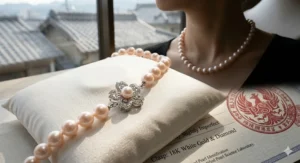
Akoya vs Freshwater vs South Sea: Why Certification Matters More for Akoyas
“Can’t I just buy freshwater pearls and save the money?” — the question every pearl seller hears. The answer depends entirely on what you’re actually buying pearls for, but the certification angle reveals why akoyas occupy their specific market niche.
The Fundamental Structural Difference
Freshwater pearls are solid nacre all the way through — they’re tissue-nucleated, meaning the pearl grows around a piece of mantle tissue rather than a bead nucleus. Akoya pearls use bead nucleation, creating a mother-of-pearl shell bead center with a nacre coating. That coating thickness directly determines quality and longevity, which is why certification matters so much for akoyas.
The A-AAA system evaluates akoya pearls according to surface quality, luster, and perfection of shape, with nacre thickness being a visual inspection by the grader rather than via x-ray analysis — the only exception being Hanadama pearls which are x-rayed at the Pearl Science Laboratory in Tokyo.
Without that nacre verification, you could buy an akoya strand with dangerously thin nacre that wears through to the bead nucleus in 5-10 years. Freshwater pearls don’t have this vulnerability — there’s no nucleus to expose — which is why certification matters less for freshwater purchases.
When to Choose Each Type
Choose Freshwater if: You want solid nacre durability, budget is primary concern ($100-400 for quality strands), and you prefer softer, less mirror-like luster. Perfect for daily wear pieces you won’t baby.
Choose Akoya if: You want that signature sharp luster and perfectly round shape, certification provides peace of mind, and you’re willing to invest $400-1,500. Best for formal jewelry and heirloom pieces.
Choose South Sea if: You want large pearls (10-15mm+), budget exceeds $2,000, and you prefer satiny luster over mirror shine. Statement pieces for significant occasions.
The certification angle: South Sea pearls have such thick nacre (2-4mm) that thin nacre isn’t a quality concern. Freshwater pearls are solid nacre, eliminating the issue entirely. Akoya pearls occupy the narrow band where nacre thickness directly impacts value and longevity, making certification the only reliable way to verify what you’re paying for.
The Luster Difference (And Why It Matters for Resale)
Hold an akoya pearl next to a freshwater pearl and the luster difference becomes immediately obvious — akoya’s mirror-like shine versus freshwater’s softer, more matte appearance. That sharpness comes from the crystalline structure of saltwater nacre, which reflects light more intensely than freshwater nacre.
For buyers planning to keep pearls long-term, luster preference is personal. For those who might sell or trade up eventually, akoya’s certified luster holds resale value better because it’s objectively measurable. A Hanadama certificate documenting sharp luster means something to future buyers; a verbal claim that freshwater pearls “look great” doesn’t carry the same weight.
Budget Breakdown: What $500, $1,000, and $2,000 Actually Buy You
Let’s cut through the vague pricing and talk specific value propositions at each major price tier.
The $300-500 Range: Certified Entry Level
What you get: 6-7mm AAA-grade akoya pearls, GIA Graduate Certificate, 14k gold or sterling silver clasp, 18″ princess length. Around 55-60 pearls total.
What you sacrifice: Smaller size means less presence. AAA grade might show minor surface blemishes under close inspection. Certification verifies authenticity but doesn’t guarantee Hanadama-level luster.
Best for: First-time akoya buyers, professional wardrobes, gifts for graduates or birthdays.
Real-world value: The PremiumPearl 6-6.5mm AA+ at $150-250 and Seven Seas 6.5-7mm AAA at $550-750 bracket this tier. You’re paying primarily for size and certification level. If certification matters for insurance or resale, stretch to the Seven Seas option. If you just want genuine akoya pearls for personal wear, PremiumPearl works.
The $700-1,100 Range: Sweet Spot Territory
What you get: 7-8mm AAA-grade pearls with GIA certification, 14k gold clasp, potentially Hanadama certification for black akoyas. Superior luster visible to untrained eyes. Approximately 60-70 pearls for standard lengths.
What you upgrade: Noticeable size increase creates jewelry presence. AAA grade at this price point typically means minimal surface blemishes. Luster approaches (but doesn’t match) Hanadama standards.
Best for: Anniversary gifts, building an heirloom collection, buyers who wear pearls weekly and want quality that justifies frequent wear.
Real-world value: This is where the quality-to-price ratio peaks. The Seven Seas 7.5-8mm AAA ($700-900) offers the best overall value — substantial size, proper certification, excellent luster. If you can only own one certified akoya strand, this price tier delivers maximum return.
The $1,200-1,800 Range: Investment Grade
What you get: 8-9mm Hanadama pearls with PSL certification, thick nacre (0.8mm+), mirror-like luster, near-perfect surface quality. The top 2% of akoya production.
What you sacrifice: Accessibility. This price tier requires serious jewelry budgets or special occasion justification. You’re paying for certified excellence that most untrained eyes can’t distinguish from high AAA.
Best for: Heirloom pieces for daughters or granddaughters, significant milestone gifts (30th anniversary, major promotion), serious pearl collectors.
Real-world value: The Hanadama 8.5-9mm at $1,200-1,500 represents what this money buys. If you appreciate the difference between “excellent” and “the best available,” this tier makes sense. If you’re primarily concerned with having certified akoya pearls rather than achieving absolute peak quality, the previous tier offers better value.
What About $2,000+?
At this level you’re entering either extremely large akoya sizes (9.5-11mm, which are genuinely rare), multi-strand designs, or adding significant diamond/gemstone embellishment. Single-strand akoya necklaces rarely justify prices above $2,000 unless you’re dealing with record-size pearls or designer settings.
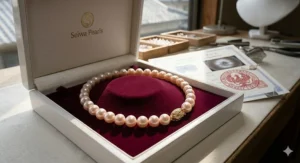
The Certification Question No One Asks: Does It Actually Affect Daily Wear Experience?
Here’s an uncomfortable truth for the certification-obsessed: in daily wear, the difference between high-AAA and certified Hanadama often matters less than the difference between 6mm and 8mm size, or between sterling silver and 14k gold clasps.
What Certification Guarantees vs What It Doesn’t
Guaranteed: Nacre thickness meets minimum standards. Luster measures within specified ranges. Surface quality passes inspection thresholds. The pearls are genuine akoya from Japanese saltwater farms.
Not guaranteed: You’ll love wearing them more than uncertified AAA strands. Other people will notice the quality difference. The necklace will transform your wardrobe.
Certification provides documentation and resale value. It verifies you paid for genuine quality rather than marketing hype. But once the necklace is around your neck, the daily wearing experience depends more on size, length, clasp comfort, and whether the luster complements your skin tone than on whether a Tokyo laboratory confirmed 0.8mm nacre thickness versus 0.5mm.
When Certification Matters Most
Insurance claims: Try explaining to your insurance company that your uncertified “AAA” pearls cost $1,200. Without documentation, you’re settling for significantly less.
Resale value: Hanadama certification can maintain 60-70% of original value in secondary markets. Uncertified strands, regardless of actual quality, struggle to achieve 40% because buyers can’t verify claims.
Family heirlooms: Passing down pearls with certification tells the next generation exactly what they’re inheriting. “Grandma’s nice pearls” becomes “Grandma’s PSL-certified Hanadama strand from 2026.”
Peace of mind: If you’re spending four figures on jewelry, certification eliminates the “did I get ripped off?” anxiety that plagues uncertified purchases.
When Certification Matters Less
Personal wear only: If you’ll never sell, insure, or pass down these pearls, certification primarily validates your purchasing decision rather than affecting ownership experience.
Budget constraints: The $300 gap between uncertified AAA and certified AAA might be better spent on upgrading from 6mm to 7mm size, where the difference is immediately visible.
Fashion jewelry approach: If you view pearls as accessories that might go out of rotation in 5-10 years, certification’s long-term benefits don’t align with your wearing timeline.
The honest assessment? Certification makes absolute sense for purchases over $700 and for any pearls intended as gifts or heirlooms. Below $700, weigh whether the certification premium provides enough value to justify the cost versus putting that money toward larger size or better clasp quality.
What Jewelers Won’t Tell You About Akoya Pearl Longevity
“These pearls will last a lifetime” — technically true, but practically misleading. Akoya pearls can last 50-100+ years with proper care, but the strand they’re originally set on won’t. Understanding the maintenance lifecycle prevents expensive surprises.
The 3-Year Restringing Cycle
Silk thread degrades. No matter how carefully you handle your pearls, oils from skin, cosmetics in the air, humidity — all of it slowly weakens the silk fibers. Around the 2-3 year mark with regular wear (wearing 2-3 times weekly qualifies as regular), you’ll need professional restringing.
What this actually costs: $75-125 for a single-strand 18″ necklace at reputable jewelers. Budget for this in your total cost of ownership. A $800 necklace isn’t truly an $800 investment — it’s $800 initial + $150-250 per decade in maintenance if you wear it regularly.
The alternative to silk? Synthetic thread (nylon, polyester) lasts longer but doesn’t drape as beautifully and can look cheaper in formal settings. Most certified strands worth $500+ use silk because it’s traditional and drapes better, even though it requires more frequent maintenance.
Clasp Wear Points to Monitor
That 14k gold clasp? The ring mechanism will eventually wear from repeated opening and closing. Budget for clasp repair or replacement around the 10-15 year mark with moderate use. Sterling silver clasps develop wear faster — 7-10 years. This isn’t a quality issue; it’s mechanical reality from thousands of open-close cycles.
Smart buyers request a jeweler inspect the clasp annually when they’re having other pieces cleaned. Catching a worn spring ring before it fails prevents the nightmare scenario of your strand breaking and pearls scattering.
Nacre Wear (The Thing Everyone Worries About But Rarely Happens)
With proper care — removing pearls before applying perfume, storing separately from other jewelry, avoiding chemicals — akoya nacre lasts indefinitely for practical purposes. Even with minimum 0.4mm nacre thickness on each side, Hanadama pearls show luster sharp enough that facial features can be observed in pearl surfaces, creating reflections with very crisp, defined edges.
The nacre horror stories? Almost always from wearing pearls during activities they shouldn’t be worn for (gardening, housework with cleaning chemicals, swimming in chlorinated pools), or from storing pearls touching metal jewelry that scratches them. Basic common sense prevents 99% of nacre damage.
The Realistic 50-Year Timeline
Years 1-5: Pearls look new. First restringing around year 2-3 if worn regularly.
Years 6-15: Second restringing at year 5-6, third at year 8-10. Clasp may need attention around year 10-12. Luster remains excellent with proper care.
Years 16-30: Restringing every 3-4 years. By year 20, you might want to update the clasp to a more modern style while preserving the pearls. Consider having the strand remade into a different length if your wearing habits have changed.
Years 31-50: You’re now in heirloom territory. The pearls should look remarkably close to original condition if properly cared for. Total maintenance investment over 50 years: roughly $600-900 in restringing and clasp work for an $800 original strand.
Compare that to costume jewelry replaced every few years, and certified akoya pearls pencil out as remarkably cost-effective luxury goods.
❓ FAQ: Your Certified Akoya Pearl Questions Answered
❓ How can you tell if akoya pearls are real or fake?
❓ What makes Hanadama certification more valuable than AAA grading?
❓ Should I buy akoya pearls from Amazon or specialty pearl dealers?
❓ What size akoya pearl necklace is best for everyday wear?
❓ How often do certified akoya pearl necklaces need restringing?
Final Verdict: Which Certified Akoya Pearl Necklace Deserves Your Investment?
After researching dozens of options and comparing everything from budget-friendly AA+ strands to premium Hanadama pieces, three clear winners emerge for different buyer priorities.
Best Overall Value: Seven Seas Pearls 6.5-7mm AAA Quality 18″ Princess Length ($550-750) — This hits the sweet spot where certification, quality, and price align perfectly. You’re getting GIA-verified AAA grade akoya pearls in the most versatile necklace length, with a 14k gold clasp that’ll outlast sterling silver alternatives. The size works for both professional settings and evening wear without feeling too formal or too casual. For buyers who want one certified akoya strand that handles 80% of their jewelry needs, this is that necklace.
Best Budget Option: PremiumPearl 6-6.5mm AA+ Quality ($150-250) — Not everyone needs (or can afford) four-figure certification. This delivers authentic Japanese akoya pearls with acceptable quality for personal wear at a price that won’t require months of saving. Yes, you sacrifice independent certification and top-tier grading, but you gain accessibility. Perfect for testing whether akoya’s classic luster actually suits your style before committing to certified grades.
Best Investment Piece: Hanadama Round Japanese Akoya 8.5-9mm ($1,200-1,500) — If you’re buying an heirloom or want the absolute pinnacle of akoya quality, PSL Hanadama certification eliminates all guesswork. The independent certification provides assurance through third-party evaluation that confirms nacre thickness and surface quality, reducing uncertainty and protecting long-term value. The 8.5-9mm size offers rare combination of presence and quality that only 2% of annual akoya production achieves.
The honest assessment? Most buyers will be happiest with the Seven Seas 6.5-7mm or 7.5-8mm AAA certified options. They provide everything that makes akoya pearls special — sharp luster, perfect roundness, GIA documentation — without crossing into luxury pricing that requires serious jewelry budgets.
For collectors or those marking significant milestones, the Hanadama tier justifies its premium through documented excellence and resale value protection. And for budget-conscious buyers just entering the akoya market, the PremiumPearl option proves you don’t need four-figure investment to own genuine Japanese saltwater pearls.
Choose based on your actual wearing patterns, budget reality, and whether certification matters for your long-term plans. Every option reviewed here represents authentic akoya quality — the differences lie in how much documentation and grade precision you need to feel confident in your purchase.
Recommended for You
- 7 Best Freshwater Pearl Necklace for Women — 2026
- 7 Best Vintage Gold Locket Necklace Antique Pieces – 2026
- 7 Best Square Gold Locket Necklaces That Transform Your Style (2026)
Disclaimer: This article contains affiliate links. As an Amazon Associate, I earn from qualifying purchases. If you purchase products through these links, we may earn a small commission at no additional cost to you.
✨ Found this helpful? Share it with your friends! 💬🤗
