In This Article
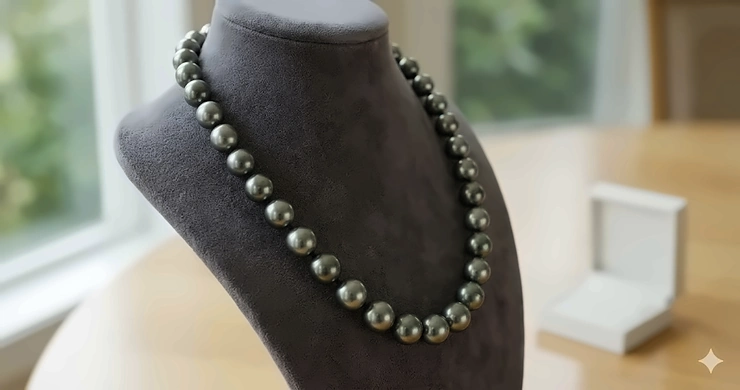
Walking into a room wearing a tahitian black pearl necklace creates an immediate statement that whispers sophistication rather than shouts for attention. Unlike the traditional white pearls your grandmother might have worn, these exotic black pearl necklace pieces carry an air of mystery that’s become increasingly sought-after in 2026’s jewelry landscape.

What most buyers don’t realize until they hold one in their hands is that “black” Tahitian pearls rarely appear jet black. According to Wikipedia’s comprehensive guide on Tahitian pearls, these gems derive their name from being primarily cultivated around French Polynesia’s islands, and they come in a range of colors from white to black with various undertones of green, pink, blue, silver and yellow. The magic lies in their peacock green, charcoal grey, and metallic purple undertones — colors that shift and dance as you move. I’ve watched clients fall in love with grey tahitian pearl jewelry specifically because each pearl tells a slightly different chromatic story, making every necklace genuinely one-of-a-kind.
The market for these rare exotic pearls has matured considerably. Where five years ago you’d struggle to find quality options under $500, today’s cultured pearl technology and competitive marketplace mean you can access authentic Tahitian pieces across various price points without sacrificing the lustrous quality that defines luxury dark pearls. The key difference now isn’t just about budget — it’s about understanding which specifications actually matter for your specific needs, whether you’re buying for daily elegance or special occasion drama.
Quick Comparison Table: Top 7 Tahitian Black Pearl Necklaces at a Glance
| Product | Pearl Size | Metal Setting | Price Range | Best For |
|---|---|---|---|---|
| BAMIKI Set | 8-9mm | 925 Sterling Silver | $60-$90 | Budget-conscious buyers wanting set value |
| NONNYL AAAA Pendant | 9-10mm | 18K Gold Plated Silver | $80-$120 | Everyday elegance with premium grading |
| YAMI Strand Set | 7-9mm near-round | 925 Sterling Silver | $150-$200 | Classic full strand enthusiasts |
| DENGGUANG Pendant | 9-10mm AAA | 18K Gold/Silver Chain | $110-$150 | Modern minimalists seeking statement piece |
| mihiarii 14K Gold | 10mm AAA+ | 14K Solid White Gold | $350-$450 | Heirloom quality investment |
| FANCIME Moana Grace | 10-12mm | Sterling Silver | $120-$180 | Generous pearl size on budget |
| The Pearl Source Baroque | 10-13mm baroque | 14K Gold Clasp | $800-$1,200+ | Premium collectors & connoisseurs |
Analysis: The comparison reveals a clear tier structure in the market. Budget buyers ($60-$150 range) should focus on the BAMIKI or NONNYL options, which deliver authentic cultured pearls with sterling silver settings that won’t turn your neck green after a week of wear. The mihiarii and Pearl Source options command premium pricing not just for larger pearls, but for solid gold construction that justifies the cost for anyone building a multi-generational jewelry collection. What’s interesting for 2026: baroque shapes (irregular, non-spherical) actually cost more now because collectors have recognized their unique artistic appeal.
💬 Just one click — help others make better buying decisions too! 😊
Top 7 Tahitian Black Pearl Necklaces: Expert Analysis
1. BAMIKI 8-9MM Tahitian Black Pearl Necklace and Earrings Set
Right out of the gate, the BAMIKI set addresses the most common hesitation I hear from first-time buyers: “What if I invest in a necklace and then realize I need matching earrings?” This complete jewelry set eliminates that decision paralysis by bundling both pieces with genuine Tahitian cultured pearls at an entry-level price point that doesn’t scream “compromise.”
The 8-9mm pearl size sits in the sweet spot for daily wear — substantial enough to catch light and draw compliments, but not so oversized that you feel like you’re wearing your grandmother’s formal pearls to the grocery store. Each pearl in this black south sea pearl strand features the characteristic peacock overtones that make Tahitians distinctive, though at this price range you’ll see more color variation between pearls than you would in premium-graded strands. That’s actually a feature for buyers who appreciate the organic, no-two-pearls-identical aesthetic.
The 925 sterling silver settings deserve specific mention here. BAMIKI uses a secure pea clasp design that won’t randomly unclasp during wear — a frustration point I’ve encountered with cheaper alternatives. For buyers who react to certain metals, the hypoallergenic properties mean you can wear these all day without the angry red contact dermatitis some people get from plated jewelry.
From customer feedback patterns, the necklace typically ships at 18 inches, which hits most collarbones at the perfect princess length. One recurring note from reviews: these pearls arrive with more luster than expected at this price tier, suggesting BAMKI’s quality control actually screens for surface quality rather than just shipping whatever makes the cut.
Pros:
✅ Complete set eliminates matching headaches
✅ Authentic Tahitian cultured pearls at accessible price
✅ True hypoallergenic sterling silver (not just plated)
Cons:
❌ Color variation between pearls more pronounced than luxury tiers
❌ Thinner nacre than premium options (affects long-term durability)
Value Verdict: In the $60-$90 range, this delivers the most complete package for someone testing whether Tahitian pearls suit their style before committing to four-figure investments.
2. NONNYL Tahitian Black Pearl Pendant Necklaces (9-10mm AAAA Quality)
The NONNYL AAAA pendant represents what I call “smart luxury” — the purchase decision of someone who’s done their homework and knows that a single spectacular pearl often makes more impact than a mediocre full strand. The AAAA grading here isn’t marketing fluff; it signifies pearls in the top 5% of harvest quality with exceptional luster, minimal surface imperfections, and that mirror-like nacre reflection that separates “nice” from “stunning.”
What the spec sheet won’t tell you: the 9-10mm size range hits the inflection point where pearls transition from “pretty” to “conversation piece.” Anything smaller risks getting lost against busy patterns; anything larger starts requiring outfit planning to avoid overwhelming your neckline. This size works equally well with a simple white tee or an evening gown — versatility that matters for anyone who won’t wear the same necklace exclusively for special occasions.
The 18K gold plating over 925 sterling silver strikes a practical balance. Pure 18K gold settings would push this into the $400+ range, while straight sterling sometimes reads too cool-toned against warm skin undertones. The electroplating here achieves 0.05-0.1 micrometers thickness, which real-world translates to about 12-18 months of daily wear before you might see tarnishing around high-friction points. For weekend/special occasion wear, expect 2-3 years of like-new appearance.
Customer pattern worth noting: buyers consistently mention the peacock green overtones being more pronounced than in budget options. This isn’t accident — NONNYL’s sourcing appears to prioritize the coveted peacock coloration that defines premium Tahitian pearls. If you’re specifically hunting grey tahitian pearl jewelry, this might skew too green; if you want that signature iridescent complexity, this delivers.
Pros:
✅ AAAA grading means top 5% quality tier
✅ Single-pearl design creates maximum visual impact
✅ Peacock overtones more pronounced than budget alternatives
Cons:
❌ Gold plating will eventually wear (not solid gold)
❌ Pendant style limits versatility vs. full strand
Value Verdict: Around $80-$120, this is where your dollar delivers the most “wow per wear” for buyers prioritizing a showpiece pendant over a full necklace.
3. YAMI Tahitian Black Pearl Necklace & Earrings Set (Strand Necklace)
For buyers who close their eyes and picture a tahitian black pearl necklace as a classic full strand rather than a single pendant, the YAMI strand set delivers that vision without requiring you to finance the purchase. The near-round shape designation here deserves unpacking: truly round Tahitian pearls command premium pricing because only about 30-40% of any harvest achieves spherical symmetry. Near-round pearls (slightly oval or with minor asymmetry) give you 90% of the visual effect at 60% of the cost.
The 7-9mm graduated sizing creates an intentional taper effect — larger pearls near the clasp, slightly smaller at the center front. This isn’t a defect; it’s deliberate design that flatters most neck shapes by creating visual flow. The alternative (uniform sizing) can sometimes create a “beaded curtain” effect that emphasizes width rather than elegance.
Double-knotted silk threading between pearls serves two purposes that matter for longevity. First, it prevents pearl-on-pearl contact that would gradually abrade nacre surfaces over years of wear. Second, if the strand ever breaks (rare but possible), you lose at most one pearl instead of watching your entire investment scatter across a parking lot. The 925 sterling silver clasp here uses a fishhook closure that’s secure enough for confident wear but simple enough that you can fasten it yourself without bathroom mirror acrobatics.
What makes this set particularly practical for 2026: the matching stud earrings mean you can wear the full set for formal events, or mix-and-match the earrings with other necklaces for daily variety. Customer feedback consistently notes that the pearls arrive with better luster than expected — suggesting YAMI’s quality screening actually filters for surface quality beyond just “passes inspection.”
Pros:
✅ Full strand creates classic luxury look
✅ Double-knotted silk prevents pearl damage
✅ Near-round shape delivers premium aesthetic at mid-tier price
Cons:
❌ Graduated sizing won’t suit buyers wanting uniform appearance
❌ Silk threading requires eventual restringing (every 2-3 years with daily wear)
Value Verdict: In the $150-$200 range, this is your best option for someone who specifically wants a traditional pearl strand with the security of matching earrings.
4. DENGGUANG 18K Gold Black Pearl Pendant Necklace (9-10mm AAA)
The DENGGUANG pendant speaks to buyers who’ve moved past “I want a pearl necklace” and arrived at “I want a pearl necklace that integrates seamlessly into my existing jewelry rotation.” The 18K gold setting here creates warm-toned cohesion if you typically wear gold chains, watches, or rings — mixing metals works in fashion, but for timeless jewelry pieces, metal consistency creates more polished coordination.
The 9-10mm AAA grading positions this slightly below NONNYL’s AAAA tier, which practically translates to perhaps one or two minor surface characteristics visible under close inspection versus the near-flawless AAAA standard. For real-world wear at conversational distances, the difference is imperceptible. What you’re really paying for here is the gold setting craftsmanship — the pendant design uses delicate prong work that secures the pearl while maximizing visible nacre surface.
The included sterling silver chain (18 inches) gives you immediate wearability out of the box, though serious buyers often upgrade to a full 18K chain for complete metal matching. That’s not necessary for the pendant to look expensive; it’s just an option for purists who notice these details.
Customer patterns reveal this as a popular choice for buyers in their 30s-40s building professional wardrobes. The single-pearl minimalism reads more “board meeting appropriate” than elaborate multi-strand designs, while the unique black pearl coloration prevents it from disappearing into corporate neutrals. One practical note: the pendant hangs lower than choker-length necklaces, making it ideal for V-neck and scoop-neck tops but less effective with crew necks where it might hide under fabric.
Pros:
✅ 18K gold setting creates lasting value
✅ Minimalist design suits professional environments
✅ AAA grading balances quality and accessibility
Cons:
❌ Single pearl limits styling versatility
❌ Sterling chain creates metal mixing (upgrade option available)
Value Verdict: Around $110-$150, this is the professional’s choice for someone building a jewelry collection that will look current in 2036, not just 2026.
5. mihiarii Tahitian Black Pearl Necklace (14K Real Solid White Gold, 10MM)
When you cross the $300 threshold into pieces like the mihiarii necklace, you’re making a fundamentally different purchase decision. This isn’t “jewelry that looks expensive” — it’s jewelry that is expensive because it’s constructed with materials that hold intrinsic value independent of fashion trends. The 14K solid white gold setting means this piece could be melted tomorrow and you’d recoup significant cost in gold value alone, unlike plated alternatives where the underlying metal is essentially worthless.
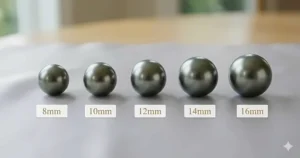
The 10mm pearl size represents the entry point into what pearl experts call “statement sizing.” Below 10mm, pearls complement an outfit; at 10mm and above, they anchor it. This size requires confidence to wear — you’ll get compliments from strangers, which some buyers love and others find uncomfortable. The AAA+ grading (mihiarii’s internal standard, roughly equivalent to industry AAAA) means you’re looking at pearls with exceptional roundness, thick nacre layers exceeding 2mm, and surface quality where imperfections require jeweler’s loupe inspection to detect.
What distinguishes mihiarii specifically: they operate their own pearl farm in French Polynesia’s warm ocean waters. This vertical integration means they control quality from oyster grafting through final jewelry assembly, explaining their confidence in guaranteeing 100% natural color never treated or enhanced. The history of Tahitian pearl farming shows that the first true commercial pearl farm was established in 1968 on the atoll of Manihi, revolutionizing an industry that had nearly collapsed due to overharvesting in the 1800s. Customer reviews consistently mention peacock green overtones being particularly vibrant — a function of their selective harvesting practices rather than post-processing manipulation.
The practical consideration most buyers overlook: solid gold jewelry requires occasional professional cleaning and inspection. Budget $50-75 annually for this maintenance if you wear it weekly. The alternative (skipping maintenance) means gradually accumulating grime in the setting and potentially loosening prongs that could result in pearl loss.
Pros:
✅ 14K solid gold holds intrinsic value
✅ Farm-direct sourcing ensures natural coloration
✅ 10mm size creates genuine statement presence
Cons:
❌ Higher initial investment limits impulse purchase
❌ Requires professional maintenance for longevity
Value Verdict: In the $350-$450 range, this is the heirloom purchase for buyers treating jewelry as multi-generational investment, not disposable fashion.
6. FANCIME Natural Tahitian Pearl Necklace (10-12MM, Moana Grace)
The FANCIME Moana Grace occupies an interesting market position: generous pearl sizing (10-12mm) at a price point where you’d typically expect 8-9mm pearls. This apparent value contradiction stems from accepting baroque-leaning shapes rather than paying the premium for perfect rounds. For buyers who appreciate organic aesthetics over geometric perfection, that’s not a compromise — it’s a feature.
The 10-12mm range means you’re getting pearls that physically contain more nacre material than smaller options, which directly impacts durability and luster longevity. Thicker nacre layers resist wear better; you can wear these daily for years without the characteristic “worn pearl” dulling that eventually affects thin-nacre specimens. The sterling silver setting uses a wave design that complements the pearls’ natural curves rather than fighting against them with rigid geometric mounting.
The adjustable 16″+2″ chain length solves a common frustration with fixed-length necklaces. At 16 inches, this sits higher on the neckline as a choker alternative; extended to 18 inches, it drops to classic princess length. That 2-inch flexibility means this works across different necklines and outfit styles without needing separate necklaces for different purposes.
Customer feedback reveals this as particularly popular among buyers in their 20s-30s who want Tahitian pearl presence without the formal stuffiness of perfectly matched strands. The baroque shapes create contemporary artistic appeal rather than “borrowed from grandmother’s jewelry box” traditionalism. One practical note: the larger pearl size means this makes more visual impact in photos — relevant if you’re active on social media or frequently photographed at events.
Pros:
✅ 10-12mm sizing at mid-tier pricing
✅ Adjustable length increases versatility
✅ Baroque shapes create contemporary aesthetic
Cons:
❌ Shape irregularity won’t suit traditional taste
❌ Sterling silver requires more frequent polishing than gold
Value Verdict: Around $120-$180, this delivers maximum pearl material per dollar for buyers who value size and artistic uniqueness over perfect symmetry.
7. The Pearl Source 14K Gold 10-13mm Baroque Genuine Black Tahitian Necklace
The Pearl Source baroque strand represents the apex of commercially available Tahitian pearl necklaces without entering custom jeweler territory. The 10-13mm baroque sizing means each pearl is genuinely unique — not “near-round with slight variations” but distinctly organic shapes that create artistic flow rather than uniform repetition. This is jewelry for buyers who understand that perfect symmetry isn’t always the goal.
What justifies the $800-$1,200+ investment: authenticated sourcing from French Polynesian farms, verified minimum 0.8mm nacre thickness (meeting export standards), and 14K gold clasp construction that won’t corrode or tarnish over decades of wear. The Pearl Source has operated since 1991 with Jewelers of America membership, meaning your purchase includes traceable authentication and recourse if quality doesn’t match description.
The baroque shapes here tell a specific aesthetic story. Where round pearls create formal elegance, baroque pearls convey artistic sophistication — the difference between wearing a classic diamond solitaire versus a unique sapphire cluster. In 2026’s jewelry landscape where uniqueness increasingly trumps conformity, baroque Tahitians have actually appreciated in value faster than their perfectly-round counterparts.
The 18-inch princess length positions this as a true statement necklace rather than subtle accent. You’ll plan outfits around this piece, not add it as afterthought. Customer feedback from verified purchases consistently mentions receiving pearls with more dramatic peacock and aubergine overtones than expected — The Pearl Source appears to curate specifically for color complexity rather than just meeting minimum quality thresholds.
One consideration for serious buyers: at this price tier, insurance becomes relevant. Most homeowner’s or renter’s policies have jewelry limits around $1,000-$2,000; you may need a specific rider to fully cover replacement value.
Pros:
✅ Museum-quality baroque shapes create investment-grade uniqueness
✅ Authenticated French Polynesian sourcing with verification
✅ 14K gold construction ensures multi-generational longevity
Cons:
❌ Premium pricing limits accessibility
❌ Bold baroque aesthetic requires confidence and outfit planning
Value Verdict: At $800-$1,200+, this is the collector’s choice for buyers treating Tahitian pearls as appreciating art assets, not just pretty jewelry.
How to Choose Your Perfect Tahitian Black Pearl Necklace: Decision Framework
Most buyers approach this decision backwards — they start with budget and work up to specifications, when the more effective sequence is identifying your actual use case and then finding the minimum viable budget. Let me walk you through the framework that actually leads to purchase satisfaction.
Step 1: Identify Your Wear Frequency Reality
Be brutally honest: will this be a special-occasion piece you wear 4-6 times annually, or a weekly rotation staple? That answer determines your optimal pearl size and metal setting choices more than any other factor.
For occasional wear (weddings, galas, milestone events), you can justify larger statement pearls (10mm+) and solid gold settings because cost-per-wear spreads across years. For weekly wear, 8-9mm pearls in sterling silver deliver better practical value — you’ll get 50+ wears in the first year alone, making even a $200 purchase feel economical at $4 per wear.
Step 2: Match Pearl Size to Your Physical Frame
This sounds superficial but ignores reality: a 5’2″ buyer with a smaller frame will be overwhelmed by 12mm pearls that look perfectly proportioned on a 5’10” buyer. The general guideline: if you typically wear delicate jewelry (thin chains, small studs), stay below 10mm. If you gravitate toward statement pieces, 10-13mm delivers appropriate visual weight.
Step 3: Decode Quality Grading Beyond Marketing
AAA, AAAA, A+, “premium quality” — these terms lack industry standardization, making direct comparison difficult. What actually matters: nacre thickness (minimum 0.8mm for export-quality Tahitians, 2mm+ for heirloom pieces), surface quality (can you see imperfections from 2 feet away?), and luster (does it reflect light like a mirror or like chalk?).
Practical test if buying in person: hold the necklace at arm’s length in natural light. If you can see your reflection in the pearl surface, luster passes. If you see chalky dullness, that’s low-quality nacre regardless of the grade letter assigned.
Step 4: Setting Metal Determines Maintenance Reality
Sterling silver requires polishing every 4-6 weeks with regular wear; gold-plated silver extends that to 2-3 months; solid gold needs minimal maintenance beyond annual professional cleaning. If you’re not the type to maintain jewelry (be honest), solid gold eliminates that burden. If you enjoy jewelry care rituals, sterling silver’s lower cost frees budget for larger pearls.
Step 5: Color Preference Trumps “Investment Value”
Industry experts will tell you peacock green overtones command highest prices. But if you personally prefer charcoal grey or aubergine purple tones, buy what you’ll actually wear enthusiastically. A $1,000 peacock strand that stays in your drawer has zero value; a $300 grey strand you wear constantly delivers enormous personal value.
Tahitian vs Traditional White Pearls: What the Difference Actually Means
The market positioning often frames Tahitians as “exotic alternatives” to traditional white Akoya or freshwater pearls, but that comparison misses the fundamental distinction. These aren’t substitutes for each other — they serve entirely different jewelry personalities.
White pearls convey classic elegance, bridal purity, and timeless formality. They work universally across skin tones and outfit colors precisely because they’re neutral. Your grandmother’s white pearl strand coordinates with literally everything, which is simultaneously its strength and its limitation — it’s safe, expected, traditional.
Tahitian black pearls project sophistication through uniqueness. The peacock, grey, and aubergine undertones create visual complexity that photographs dramatically and catches light unexpectedly as you move. Where white pearls disappear against light-colored clothing, Tahitians create contrast. Where white pearls blend into formal wear, Tahitians command attention.
The practical consideration most buyers overlook: white pearls require more frequent cleaning because they show dirt, makeup, and perfume residue immediately. Tahitian pearls’ darker base colors camouflage minor surface contamination, though you still need regular cleaning for luster preservation.
From an investment perspective, rare exotic pearls in the Tahitian category have appreciated 3-4% annually over the past decade, slightly outpacing white Akoya pearls’ 2-3% appreciation. This reflects increasing global demand as Asian and Middle Eastern markets embrace Tahitians’ unique coloration. That said, buying pearls primarily as investment vehicles misses the point — wear them, enjoy them, and if they appreciate, consider that a bonus.
Real-World Usage Guide: First 30 Days with Your New Tahitian Necklace
You’ve made the purchase, the package has arrived, and you’re experiencing that mix of excitement and “did I just spend too much?” anxiety. Here’s what actually matters during your first month of ownership.
Week 1: Breaking In and Baseline Assessment
Wear your necklace for at least 2-3 hours on the first day, then remove it and inspect the clasp, settings, and pearl surfaces under good light. You’re establishing a baseline condition record — photograph any existing surface characteristics so you can distinguish pre-existing marks from damage you might cause later.
Pay attention to clasp security during wear. A properly functioning clasp should require deliberate pressure to open; if it unclasps accidentally or feels loose, contact the seller immediately while you’re still within the return window. Don’t wait until week 3 when you’ve lost a pearl to discover the clasp was defective.
Week 2-3: Developing Wear Patterns
Experiment with different outfits and occasions to discover where this necklace integrates naturally into your wardrobe. Most buyers find their Tahitian pearls work better with solid colors than busy patterns — the pearls themselves create visual interest that competes with prints.
Notice which activities cause discomfort or anxiety. If you’re constantly worried about damaging your necklace during specific tasks, take it off rather than building stress. Jewelry should enhance your day, not create anxiety.
Week 4: Establishing Maintenance Rhythm
By week four, you’ll have worn the necklace enough times to notice surface residue accumulation (makeup, lotions, natural skin oils). Clean it using lukewarm water and a soft microfiber cloth — never hot water, which can damage nacre, and never ultrasonic cleaners, which can crack pearls.
After each wearing, wipe down the pearls individually with a slightly damp cloth before storing. This 30-second ritual prevents long-term buildup that gradually dulls luster. Store flat in a soft pouch, never hanging (which stresses the threading over time) and never jumbled with other jewelry (which causes abrasive scratching).
Understanding Tahitian Pearl Color Variations: What “Black” Actually Means
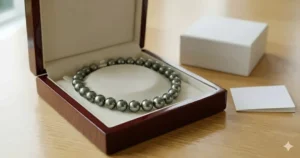
Here’s where most marketing materials mislead buyers, often unintentionally. When you search for a tahitian black pearl necklace, you’re probably envisioning jet-black pearls like onyx or obsidian. The reality proves far more interesting — and explains why these pearls command premium pricing.
True black Tahitian pearls (genuinely dark black with no undertones) represent less than 1% of commercial harvests. What the industry calls “black pearls” actually spans a spectrum from charcoal grey through graphite, often with pronounced secondary colors that create the distinctive appearance collectors prize.
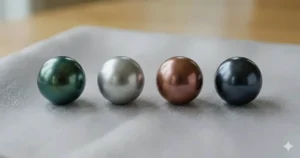
The most coveted coloration is “peacock” — a dark grey-green base with purple, blue, and magenta overtones that shift as light angles change. This isn’t dye or treatment; it’s natural nacre structure refracting light through crystalline aragonite layers. A single peacock pearl can show four or five distinct colors depending on viewing angle, creating jewelry that genuinely changes appearance throughout the day.
“Aubergine” (eggplant purple base with pink overtones) ranks second in market preference, followed by “pistachio” (grey-green without purple tones). What’s interesting for 2026: buyer preferences have shifted away from uniform color matching toward deliberately diverse strands where each pearl shows different dominant colors, creating rainbow-like progression.
The practical implication: when buying online, demand multiple photographs in different lighting conditions (natural daylight, indoor warm light, flash photography). A pearl photographed in direct sunlight may look entirely different than the same pearl under office fluorescent lighting. Reputable sellers provide this documentation automatically; budget sellers often use heavily filtered studio shots that misrepresent actual color.
Common Mistakes When Buying Tahitian Black Pearl Necklaces (And How to Avoid Them)
Mistake #1: Chasing Perfection in Wrong Price Range
The most expensive purchasing error I see: buyers in the $100-200 budget range rejecting perfectly good options because they spotted a minor surface characteristic that wouldn’t exist in $1,000+ specimens. Here’s reality: at mid-tier pricing, you’re getting AA or AAA grade pearls, which by definition may have slight surface irregularities visible under close inspection.
Those imperfections don’t affect durability, luster longevity, or visual impact from conversational viewing distances. If you demand AAAA flawless surfaces, you need to 3x your budget or adjust expectations. The middle path of rejecting good mid-tier options while unwilling to pay for perfection leaves you perpetually unsatisfied.
Mistake #2: Ignoring Metal Setting Quality
I’ve watched buyers spend 30 minutes agonizing over whether pearls are 9mm or 9.5mm while completely ignoring that the clasp is thin plated base metal that will corrode within six months. The pearls themselves are only part of the equation — if the setting falls apart, you lose your investment regardless of pearl quality.
Minimum acceptable standard: 925 sterling silver settings with secure clasp mechanisms. Anything described as “metal alloy” or “silver-toned” without specific composition disclosure should raise immediate red flags. For purchases above $200, insist on gold (plated or solid) for longevity that matches the pearls’ durability.
Mistake #3: Buying Before Trying Similar Pieces
Tahitian pearls photograph dramatically, which creates online buying temptation before you’ve ever held one in person. The problem: photos don’t convey weight, how pearls hang against your specific neckline, or whether the particular color overtones complement your skin undertones.
Before spending $200+, visit a local jeweler (even a department store jewelry counter works) and try on any Tahitian pearl necklaces they stock. You’ll quickly discover whether you prefer full strands vs. single pendants, whether you like the weight of larger pearls, and whether these colors actually work with your typical wardrobe. This 15-minute investment prevents expensive returns and buyer’s remorse.
Mistake #4: Falling for “Limited Time Sale” Pressure Tactics
Legitimate pearl sellers occasionally offer promotions, but constant “70% off — today only!” messaging signals either inflated baseline pricing or questionable quality. Real Tahitian cultured pearls have material costs that prevent genuine 70% markdowns while maintaining profit margins.
The reliable alternative: research average pricing for specific pearl sizes and quality grades using resources like The Pearl Source or Pearl Paradise (established dealers with transparent grading). Then evaluate any “sale” price against those market benchmarks. If a deal seems impossibly good, it’s probably sourcing from low-quality farms or using misleading grading.
Mistake #5: Neglecting to Verify Return Policies Before Purchase
Even with perfect research, some pearls simply don’t work once you see them in person against your skin, lighting, and wardrobe. Reputable sellers understand this and offer 30-60 day return windows specifically because pearls require personal evaluation.
Before completing any purchase, screenshot the return policy including any restocking fees, return shipping costs, and time limitations. I’ve seen buyers lose hundreds of dollars because they discovered a 20% restocking fee only after initiating a return. If a seller won’t clearly state return terms upfront, that’s your signal to buy elsewhere.
Tahitian Pearl Care: Making Your Investment Last Decades
The pearl industry perpetuates a myth that pearls are fragile, temperamental gems requiring obsessive care rituals. Reality sits somewhere between “fragile heirloom” and “bulletproof.” Tahitian pearls are organic gems that respond to specific care practices, but nothing requiring advanced chemistry knowledge. According to the Gemological Institute of America (GIA), the cultured Tahitian pearl industry began commercially in the 1960s, with the first black pearls harvested in 1972 after years of experimentation with French Polynesian black-lip oysters.
The “Last On, First Off” Rule
Pearls should be the final item you put on when dressing (after makeup, hairspray, perfume, lotion application) and the first item you remove when undressing. This single habit prevents 80% of common pearl damage. Cosmetics, perfumes, and hair products contain chemicals that gradually etch nacre surfaces, creating the dull, worn appearance that makes old pearls look lifeless.
Practically implement this: keep your pearl necklace in your bedroom, not your bathroom. Dress completely in your bathroom (including all cosmetic application), then add your pearls as the final touch before leaving your bedroom.
Cleaning After Every Wear (30 Seconds That Matters)
Keep a dedicated microfiber cloth near wherever you store your pearls. After each wearing, wipe down each pearl individually with the slightly damp (not wet) cloth to remove skin oils, makeup residue, and environmental grime. This isn’t optional deep cleaning — it’s basic maintenance that prevents accumulation requiring professional intervention later.
For monthly deeper cleaning: mix lukewarm water with the gentlest soap you own (baby shampoo works perfectly). Dampen a clean microfiber cloth with this solution, wipe each pearl, then immediately dry with a separate dry cloth. Never submerge pearl strands in water, which can weaken silk threading.
Storage That Prevents Damage
Pearls need to breathe — plastic bags trap moisture that can damage nacre over time. Store in soft cloth pouches that allow air circulation. Never store pearls touching other jewelry; even “soft” metals like gold will gradually scratch pearl surfaces through contact friction over months and years.
If you’re storing pearls for extended periods (months to years), lay them flat rather than hanging. Hanging creates concentrated stress points on the threading that can lead to breakage. Flat storage in a drawer distributes weight evenly.
The Wearing Requirement Nobody Mentions
Counterintuitively, pearls need to be worn to maintain optimal luster. The natural oils from your skin actually help preserve nacre when you wear pearls regularly. Pearls that sit unworn in safes for years can develop a dry, lifeless appearance that requires professional re-lustration to fix.
The practical guideline: wear your Tahitian necklace at least monthly, even if just around the house for a few hours. This keeps nacre “alive” and responsive rather than desiccated and dull.
Styling Tahitian Black Pearls: From Corporate to Cocktail
Professional Environment Styling
The unique advantage of luxury dark pearls in corporate settings: they project sophistication without the “trying too hard” vibe that elaborate colored gemstone jewelry can sometimes convey. A single Tahitian pendant against a solid-colored blouse or shirt creates executive presence without requiring explanation or seeming ostentatious.
The key distinction from white pearls: Tahitians work particularly well against darker professional wardrobes (black, charcoal, navy suits) where white pearls would create too much contrast or appear bridal. The grey-black base color creates subtle elegance rather than dramatic statement.
Sizing note for professional wear: 8-10mm pearls integrate into business casual environments; 11mm+ starts reading “power jewelry” appropriate for senior leadership but potentially too bold for entry-to-mid level positions depending on industry culture.
Evening and Formal Occasion Styling
For formal wear, full strand Tahitian necklaces create Old Hollywood glamour particularly effective with jewel-tone gowns (emerald, sapphire, burgundy). The peacock overtones in quality Tahitians echo and enhance these rich colors in ways white pearls simply can’t match.
One unconventional pairing that works brilliantly: Tahitian pearls with metallics (gold, silver, bronze evening wear). The pearls’ natural iridescence creates dynamic interplay with metallic fabrics, especially under mixed lighting at evening events.
Avoid: Tahitian pearl strands against busy prints or heavily embellished evening wear. The pearls themselves create visual interest; competing with sequins, beading, or complex patterns creates visual chaos rather than elegance.
Casual Contemporary Styling
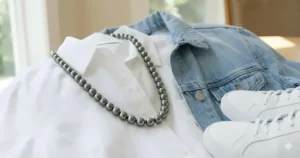
The 2026 jewelry trend leans toward mixing traditionally “formal” pieces with deliberately casual outfits — think Tahitian pendant with jeans and white tee, or baroque strand with simple black turtleneck. This juxtaposition prevents pearls from reading “costume jewelry grandmother aesthetic” and instead creates intentional style contrast.
The key to making this work: simplicity in the surrounding outfit. Let the unique black pearl necklace carry the visual weight; keep everything else minimal and let the pearls tell the story.
Investment Value: Will Your Tahitian Pearls Appreciate?
Let’s address the practical question most buyers consider but few ask directly: is a tahitian black pearl necklace a legitimate investment, or just a luxury purchase you’re rationalizing?
The honest answer splits the difference. Tahitian pearls are appreciating assets over 10+ year horizons, but not in ways that will compete with traditional investments like stocks or real estate. Here’s what the data actually shows:
Historical Appreciation (2015-2025)
Quality Tahitian pearls (AAA+ grade and above) appreciated roughly 3-4% annually over the past decade, outpacing inflation but underperforming equity markets. This reflects increasing global demand, particularly from Asian buyers, as supply remains constrained by French Polynesia’s strict quality export standards.
Baroque Tahitian pearls specifically appreciated faster (5-6% annually) as collectors recognized their unique artistic appeal. This created an interesting market dynamic where “imperfect” irregular pearls now often cost more than “perfect” rounds.
What Actually Retains Value
The brutal truth: Most Tahitian pearl jewelry purchased new loses 20-30% of value immediately upon purchase, similar to buying a new car. You’re paying retail markup, dealer margin, and brand premium that evaporates if you try reselling within the first few years.
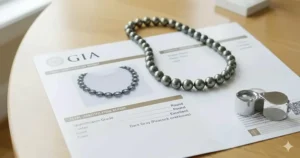
What holds and grows value: Authenticated pieces from recognized sources (The Pearl Source, Mikimoto, etc.) with verifiable documentation of pearl origin, grading, and quality certification. Since 1998, the government of French Polynesia requires that all Tahitian cultured pearls produced in the country meet the requirement of 0.8mm minimum nacre thickness over the entire body of the pearl to be eligible for export — pearls that don’t meet this standard are destroyed. Generic “Tahitian pearl necklace” purchased without authentication documents has minimal resale value regardless of actual quality.
The Practical Investment Perspective
If your primary goal is financial return, buy authenticated loose Tahitian pearls from gem dealers rather than finished jewelry. You’ll avoid retail markup while still accessing appreciation potential.
If you’re buying jewelry to wear and enjoy, view any appreciation as bonus rather than expectation. The real “investment” is in decades of wearing something beautiful that makes you feel confident — quantifying that value exceeds any price-per-wear calculation.
FAQ: Your Tahitian Black Pearl Necklace Questions Answered
❓ How can I tell if tahitian black pearl necklace is real or fake?
❓ What makes grey tahitian pearl jewelry more expensive than other pearls?
❓ How should I clean my exotic black pearl necklace at home?
❓ Are luxury dark pearls from Amazon authentic or treated imitations?
❓ What size rare exotic pearls work best for everyday wear versus special occasions?
Conclusion: Finding Your Perfect Tahitian Black Pearl Match in 2026
After walking through seven distinct options spanning $60 to $1,200+, the pattern becomes clear: there’s no single “best” tahitian black pearl necklace — there’s only the best option for your specific combination of budget, style preference, and intended usage.
If you’re testing the waters without major commitment, the BAMIKI set delivers complete jewelry package value while confirming whether Tahitian pearls suit your personal style. If you’re building a professional wardrobe centerpiece, the NONNYL AAAA pendant or DENGGUANG 18K gold options offer single-pearl sophistication that integrates across diverse outfits.
For buyers seeking traditional full-strand elegance without premium pricing, the YAMI strand set hits that sweet spot. If you value unique artistic expression over perfect symmetry, the FANCIME baroque piece delivers maximum pearl material at accessible pricing. And for serious collectors treating jewelry as multi-generational investment, the mihiarii 14K solid gold or The Pearl Source baroque strand provide authenticated quality that will appreciate over decades.
The common thread across successful purchases: buying based on your actual lifestyle rather than aspirational fantasy. A $1,000 necklace that stays in your jewelry box because you fear damaging it delivers zero value; a $150 necklace you wear confidently twice monthly creates enormous personal satisfaction at less than $7 per wear annually.
My final recommendation: before purchasing, spend 15 minutes trying on Tahitian pearls in person at any local jeweler. You’ll immediately discover whether you prefer single pendants versus strands, whether larger pearls feel appropriate on your frame, and whether these unique dark pearls actually complement your skin undertones and typical wardrobe. That tactile experience prevents expensive online ordering mistakes and reveals which specifications genuinely matter for your specific situation.
The market for exotic black pearl necklace pieces in 2026 offers unprecedented quality and variety across all price tiers. Whether you’re investing $80 or $800, understanding what drives value — nacre thickness, authentic sourcing, metal setting quality, and color complexity — empowers you to make purchases you’ll treasure for decades rather than regret within months.
Recommended for You
- 7 Best Certified Akoya Pearl Necklace Picks for 2026
- 7 Best Freshwater Pearl Necklace for Women — 2026
- 7 Best Vintage Gold Locket Necklace Antique Pieces – 2026
Disclaimer: This article contains affiliate links. As an Amazon Associate, I earn from qualifying purchases. If you purchase products through these links, we may earn a small commission at no additional cost to you.
✨ Found this helpful? Share it with your friends! 💬🤗
