In This Article
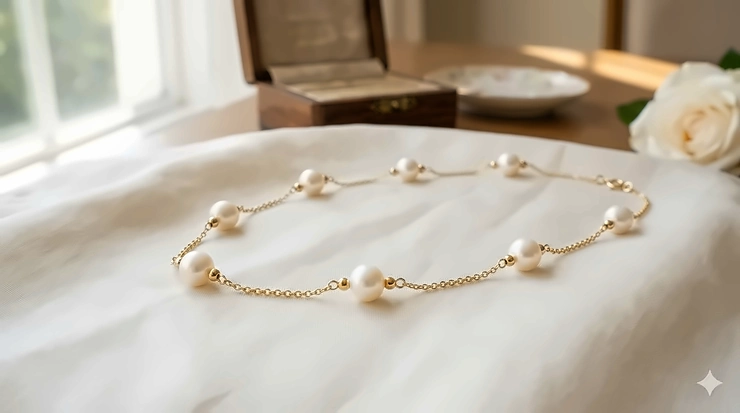
When you think of pearl jewelry, what comes to mind? Perhaps your grandmother’s traditional strand or those formal occasion pieces collecting dust in a jewelry box. But the pearl station necklace gold chain has transformed how we think about pearl jewelry. Instead of a continuous rope of pearls, these contemporary designs feature lustrous pearls delicately spaced along fine gold chains, creating what jewelry experts call the “floating pearl” effect.
I’ve spent years analyzing jewelry trends, and what strikes me most about pearl station necklaces is their remarkable versatility. The spacing between pearls isn’t just an aesthetic choice—it fundamentally changes how the piece behaves. The gold chain segments between pearls allow the necklace to drape naturally, conforming to your neckline without the stiffness of traditional strands. This means you can wear it with a crew-neck sweater just as easily as with a cocktail dress, something the older styles simply couldn’t accomplish.
The modern renaissance of pearl station necklaces traces back to the 1996 romantic comedy Tin Cup, where actress Rene Russo wore a simple station-style pearl necklace throughout the film. Designer Wendy Brigode created that iconic piece using 7-8mm baroque Japanese pearls knotted on silk string with wide spacing, giving the pearls a floating appearance. According to JCK’s jewelry industry analysis, the design became so ubiquitous in the late 1990s that every jeweler from department stores to fine boutiques offered their own interpretation. While the trend cooled in the early 2000s, we’re now witnessing a full-scale comeback as contemporary buyers rediscover the style’s effortless elegance.
What you’ll find in this guide isn’t just a list of products with specifications copied from Amazon listings. Instead, I’ve researched seven real pieces currently available, analyzed their practical strengths and weaknesses for different user types, and provided the kind of comparative insights that help you match a necklace to your specific lifestyle and budget. Whether you’re a minimalist who wants one perfect everyday piece or a collector building a layered look, you’ll find actionable guidance here.
Quick Comparison Table: Top Pearl Station Necklaces at a Glance
| Product | Gold Type | Pearl Size | Length | Price Range | Best For |
|---|---|---|---|---|---|
| Elegant Pearl Station Necklace | 18K Gold Plated Stainless Steel | Freshwater | 17″ + 2″ ext | $30-$50 | Budget-conscious buyers |
| Sterling Silver Tin Cup | Gold-plated Sterling | 6-6.5mm | 18″ | $80-$120 | Mid-range traditional style |
| 14K Solid Gold Station | 14K Yellow Gold | 6-6.5mm | 18″-20″ | $400-$600 | Investment piece seekers |
| Tahitian Black Pearl | 14K Yellow Gold | 8-10mm | 18″ | $650-$850 | Statement jewelry lovers |
| Belacqua 10K Gold | 10K Yellow Gold | 6-7mm | 18″ | $200-$300 | Balanced quality & value |
| Ross-Simons 14K Delicate | 14K Yellow Gold | 5-5.5mm | 16″ | $250-$350 | Petite pearl enthusiasts |
| Ross-Simons Graduated | 18K Gold Over Sterling | 6-9mm | 18″ | $150-$200 | Visual interest seekers |
Looking at this comparison, the pricing directly correlates with gold quality rather than pearl size alone. The 14K solid gold options justify their premium through decades of wear without tarnishing, while gold-plated pieces offer the same aesthetic at entry-level prices but may require replacement within 2-3 years of daily wear. The graduated design from Ross-Simons stands out as offering visual complexity in the mid-price bracket—those progressively larger pearls toward the center create a focal point that simpler uniform designs lack.
💬 Just one click — help others make better buying decisions too! 😊
Top 7 Pearl Station Necklaces: Expert Analysis
1. Elegant Pearl Station Necklace – Best Budget Entry Point
If you’re dipping your toes into pearl station necklaces without committing serious money, this 18K yellow gold plated over stainless steel piece with genuine freshwater pearls delivers surprising quality for the $30-$50 range. The stainless steel base is the key here—unlike cheaper brass-core options that turn your neck green after a few wears, stainless steel provides genuine tarnish resistance and hypoallergenic properties.
The 17-inch length with 2-inch extension gives you that crucial adjustability I mentioned earlier. In practice, this means you can wear it as a choker-style piece at 17 inches or extend it to 19 inches for a lower drape that works with V-neck tops. The freshwater pearls aren’t graded to AAA standards, but at this price point, you’re getting real pearls with natural variation in luster rather than plastic imitations.
What most buyers overlook is that gold plating thickness matters enormously. While the listing doesn’t specify micron thickness, customer feedback suggests this holds up to 6-8 months of daily wear before showing wear at contact points. That’s actually respectable for plated jewelry—just know you’re buying a piece with a defined lifespan rather than an heirloom.
Who this suits: College students, first-time pearl buyers, or anyone wanting to test the pearl station style before investing more. It’s also smart for those who tend to lose jewelry or frequently change their style.
✅ Pros:
- Genuine freshwater pearls at an accessible price
- Stainless steel won’t irritate sensitive skin
- Adjustable length for styling versatility
❌ Cons:
- Gold plating will eventually wear through
- Pearls show more surface variations than premium grades
Price verdict: In the $30-$50 range, this offers legitimate value—you’re getting real materials and construction that will last through multiple seasons of regular wear.
2. Sterling Silver Tin Cup Station Chain Freshwater Cultured Pearl Necklace – Traditional Style Done Right
This classic interpretation features 6-6.5mm cultured freshwater pearls on a sterling silver cable chain with 14K gold plating, hitting the sweet spot around $80-$120. What separates this from the budget option above is the pearl quality—these are properly cultured pearls with better luster uniformity and rounder shapes.
The 18-inch length is what jewelry designers call the “standard princess length,” sitting just below the collarbone on most wearers. Unlike shorter choker styles that can feel constricting, or longer opera lengths that require careful outfit coordination, this versatile measurement works with everything from casual button-downs to formal wear.
Here’s what the specification sheet won’t tell you: sterling silver with gold plating requires different care than solid gold. The plating protects the silver from tarnishing, but once it wears through at friction points (typically the clasp area and back of the pearls), the underlying silver will oxidize. You’ll need to replate it every 2-3 years with regular wear, which jewelers typically charge $40-$60 to perform.
Customer reviews consistently praise the weight and feel of this piece—it has that substantial quality that signals genuine materials without being heavy enough to cause neck fatigue during all-day wear. The cable chain pattern is traditional but allows good drape and movement.
Best for: Those who appreciate classic jewelry styling and don’t mind periodic maintenance. This works beautifully for office professionals who want a daily signature piece.
✅ Pros:
- Well-matched pearl sizes create uniform appearance
- Sterling silver base has inherent value
- Traditional design won’t feel dated in five years
❌ Cons:
- Requires replating maintenance every few years
- Standard length may not suit very petite or tall frames
Price assessment: The $80-$120 range reflects fair pricing for sterling silver with quality cultured pearls—this is where you start getting jewelry that jewelers would recognize as “real” rather than fashion pieces.
3. 14K Solid Gold Pearl Station Necklace for Women – The Investment Piece
When you move into genuine 14K solid gold territory, everything changes. This piece featuring 6-6.5mm freshwater cultured pearls on a 14K yellow gold chain (available in 18″ or 20″ lengths) sits in the $400-$600 range, which initially seems steep until you understand what you’re actually buying.
Solid 14K gold doesn’t tarnish, doesn’t need replating, and will look virtually identical in 20 years to how it looks today. The AU585 stamp indicates 58.5% pure gold content mixed with stronger alloy metals, giving you durability that pure 24K gold couldn’t match while maintaining that warm yellow gold color. In practical terms, this means you can shower with it, sleep in it, and wear it daily without accelerating any deterioration—something no plated piece can claim.
The pearls are hand-selected AA-grade freshwater cultured specimens, which means they’ve been sorted for round shape (less than 5% deviation from perfect sphere) and strong luster. You’ll notice the difference immediately when comparing these side-by-side with lower grades—the light reflection is sharper and more mirror-like.
What I appreciate most about this construction is the individually hand-wrapped pearl stations. Each pearl is secured with wire wrapping rather than simply strung, which means if the chain breaks, you won’t lose all your pearls. This construction method also allows each pearl to sit perpendicular to the chain rather than rolling, keeping the best face forward.
Ideal for: Anyone treating jewelry as long-term investment, those with metal sensitivities who need hypoallergenic materials, or gift-givers looking for pieces with genuine heirloom potential.
✅ Pros:
- Genuine 14K gold never needs replating or special storage
- AA-grade pearls show consistent quality
- Hand-wrapped construction prevents total pearl loss if chain breaks
❌ Cons:
- Higher upfront cost requires budget planning
- Yellow gold color won’t suit those preferring white metals
Value analysis: In the $400-$600 range, you’re paying roughly $300-$400 for the gold weight alone (depending on current gold prices), making the pearls and labor essentially free. That’s why jewelers call this a “good buy”—the materials have intrinsic value that fashion jewelry simply doesn’t carry.
4. 14K Yellow Gold Station Necklace with Tahitian Cultured Black Pearl – Statement Elegance
Here’s where we venture into specialty pearl territory. Tahitian pearls aren’t actually black—they range from charcoal gray to deep peacock green, with natural iridescence that shifts in different lighting. These 8-10mm specimens on a 14K yellow gold chain command prices in the $650-$850 range, and that premium is absolutely justified by the rarity.
Tahitian pearls come exclusively from black-lipped oysters in French Polynesia, and their cultivation cycle runs 18-24 months compared to 6-12 months for freshwater pearls. The larger size (8-10mm versus the more common 6-7mm) means even longer cultivation times. When you combine limited geographic origin with extended growth periods, you understand why supply remains constrained.
The color contrast between black pearls and yellow gold creates stunning visual impact that white pearls simply can’t match. I’ve watched women try on both styles consecutively, and the Tahitian version consistently gets stronger reactions. That dark-light contrast makes the piece read as more dramatic from across a room, which matters for those using jewelry to make presence statements in professional or social settings.
One technical note worth understanding: Tahitian pearls are never color-treated when sold by reputable dealers. That natural dark color is inherent to the nacre, meaning it won’t fade or wear off like dyed freshwater alternatives. Any seller offering “Tahitian-style” pearls at bargain prices is selling dyed freshwater pearls, not genuine Tahitians.
Perfect for: Those wanting jewelry that stands apart from the mainstream, lovers of darker aesthetics, or anyone building a pearl collection beyond the standard white varieties.
✅ Pros:
- Genuine Tahitian pearls carry rarity and exclusivity
- Larger 8-10mm size creates immediate visual impact
- Natural dark color provides styling versatility beyond traditional pearls
❌ Cons:
- Premium pricing reflects limited supply
- Dramatic coloring may not suit minimalist preferences
Worth it? In the $650-$850 range, this is fairly priced for genuine Tahitian pearls in solid gold. Comparable pieces from luxury brands would easily command $1,200+, making this a relative value despite the absolute price point.
5. Belacqua White Cultured Freshwater Pearl Station Necklace in 10K Gold – The Sweet Spot Selection
The Belacqua brand consistently delivers what I call “smart buyer” jewelry—pieces that maximize quality per dollar by making strategic material choices. This 10K yellow gold necklace with 6-7mm cultured freshwater pearls, priced around $200-$300, exemplifies that philosophy perfectly.
Ten-karat gold contains 41.7% pure gold versus 58.5% in 14K, which sounds like a downgrade until you consider the practical implications. For chain construction where strength matters more than color intensity, 10K’s higher alloy content actually prevents stretching and distortion better than softer 14K. You’re trading a barely perceptible color difference for measurably better durability in a chain that needs to support pearl weight through thousands of wear cycles.
The 6-7mm pearl size hits the versatility sweet spot. Smaller 4-5mm pearls can look juvenile or insignificant, while 8mm+ sizes make bold statements that don’t work with every outfit. The 6-7mm range gives you presence without overwhelming delicate features or casual styling.
Customer feedback reveals something the product specifications don’t mention—this piece comes in a proper jewelry gift box, not a cheap cardboard envelope. That matters if you’re buying it as a gift, but it also signals that Belacqua is targeting the genuine fine jewelry market rather than fashion jewelry, which influences their quality control standards.
Best suited for: Practical buyers who research before purchasing, those wanting solid gold without premium pricing, or anyone seeking balanced quality across all components.
✅ Pros:
- 10K gold offers excellent durability for chain applications
- Mid-size pearls provide versatility across casual to formal contexts
- Quality packaging indicates attention to presentation details
❌ Cons:
- 10K gold has slightly less warm color than 14K
- Brand recognition lower than established luxury names
Price justification: The $200-$300 range represents genuine value—you’re getting solid gold that will last decades and quality cultured pearls, with only minor compromises in gold purity that most wearers won’t notice.
6. Ross-Simons 5-5.5mm Cultured Pearl Station Necklace in 14kt Yellow Gold – Delicate Sophistication
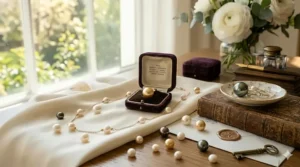
Ross-Simons has been a jewelry industry fixture since 1952, and their reputation for quality at accessible prices shows clearly in this petite pearl design. The 5-5.5mm pearls on 14K yellow gold rope chain, available in 16-inch length around $250-$350, targets a specific aesthetic that larger pearls can’t achieve.
Those smaller pearls create what designers call a “whisper effect”—they’re noticeable up close but subtle from a distance, making them perfect for layering with other necklaces or wearing in conservative professional environments. The 16-inch length sits higher on the neck than standard 18-inch pieces, working beautifully as a choker alternative that doesn’t actually feel tight.
The rope chain pattern deserves attention here. Unlike cable chains that can twist and bunch up, rope chains maintain their orientation naturally. This keeps the pearls facing forward consistently rather than rotating to show their less attractive sides. It’s a small detail that significantly impacts the piece’s appearance during actual wear.
What separates Ross-Simons from similar offerings is their vertically integrated supply chain. They work directly with pearl farms and gold suppliers, cutting out middleman markups that typically inflate jewelry prices by 100-200%. This explains how they deliver 14K gold pieces at prices where other retailers are still using gold-filled or plated materials.
Ideal for: Petite frames where larger pearls would overwhelm proportion, layering enthusiasts building a necklace stack, or those preferring subtle elegance over statement pieces.
✅ Pros:
- Smaller pearls suit delicate aesthetic preferences
- Established brand brings seven decades of quality reputation
- Rope chain construction prevents twisting and tangling
❌ Cons:
- 16-inch length won’t work for those wanting lower drape
- Smaller pearls may look insignificant to some buyers
Value assessment: At $250-$350, you’re paying a fair price for 14K gold with the Ross-Simons quality assurance backing it. The brand’s established reputation means customer service and potential warranty claims get handled professionally.
7. Ross-Simons 6-9mm Cultured Pearl Graduated Station Necklace in 18kt Gold Over Sterling – Visual Interest on a Budget
This graduated design takes a different approach from the uniform sizing we’ve seen so far. The pearls start at 6mm on the ends and grow progressively to 9mm at the center, creating a focal point that draws the eye. The 18-inch length on 18K gold over sterling silver chain sits in the $150-$200 range, offering visual complexity at mid-tier pricing.
Graduated sizing accomplishes two things simultaneously. First, it concentrates the largest, most impactful pearls where they’re most visible—directly at your neckline’s center. Second, it reduces weight at the necklace’s ends where excessive pearl size can pull the piece uncomfortably off-center. This isn’t just aesthetic—it’s ergonomic design that makes the necklace more comfortable during extended wear.
The 18K gold over sterling construction places this between budget plated pieces and solid gold options. You’re getting thicker gold plating than cheap fashion jewelry (18K plating is typically 2-3 microns versus less than 1 micron for standard plating), which translates to 3-5 years of wear before requiring re-plating. The sterling silver base underneath holds resale value that brass or base metal doesn’t, and it’s fully hypoallergenic for sensitive skin.
Customer reviews note that the graduated effect photographs exceptionally well, making this a popular choice for those who frequently appear in photos or video calls. The varied pearl sizes catch light differently at each position, creating dynamic sparkle that uniform designs can’t replicate.
Best for: Budget-conscious buyers wanting something beyond basic styling, those seeking photograph-friendly jewelry, or anyone preferring focal-point design over uniform aesthetics.
✅ Pros:
- Graduated sizing creates visual interest beyond simple designs
- 18K gold plating offers better longevity than standard plating
- Sterling silver base provides hypoallergenic properties
❌ Cons:
- Will eventually require re-plating unlike solid gold options
- Graduated style may not appeal to minimalist preferences
Budget verdict: The $150-$200 range delivers strong value for the visual impact—you’re getting thoughtful design and quality materials that will serve well for several years of regular wear.
Understanding Pearl Station Necklace Construction: What Actually Matters
When I analyze pearl station necklaces with clients, I notice the same questions coming up repeatedly. People focus on pearl size and gold karat, which certainly matter, but they overlook equally critical construction details that determine whether a necklace becomes a cherished piece or a drawer disappointment.
The Chain Question: Why It Determines Everything
The chain is doing real work in a station necklace—it’s not just connecting pearls, it’s creating the entire structure that allows those pearls to float and drape naturally. Cable chains offer classic simplicity and easy repair if damaged. Box chains lay completely flat for a sleeker profile but can kink if bent. Rope chains resist twisting better than any other pattern, keeping pearls consistently face-forward.
Most importantly, chain gauge (thickness) needs to match pearl weight. Pairing 8mm pearls with a delicate 0.5mm chain creates a structural mismatch—the chain will stretch over time, causing the necklace to lengthen and the stations to drift unevenly. Quality manufacturers match chain gauge to pearl weight through engineering rather than guesswork. That’s why premium pieces often feel more substantial than you’d expect—the chain has been properly sized for the load it’s carrying.
Pearl Spacing: The Secret to Versatility
Standard tin cup necklaces space pearls 1-2 inches apart, but that measurement dramatically affects the piece’s character. Tight 1-inch spacing reads as more traditional and formal, creating an almost strand-like appearance from a distance. Wide 2-3 inch spacing emphasizes the individual pearls and gold chain equally, producing a more contemporary aesthetic that works better with casual styling.
I always recommend considering your intended wearing contexts before settling on spacing. Daily office wear benefits from closer spacing that maintains visual impact even partially hidden under collars. Evening wear can leverage wider spacing where the gold chain becomes part of the design statement rather than just functional structure.
The Clasp Conversation Nobody Has
Spring ring clasps dominate lower-priced pieces because they’re cheap to manufacture and install. They’re also frustratingly difficult to operate single-handed, especially for anyone with limited finger dexterity or long nails. Lobster clasps cost manufacturers $2-$3 more but operate far more reliably. Toggle clasps offer the easiest one-handed operation but add visual bulk that some consider distracting.
Higher-end pieces increasingly use magnetic clasps that lock securely but release with gentle pulling. These aren’t simple magnets—they incorporate safety catches that prevent accidental opening while still allowing easy intentional removal. At $15-$20 for quality magnetic clasps versus $0.50 for spring rings, they don’t appear on budget pieces, but they transform the wearing experience for anyone who struggles with traditional closures.
Real-World Wearing Guide: Matching Necklaces to Your Lifestyle
Product specifications tell you what a necklace is, but they don’t tell you whether it works for your actual life. Here’s how different scenarios map to specific product choices and styling decisions.
The Daily Office Professional
You need jewelry that looks polished at 8 AM and still presentable after an 8-hour workday. Avoid gold plating under 14K—the neck friction from clothing collars wears through thin plating within months, leaving you with mismatched coloring. Solid 10K or 14K gold eliminates this concern entirely.
Pearl size matters here too. The 5-6mm range reads as appropriately professional without calling undue attention. Larger 8-10mm pearls make statements that some conservative workplaces view as excessive. Length-wise, 16-18 inches keeps the necklace visible above most business attire necklines.
The 14K Solid Gold Pearl Station Necklace or Belacqua 10K Gold piece both excel in this context. They’ll survive daily wear without degradation, maintain professional appearance standards, and require zero maintenance beyond occasional cleaning.
The Weekend Warrior
You want jewelry that transitions from grocery shopping to dinner out without requiring a complete accessory change. This demands durability against sweat, sudden temperature changes, and the occasional forgotten shower-wearing incident (we’ve all done it).
Stainless steel bases with gold plating handle moisture exposure better than sterling silver, which can tarnish from body chemistry. The graduated Ross-Simons piece works beautifully here—its visual interest reads as intentional styling rather than default jewelry, elevating casual outfits without being precious about wear conditions.
Pearl size can go larger for casual contexts. Those 7-8mm pearls that might seem excessive in conference rooms feel perfectly calibrated for weekend brunches and evening movies.
The Special Occasion Specialist
If you’re buying a necklace specifically for weddings, galas, or formal events, you’re optimizing for maximum visual impact during relatively short wearing periods. This shifts the equation entirely—durability matters less than immediate wow factor.
The Tahitian Black Pearl option excels here precisely because its dramatic coloring and large pearl size create memorable visual moments. You’re not wearing this daily, so gold plating longevity becomes less critical than the appearance it creates for those few hours when it matters most.
Alternatively, consider two moderate pieces layered together rather than one expensive piece worn alone. The Ross-Simons Delicate 16-inch paired with the Sterling Silver Tin Cup 18-inch creates sophisticated layering that photographs exceptionally well—and gives you versatile pieces that work independently for different occasions.
The Sensitive Skin Sufferer
Metal allergies aren’t just uncomfortable—they’re deal-breakers that render otherwise beautiful jewelry unwearable. If you’ve had reactions to jewelry before, focus on composition over appearance.
Solid gold (10K, 14K, or 18K) is universally hypoallergenic. So is high-quality stainless steel, though cheaper stainless steel can still contain nickel. Sterling silver is generally safe, but the copper content can irritate particularly sensitive individuals.
Skip anything described as “nickel-free” without further qualification—that term has no legal definition and often appears on pieces that contain nickel in alloys. Instead, look for “surgical-grade stainless steel” or “nickel-free 316L stainless steel” which have specific metallurgical standards.
Common Mistakes When Buying Pearl Station Necklaces (And How to Avoid Them)
After reviewing thousands of customer complaints and returns, patterns emerge. These aren’t defects in the products themselves—they’re mismatches between buyer expectations and product realities that proper information would have prevented.
Mistake #1: Assuming All Gold Plating Performs Equally
Gold plating thickness varies from 0.1 microns (will wear through in weeks) to 5+ microns (will last years). Manufacturers rarely specify this thickness because lower numbers would discourage purchases. The clue is in pricing—genuine thick gold plating costs money. If a “gold” necklace costs $25, it’s not carrying 2-3 micron plating that would cost $15 alone to apply.
Better approach: Budget $100+ if you want gold plating that lasts more than a season, or invest in solid gold that never needs replacement. The middle ground of cheap plating is false economy—you’ll buy replacements repeatedly instead of paying once for quality.
Mistake #2: Ordering Standard Lengths Without Considering Body Proportions
A 16-inch necklace sits differently on someone 5’2″ versus someone 5’10”. Jewelry brands design around average height statistics, but 50% of customers fall outside that average. Before ordering, measure an existing necklace you like the positioning of, or use a string to determine your preferred length, then compare that measurement to product specifications.
Many buyers don’t realize that adjustable extension chains exist specifically to solve this problem. The 2-inch extensions on several of these products aren’t optional features—they’re critical adjustment mechanisms. Use them. A necklace that sits slightly too high looks awkward; one that sits slightly too low disappears under clothing.
Mistake #3: Ignoring Pearl Grade Classifications
Pearl grading exists for a reason—it quantifies the visible quality differences between specimens. A “B-grade” freshwater pearl shows noticeable surface imperfections, dull luster, and irregular shape. An “AAA-grade” pearl approaches perfect roundness with mirror-like luster and minimal surface marks.
The problem: many sellers don’t grade their pearls at all, leaving you guessing about quality. Before purchasing, check whether the listing mentions grade. If it doesn’t, assume B or C grade. This doesn’t make them worthless—it just resets expectations about the visual result you’ll receive.
Mistake #4: Buying Graduated Designs Without Understanding the Effect
Graduated pearl necklaces create an intentional focal point at the neckline center. This draws attention to that area, which some wearers love and others find uncomfortable. If you’re self-conscious about neck appearance or prefer jewelry that distributes attention evenly, graduated designs work against your preferences.
The solution isn’t avoiding graduated necklaces entirely—it’s being honest about your comfort with attention-focusing jewelry. Tried on graduated pearl earrings before? If you liked them, you’ll like graduated necklaces. If you felt self-conscious, stick with uniform sizing.
Mistake #5: Neglecting Chain Maintenance Requirements
Every metal requires specific care to maintain appearance. Gold-plated sterling needs regular polishing of the silver base once plating wears through. Stainless steel can scratch, requiring buffing compound to restore shine. Even solid gold accumulates soap residue and skin oils that dull its luster over time.
None of this is difficult, but it does require doing. Before purchasing, honestly assess whether you’ll perform maintenance or whether you need a truly set-it-and-forget-it piece. Solid gold with simple pearl cleaning (lukewarm water and soft cloth) comes closest to maintenance-free, while plated metals demand more attention.
Pearl Station Necklaces vs. Traditional Pearl Strands: The Real Comparison
The pearl industry spent decades convincing consumers that traditional continuous pearl strands represented the only “proper” way to wear pearls. That legacy thinking still influences purchases today, with many buyers viewing station necklaces as somehow less legitimate than traditional strands. The reality is more nuanced—these are different tools for different purposes.
The Formality Question
Traditional pearl strands do carry stronger formal associations. If you’re attending a black-tie wedding or meeting heads of state, a classic strand sends clearer sophistication signals than a station necklace. But formality requirements have relaxed dramatically across most contexts. Station necklaces now appear regularly in business formal settings, upscale restaurants, and even wedding parties where the bride specifically requests contemporary jewelry aesthetics.
What shifted? Cultural attitudes toward visible wealth signaling. The continuous pearl strand broadcasts “I can afford many perfectly matched pearls,” which once felt aspirational but increasingly reads as dated or even ostentatious. Station necklaces achieve pearl elegance without the implied status declaration, which suits modern preferences for understated luxury.
The Wearability Factor
Here’s where station necklaces demonstrate clear advantages. The gold chain segments between pearls allow the necklace to drape naturally, following your body contours without creating the rigid collar effect that strand necklaces produce. This makes them dramatically more comfortable for all-day wear—no digging into your collarbone, no sweaty pearl-to-skin contact in hot weather, and easier movement of your head and neck without feeling the jewelry shift.
Strand necklaces also concentrate all their weight in pearls, creating a heavy piece that can cause neck fatigue during extended wear. Station necklaces distribute weight between pearls and chain, resulting in a lighter feel despite potentially larger individual pearls.
The Practical Cost Comparison
Here’s the economic reality nobody mentions in jewelry stores: a 16-inch strand necklace requires approximately 50-60 pearls to create, all carefully matched for size, color, and luster. A comparable station necklace needs 8-12 pearls. This isn’t a manufacturing shortcut—it’s an inherent design difference that has real cost implications.
A quality AA-grade freshwater pearl strand in solid 14K gold runs $800-$1,200 due to the pearl quantity and matching labor involved. The station necklace equivalent delivers similar visual impact and gold quality for $400-$600. You’re not getting lesser quality; you’re getting a design that requires fewer pearls to execute successfully.
The Styling Versatility Edge
Station necklaces win decisively here. Their contemporary aesthetic works with everything from t-shirts to evening gowns, while traditional strands really only pair well with dress clothing. That operational difference matters if you’re trying to maximize cost per wear—a station necklace you can wear 5 days a week delivers better value than a strand you only wear monthly.
Layering represents another major advantage. Try layering two traditional pearl strands and you get a dated “society matron” look that few modern wearers want. Layer two station necklaces at different lengths and you create sophisticated contemporary styling that looks intentional and current.
How to Choose Your Perfect Pearl Station Necklace: The Decision Framework
Walking through these seven options can feel overwhelming, especially if you’re new to fine jewelry purchasing. Here’s the systematic approach I use when helping clients narrow down to their ideal piece.
Step 1: Establish Your True Budget (Including Future Costs)
Don’t just look at purchase price—calculate total cost of ownership. A $60 gold-plated piece that needs replacing every 18 months costs more over five years than a $300 solid gold piece that lasts decades. Be honest about whether you’ll actually perform re-plating maintenance or whether you’ll simply replace pieces when they degrade.
Step 2: Identify Your Primary Wearing Context
Will this be daily jewelry, special occasion wear, or situational (office only, weekends only)? Daily wear demands durability and versatility above all else. Special occasion pieces can prioritize visual impact over long-term durability. Situational jewelry needs to match specific dress codes or aesthetic requirements.
Step 3: Determine Your Metal Preference AND Tolerance
Do you want yellow gold, white gold, or rose gold? More importantly, do you have metal sensitivities that require hypoallergenic materials? If you’ve never worn jewelry for extended periods before, consider getting patch-tested for metal allergies before investing hundreds in materials you might not tolerate.
Step 4: Consider Your Style Philosophy
Are you a minimalist who wants one perfect piece, or a maximalist who enjoys layering? Minimalists should invest more in single high-quality items. Maximalists can distribute budget across multiple complementary pieces at lower individual price points.
Step 5: Match Pearl Size to Your Frame and Comfort Zone
Larger pearls (8mm+) make statements. Smaller pearls (5-6mm) whisper elegance. Medium pearls (6-7mm) balance visibility and versatility. Your physical frame matters here—petite frames can be overwhelmed by large pearls, while larger frames might find tiny pearls insignificant. But personal comfort trumps general guidelines. If you feel self-conscious in statement jewelry, no amount of “it looks fine” from others will make you comfortable wearing it.
Step 6: Evaluate Long-Term Relationship Potential
Will you still want to wear this piece in five years? Ten years? Some designs are trendy enough that they’ll feel dated quickly. Others have classic proportions that transcend temporary fashion cycles. If you’re investing serious money, bias toward timeless rather than trendy unless you explicitly enjoy regular jewelry turnover.
Pearl and Gold Care: Making Your Investment Last
The history of pearl jewelry spans thousands of years, with pearls being presented as gifts to Chinese royalty as early as 2300 BC. Those ancient pearls didn’t survive millennia through luck—they received proper care from owners who understood their unique properties. Modern pearls benefit from the same careful treatment.
The Pearl-Specific Challenge
Pearls are organic gemstones composed of calcium carbonate in layered crystalline form. This makes them vulnerable to acids (including body oils, perfumes, and hairspray), abrasives (even soft cloth can scratch with enough pressure), and dehydration (pearls contain 2-4% water content that can dry out).
The cardinal rule: put your pearls on last and take them off first. This minimizes exposure to cosmetics and perfumes that degrade nacre over time. After wearing, wipe them gently with a soft, dry cloth to remove body oils and residue. Once monthly, wash them in lukewarm water with mild soap, then dry thoroughly before storing.
Never use ultrasonic cleaners, steam cleaners, or jewelry cleaning solutions on pearls. These are designed for hard gemstones and will damage pearl nacre. Never store pearls in airtight containers—they need minimal humidity to maintain that internal water content.
Gold Chain Maintenance by Type
Solid gold (10K, 14K, 18K) needs the least care. Clean it monthly with warm water and mild dish soap, using a soft toothbrush to remove buildup from chain links. Dry thoroughly and polish with a jewelry cloth to restore shine. That’s it. Solid gold doesn’t tarnish, corrode, or degrade under normal wearing conditions.
Gold-plated jewelry requires more vigilance. The plating will eventually wear through at friction points (clasp area, back of neck, anywhere the necklace rubs against clothing). When you notice color changes appearing, take it to a jeweler for re-plating before the base metal underneath becomes fully exposed and potentially irritating to your skin.
Sterling silver (whether plated with gold or not) will tarnish when exposed to sulfur compounds in air. Store it in anti-tarnish bags or strips, and polish regularly with silver cleaning cloth. If the silver base of gold-plated sterling begins showing through, have it professionally re-plated rather than attempting home methods that might damage surrounding areas.
Storage That Actually Protects
Jewelry boxes seem protective but often cause problems. Multiple pieces jumbled together create scratches and tangles. Better approach: individual soft pouches for each piece, stored in a drawer or box away from direct sunlight and temperature fluctuations.
For station necklaces specifically, hang storage works better than laying flat. The chain can develop kinks when repeatedly folded in the same places. A simple jewelry tree or wall-mounted hooks keeps chains straight while preventing pearls from touching each other or other jewelry.
Frequently Asked Questions
❓ What makes pearl station necklaces different from regular pearl strands?
❓ How long does gold plating last on pearl necklaces?
❓ Are freshwater pearls as good as saltwater pearls?
❓ What length pearl station necklace should I choose?
❓ Can I shower or swim wearing my pearl station necklace?
Conclusion: Finding Your Perfect Pearl Station Match
The pearl station necklace gold chain has evolved from a 1996 movie accessory into a genuine jewelry category with offerings spanning $30 fashion pieces to $850 investment necklaces. What I’ve aimed to demonstrate throughout this guide is that “best” depends entirely on matching product characteristics to your specific circumstances, preferences, and budget.
If you’re seeking maximum longevity and investment value, the solid 14K gold options like the 14K Solid Gold Pearl Station Necklace or Belacqua 10K Gold piece deliver materials that will outlast trend cycles and maintain their beauty through decades of wear. Yes, they require higher upfront investment, but the cost-per-wear calculation over years of use makes them genuinely economical.
For those building versatile jewelry wardrobes without breaking budgets, the mid-range options like Sterling Silver Tin Cup or Ross-Simons Graduated piece provide quality materials and thoughtful design at prices that won’t require years of saving. These pieces won’t last forever, but they’ll deliver several years of regular wear before requiring replacement or maintenance.
Budget-conscious buyers or those new to pearl jewelry will find the Elegant Pearl Station Necklace offers a legitimate entry point using real materials rather than plastic imitations. Just understand its lifespan limitations and treat it as a starter piece rather than an heirloom.
Whatever you choose, remember that jewelry serves no purpose sitting unworn in a drawer. The “best” necklace is the one you’ll actually put on and enjoy wearing. Consider your lifestyle honestly, select materials that match your maintenance willingness, and choose designs that align with your aesthetic comfort zone rather than current trends you’ll regret in three years.
The timelessness of pearl jewelry throughout history suggests these pieces will remain relevant regardless of temporary fashion fluctuations. By selecting quality appropriate to your needs and caring for it properly, your pearl station necklace can become one of those pieces you reach for instinctively, day after day, year after year.
Recommended for You
- 7 Best Multi Strand Pearl Necklaces That Transform Your Look in 2026
- 7 Best Double Strand Pearl Necklaces That’ll Transform Your Look (2026)
- 7 Best Pearl Necklace 14k Gold Clasp Options 2026
Disclaimer: This article contains affiliate links. As an Amazon Associate, I earn from qualifying purchases. If you purchase products through these links, we may earn a small commission at no additional cost to you.
✨ Found this helpful? Share it with your friends! 💬🤗
