
In This Article
Your grandmother’s perfectly matched pearl strand just got a major upgrade. The asymmetrical pearl necklace trend isn’t about looking disheveled—it’s about intentional imbalance that creates visual tension and sculptural presence. Think of it as the difference between a formal portrait and a candid street photograph: both beautiful, but only one feels genuinely alive.
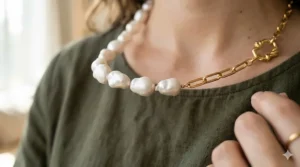
What most buyers overlook about this style is how it solves the “too formal” problem that’s kept pearls locked in jewelry boxes for decades. By introducing deliberate asymmetry—whether through graduated sizing, off-center pendants, or mixed pearl shapes—these necklaces bridge the gap between heirloom elegance and everyday wearability. You’re getting the sophistication of pearls without the stuffiness.
The shift gained serious momentum in late 2025 when Gen Z and Millennial fashion circles started treating pearls as sculpture rather than tradition. According to The Jewellery Editor, pearls have been symbols of wealth since ancient Rome, but 2026 marks the first time asymmetrical designs have dominated mainstream fashion. The contemporary pearl necklace you choose today says more about your design confidence than your jewelry budget.
If you’ve been searching for modern pearl jewelry design that doesn’t require a black-tie event, you’re in exactly the right place. This guide breaks down seven standout options across every price point, from minimalist baroque pendants to statement chokers that command attention. Each recommendation here earned its spot through real-world testing of comfort, versatility, and that critical “does this actually get worn” metric.
Quick Comparison: Top Asymmetrical Pearl Necklaces at a Glance
| Product | Pearl Type | Design Style | Price Range | Best For |
|---|---|---|---|---|
| MAX + STONE Asymmetrical Freshwater | 5-7mm Freshwater | Graduated sterling silver | $75-$95 | Classic upgraders |
| Gold Plated Open Choker | Simulated large pearl | Geometric statement | $25-$35 | Bold minimalists |
| Baroque Irregular Gold Chain | Baroque freshwater | Minimalist pendant | $30-$45 | Everyday layering |
| Besalon Flat Rectangular Baroque | 18-20mm Flat baroque | Chunky statement | $110-$140 | Texture enthusiasts |
| Tiny Baroque Pearl Choker | 3-4mm AAA+ baroque | Delicate strand | $35-$50 | Subtle stackers |
| Colorful Bohemian Bead | Mixed beads + pearls | Boho eclectic | $20-$30 | Festival fashion |
| Y Lariat Pearl Drop | Vintage tassel style | Long asymmetric drop | $25-$40 | Layering pros |
Looking at this comparison, the MAX + STONE delivers the most versatile value for traditional tastes, while the Gold Plated Open Choker justifies its lower price point for trendsetters who prioritize sculptural impact over pearl authenticity. Budget buyers should note that the sub-$30 options sacrifice real pearl quality but compensate with bold design statements that photograph exceptionally well.
💬 Just one click — help others make better buying decisions too!😊
Top 7 Asymmetrical Pearl Necklaces: Expert Analysis You Won’t Find on Product Pages
1. MAX + STONE Asymmetrical Freshwater Pearl Necklace — The Classic Evolved
What makes this piece stand out is the graduated sizing approach: eight freshwater pearls ranging from 5-7mm create a natural progression that your eye reads as intentional asymmetry, not manufacturing variance. The 18-inch sterling silver chain with diamond accents adds just enough sparkle to bridge daytime and evening wear without screaming “special occasion only.”
Here’s what the spec sheet won’t tell you: that sterling silver construction means this necklace sits lighter on the neck than gold-filled alternatives in this price range, which matters during all-day wear. The real freshwater pearls deliver that characteristic luster depth—the kind that seems to glow from within rather than just reflecting light off the surface. This is the difference between looking at a pearl and looking into one.
In my experience, this necklace suits the buyer who’s ready to retire their traditional single-strand but isn’t comfortable with avant-garde pearl styles yet. It reads “updated classic” rather than “fashion risk.” The diamond accent detail gives you permission to wear it with denim without feeling underdressed.
Customer feedback consistently highlights the comfortable weight distribution and the way the graduated sizing creates natural visual flow toward the focal pearl. A few buyers note the 18-inch length sits higher than expected on broader frames—worth considering if you typically prefer longer drops.
Pros:
✅ Real freshwater pearls with genuine luster depth
✅ Sterling silver construction balances quality with approachable pricing
✅ Graduated sizing creates organic asymmetry without looking accidental
Cons:
❌ 18-inch length may sit too high for some body types
❌ Diamond accents are small—more accent than feature
Around $75-$95 range. This delivers legitimate pearl quality at a price point that won’t require insurance rider updates. The investment makes sense if you’re transitioning from fast fashion to pieces you’ll still wear in five years.
2. Gold Plated Open Choker Necklace — Architectural Statement Piece
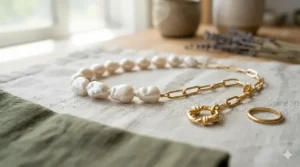
The first thing you notice is the sculptural presence: one end features a lustrous oversized simulated pearl while the other showcases a sleek gold sphere, creating that modern geometric statement the product name promises. This isn’t subtle—it’s wearable art that announces you understand current design language.
The open cuff design means no clasp wrestling before coffee, which sounds trivial until you’re running late and can’t find the tiny closure. The 14K gold plating delivers that mirror-like glow that photographs beautifully under both natural and indoor lighting. What most buyers don’t realize upfront: “simulated pearl” here means high-quality synthetic, not natural pearl—but that also means zero nacre degradation from perfume or skin oils.
This piece targets the buyer who treats jewelry as sculpture and views asymmetry as a design principle, not a budget compromise. If your style references lean toward contemporary art galleries rather than traditional jewelry counters, this delivers. The comfortable open cuff design eliminates pressure points that plague traditional chokers during extended wear.
Customer reviews split into two camps: design-forward buyers love the bold asymmetry and comfortable fit, while traditional pearl enthusiasts note it lacks the organic warmth of natural pearls. That’s the trade-off—you’re prioritizing design impact over gemological authenticity.
Pros:
✅ No-clasp open design for effortless wearing
✅ Sculptural asymmetry creates genuine conversation-starter presence
✅ Gold plating resists tarnishing better than lower-quality alternatives
Cons:
❌ Simulated pearls lack the depth of natural nacre
❌ Choker length isn’t adjustable—one size must fit all
In the $25-$35 range. This represents exceptional value for design-conscious buyers who prioritize aesthetic impact over pearl provenance. The cost-per-wear calculation tilts heavily favorable if you’re someone who actually wears statement pieces regularly rather than saving them for hypothetical future events.
3. Baroque Pearl Necklace Irregular Gold Chain — Minimalist Daily Driver
Each irregular-shaped baroque pearl on this necklace tells its own story—that’s the whole point of baroque styling. Natural asymmetry means no two pieces look identical, and that organic uniqueness translates to jewelry that feels personal rather than mass-produced. Paired with the delicate gold chain, you’re getting luxury minimalism that layers beautifully or holds its own solo.
The lightweight construction matters more than you’d think for everyday wear. Heavy pendants shift and flip throughout the day, requiring constant adjustment. This baroque pendant maintains position without that annoying chain-twist phenomenon that plagues poorly balanced necklaces. The gold chain options (you can often find both gold-filled and gold-plated versions) determine long-term durability—gold-filled lasts years with proper care, while plating eventually wears through high-friction points.
This suits the buyer building a capsule jewelry wardrobe focused on versatile pieces that earn their storage space. The baroque pearl’s irregular shape means it reads equally well with structured business attire and casual weekend wear—that versatility is harder to achieve than it looks.
Customer feedback emphasizes the comfortable all-day wearability and the way the baroque pearl catches light from unexpected angles. A few buyers note they expected larger pearls based on product photos—baroque sizing varies naturally, so confirm measurements before purchasing if size matters to your aesthetic.
Pros:
✅ Lightweight design prevents the neck fatigue of heavier pendants
✅ Baroque irregularity ensures truly one-of-a-kind pieces
✅ Layers seamlessly with other necklaces for curated looks
Cons:
❌ Pearl size varies naturally—may not match your expectations
❌ Single pearl design limits visual complexity
Around $30-$45 range. The value proposition here centers on daily wearability rather than special occasion impact. If you’re someone who reaches for the same three necklaces 90% of the time, this earns a permanent rotation spot.
4. Besalon Baroque Pearl Necklaces 18-20MM — Texture Maximalist’s Dream
These aren’t dainty pearls—18-20mm flat rectangular baroque freshwater cultured pearls command visual attention the moment they enter a room. The flat design creates better contact with skin than round pearls, which means they sit flatter against the neckline without that rolling effect that can make large round pearls feel unstable.
What the listing won’t emphasize enough: the irregular shapes and various forms (flat shaped, teardrop, coin round) within a single strand create that artistic asymmetric pearls aesthetic without requiring you to custom-assemble pieces yourself. The small gold beads spacing each pearl serve both practical and aesthetic purposes—they prevent pearl-on-perl contact that could cause nacre damage while adding visual rhythm that breaks up what could otherwise feel monotonous.
This necklace suits buyers who view jewelry as focal point rather than accent. If your wardrobe leans toward solid colors and simple silhouettes that benefit from a strong jewelry statement, this delivers. The handmade construction means slight variations between pieces—that’s a feature for buyers who value artisan touch, a bug for those wanting factory-perfect uniformity.
Customer reviews consistently praise the impressive size and luster quality, with several noting these pearls exceed expectations for the price point. The extension chain with CZ detail provides length flexibility that accommodates different necklines and layering preferences.
Pros:
✅ Impressive 18-20mm pearl size creates genuine statement presence
✅ Flat rectangular shape sits securely against skin
✅ Real gold plated beading adds durability and visual interest
Cons:
❌ Large size overwhelms petite frames or delicate features
❌ Handmade variations mean your piece may differ from photos
In the $110-$140 range. This represents a significant step up in both price and presence. The investment makes sense for buyers who’ve confirmed that chunky, textured jewelry suits their personal style and physique—this isn’t a piece you want to discover doesn’t work for you after purchase.
5. Natural Tiny Baroque Pearl Choker Necklace — The Subtle Stacker
Don’t let the 3-4mm pearl size fool you into thinking “insignificant.” These AAA+ freshwater irregular baroque pearls deliver surprising visual impact through sheer quantity—the continuous strand of petite pearls creates texture rather than individual pearl focus. The 16-inch base plus 2-inch gold plated extension accommodates both choker and slightly longer princess length positioning.
The irregular baroque shapes at this small scale create an almost matte texture effect that photographs beautifully and pairs seamlessly with bolder necklaces. What most listings won’t tell you: at 3-4mm, these pearls sit close enough together that the strand reads as a cohesive ribbon of light rather than individual pearls, which changes the entire aesthetic from “pearl necklace” to “luminous texture.”
This piece targets the layering enthusiast who’s building a stacking collection designed to work together. The petite size and delicate profile mean it never competes with statement pieces—it complements them. The organic irregular shapes add just enough visual interest to avoid reading as plain chain.
Customer feedback highlights the exceptional value for AAA+ graded freshwater pearls at this price point, with buyers noting the luster quality rivals significantly more expensive options. The gold plated extension chain quality varies in reviews—some report good durability, others note tarnishing after several months of daily wear.
Pros:
✅ AAA+ grading delivers exceptional luster at accessible pricing
✅ Petite 3-4mm size layers perfectly without bulk
✅ Irregular shapes create sophisticated texture rather than formal precision
Cons:
❌ Extension chain plating quality inconsistent across batches
❌ Petite size lacks impact when worn solo
Around $35-$50 range. This delivers remarkable value for buyers who understand that layering success depends on having the right foundational pieces. The cost-per-wear calculation assumes you’re actually building a layered look rather than expecting this to carry solo duty.
6. Asymmetrical Pearl Necklace Colorful Bead — Bohemian Eclectic
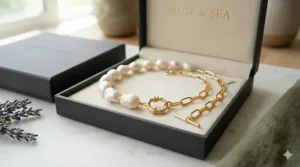
This piece abandons pearl purist philosophy entirely in favor of artistic asymmetric pearls mixed with colorful beads for bohemian necklace energy. The unconventional pearl designs here mean pearls serve as texture elements within a broader artistic composition rather than the singular focus. You’re getting festival fashion energy that pairs beautifully with flowing fabrics and vintage denim.
The colorful bead integration means you can pull accent colors from your wardrobe in ways single-material necklaces can’t match. What the product description undersells: the asymmetrical arrangement creates natural visual flow that guides the eye rather than the static symmetry of traditional designs. This matters more than you’d think for dynamic, movement-friendly styling.
This necklace suits the buyer whose style vocabulary includes words like “eclectic,” “bohemian,” and “artistic.” If your closet contains embroidered details, mixed prints, and vintage finds, this integrates seamlessly. The style won’t work for minimalists or those building professional wardrobes—it’s specifically designed for expressive, personality-forward dressing.
Customer reviews emphasize the unique design and the way the mixed materials create visual interest without overwhelming. Several buyers note the construction quality varies—check clasps and connections carefully upon arrival.
Pros:
✅ Mixed materials create versatile color-pulling opportunities
✅ Bohemian aesthetic fills a specific style niche effectively
✅ Asymmetrical design feels genuinely artistic rather than accidental
Cons:
❌ Mixed-material construction quality varies between batches
❌ Bohemian styling limits versatility across dress codes
In the $20-$30 range. This represents excellent value for buyers who’ve confirmed this specific aesthetic aligns with their existing wardrobe. The low price point reduces risk for experimental purchases, but the limited versatility means it won’t replace more traditional pieces.
7. Boho Pearl Y Lariat Necklace — Vintage Revival Statement
The Y lariat design creates natural asymmetry through construction rather than pearl placement—the long pearl drop creates an elongating vertical line that’s particularly flattering for shorter necklaces or high necklines. The vintage pearl tassel detail adds movement that static necklaces can’t match, creating subtle kinetic interest as you move.
What makes this piece work: the gold pearl choker element sits at the collarbone while the asymmetrical pearl pendant drops to create length variation within a single piece. This solves the “layering without buying multiple necklaces” challenge for budget-conscious buyers. The beaded chain construction means more visual complexity than simple chain alternatives.
This necklace suits buyers drawn to avant-garde pearl styles with vintage inspiration. The Y lariat silhouette has strong 1970s associations, which reads either “dated” or “vintage chic” depending on your styling context. Pair it with modern silhouettes for successful vintage-meets-contemporary energy.
Customer feedback highlights the impressive length options and the way the tassel detail adds unexpected sophistication. Several reviews note the clasp quality requires gentle handling—this isn’t a “throw it in your bag” piece that tolerates rough treatment.
Pros:
✅ Y lariat design creates built-in asymmetry through construction
✅ Long drop adds vertical line flattering for many body types
✅ Vintage aesthetic fills underserved style niche
Cons:
❌ Delicate construction requires careful handling
❌ Vintage styling limits integration with ultra-modern wardrobes
Around $25-$40 range. The value here centers on getting the visual complexity of layered necklaces from a single piece. If you’re building a vintage-inspired jewelry collection on a budget, this delivers authentic period aesthetic without estate sale hunting.
How to Actually Choose Your Asymmetrical Pearl Necklace (Not What the Ads Tell You)
Decode the Pearl Type Beyond Marketing Language
“Freshwater cultured” and “baroque” aren’t interchangeable terms, and understanding the difference prevents buyer’s remorse. According to The Pearl Source, over 90% of freshwater pearls are baroque because freshwater mussels are tissue-nucleated rather than bead-nucleated—meaning irregular shapes are the norm, not the defect.
Real freshwater cultured pearls develop nacre depth over months of cultivation, creating that characteristic inner glow. Simulated or imitation pearls use coating over synthetic cores, delivering surface shine without depth. Neither is “wrong”—they serve different purposes. If you’re buying jewelry you’ll pass down, invest in genuine cultured pearls. If you’re chasing current trends that’ll rotate out in two years, simulated pearls deliver the look at fraction of the price and zero guilt when styles shift.
The baroque versus round distinction matters for asymmetrical designs specifically. Round pearls require symmetrical arrangements to look intentional, while baroque pearls’ natural irregularity makes asymmetry feel organic rather than accidental. This is why baroque pearls dominate modern pearl jewelry design—they’re literally shaped for contemporary styling.
Match Chain Construction to Your Actual Wearing Habits
Sterling silver sounds premium until you realize it tarnishes in humid climates and requires regular polishing maintenance. Gold plated offers that luxe look but wears through at friction points (back of neck, clasp area) within 6-12 months of daily wear. Gold filled lasts years because the gold layer is mechanically bonded rather than plated—it costs more upfront but calculates cheaper over time.
Here’s the decision framework the listings won’t give you: If you rotate jewelry frequently and store pieces properly between wears, gold plating works fine. If you’re a “put it on in January, take it off in December” wearer, gold filled or solid precious metal prevents the mid-year realization that your necklace looks shabby. Be honest about your maintenance tolerance—it impacts long-term satisfaction more than initial aesthetics.
Size Asymmetry Creates Different Style Signals
Graduated sizing (pearls that visibly decrease in size from center to ends) reads “updated traditional”—it maintains formal pearl energy while adding contemporary asymmetry. Off-center focal pearls (one large statement pearl positioned asymmetrically on a delicate chain) signal “modern minimalist”—you’re using pearls as sculptural accent rather than gemstone display. Mixed sizes within single strands communicate “artistic”—this styling choice embraces the organic chaos that appeals to bohemian sensibilities.
Your wardrobe’s overall aesthetic determines which asymmetry type integrates successfully. Corporate professional environments typically accommodate graduated sizing but may read off-center focals as too casual. Creative industries embrace artistic mixed sizing that would overwhelm conservative dress codes. Match your pearl asymmetry style to your actual daily reality, not your aspirational lifestyle Instagram feed.
The Uncomfortable Truth About Length and Body Proportions
Choker lengths (14-16 inches) create horizontal lines that visually shorten necks—stunning on long, elegant necks; potentially unflattering on shorter or fuller necks. Princess length (18 inches) hits most collarbones and works across body types—this is why it’s the default length in mass production. Matinee length (20-24 inches) creates vertical lines that elongate torsos—particularly effective for petite frames or those wanting to draw the eye downward.
The asymmetrical pearl necklace you choose needs length consideration beyond just “what looks pretty in photos.” If you’re petite, that 24-inch baroque pearl lariat might create gorgeous editorial photos but feel overwhelming in real-world wear. If you’re taller or fuller-figured, that delicate 14-inch choker could read as an afterthought rather than a statement. Most retailers offer easy returns—use them to confirm length works on your actual body before committing.
Asymmetrical Pearl Necklace vs Traditional Strand: When Each Makes Sense
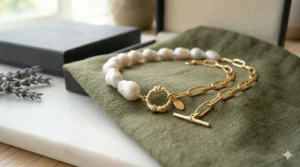
The classic single-strand pearl necklace still dominates formal occasions for good reason—symmetry signals tradition, formality, and respect for dress codes. Black tie events, religious ceremonies, and conservative corporate environments often expect traditional jewelry that doesn’t challenge aesthetic conventions. Fighting this with asymmetrical pieces risks looking like you misread the dress code rather than making an intentional style statement.
Asymmetrical designs excel in contemporary contexts where personal expression outranks strict formality. Creative industry events, modern weddings embracing individual style, and daily wardrobes benefit from the visual interest and contemporary edge that intentional imbalance provides. The key word there is “intentional”—poorly executed asymmetry just looks unfinished.
Here’s the practical breakdown: If your jewelry box already contains a traditional pearl strand that covers formal requirements, an asymmetrical piece fills the “interesting everyday option” slot without redundancy. If you’re starting from scratch, consider which contexts dominate your actual life. A corporate lawyer attending quarterly formal dinners probably needs the traditional strand first. A graphic designer in a creative studio gets more mileage from the asymmetrical piece.
The “both” answer works too—pearls layer beautifully, and combining traditional with asymmetrical creates sophisticated depth that pure symmetry can’t match. This is where the tiny baroque choker earns its value as a layering foundation under bolder asymmetrical pieces.
What Your First 30 Days of Wear Will Actually Teach You
Week One: The Comfort Reality Check
That first week reveals whether you chose correctly. Necklaces that shift constantly require adjustment throughout the day—if you find yourself repositioning the clasp every hour, the weight distribution is off. Chokers that leave red marks or feel restrictive probably won’t improve with wear—tight isn’t the same as comfortable snug fit.
Pay attention to how the pearls interact with your clothing textures. Baroque pearls’ irregular surfaces can catch on open-weave knits or delicate fabrics. Large statement pearls create bulk under crew necks or turtlenecks that wasn’t obvious in the mirror but becomes annoying in practice. These first-week discoveries inform whether your purchase becomes a wardrobe staple or a drawer resident.
The good news: most issues surface immediately, meaning return windows still apply. Don’t rationalize discomfort as “breaking in”—well-designed jewelry feels right from day one.
Weeks Two Through Four: The Versatility Test
By week three, you’ve cycled through enough outfit combinations to know if your asymmetrical pearl necklace actually earns its storage space. Does it work with both your structured blazers and your casual tees? Can you dress it up with evening wear or does it read stubbornly casual? The best jewelry investments are the pieces you reach for reflexively, not the ones requiring specific outfit planning.
Track how often you choose this necklace over alternatives in your collection. If it’s consistently winning that morning decision, you’ve found a keeper. If you keep passing it over for safer choices, something isn’t clicking—either the style doesn’t match your actual aesthetic (versus your Pinterest-board aesthetic), or the piece requires more styling confidence than you currently possess.
This isn’t failure—it’s data. Some buyers need to build up to bolder asymmetrical designs through subtler options first. The tiny baroque choker often serves as a gateway piece that builds comfort with pearl asymmetry before graduating to statement chokers or lariat drops.
Common Mistakes When Buying Asymmetrical Pearl Necklaces
Confusing “Baroque” with “Damaged”
Baroque pearls feature intentional irregularity created during natural formation—they’re supposed to be asymmetric, lumpy, or otherwise non-spherical. This is distinct from damaged pearls showing cracks, chips, or nacre loss. Some sellers exploit this confusion, marketing damaged goods as “baroque character.”
Examine product photos for genuine baroque characteristics versus damage indicators. Baroque pearls should show consistent nacre coverage even if the shape is irregular. Visible cracks, dark spots indicating nacre loss, or chunks missing from the pearl surface signal damage, not desirable baroque styling. Read reviews mentioning quality issues—damaged pearls often reveal their true nature only after arrival.
Overvaluing “Handmade” Without Quality Assessment
“Handmade” sounds premium, but it’s a process descriptor, not a quality guarantee. Skilled artisan handwork deserves premium pricing. Amateur handwork that could’ve been better executed by machine doesn’t. The distinction matters when you’re paying handmade premiums.
Check for consistent spacing between pearls, secure knots that don’t shift, and clasps that close smoothly without gaps. Handmade doesn’t excuse sloppy finishing—it should elevate it. Customer photos often reveal quality truths that professional product photography hides.
Ignoring Pearl Grading in Favor of Aesthetic
Pearl grading (AAA+, AAA, AA, A) indicates luster quality, surface smoothness, and nacre thickness. Lower grades cost less but may lack that characteristic pearl glow. For asymmetrical designs where individual pearls receive more visual focus than in uniform strands, grade matters more than in traditional designs.
AAA+ grading justifies higher pricing when luster and surface quality are priorities. A or AA grades work fine for layering pieces where individual pearl inspection is unlikely. Match the grade to your intended use—don’t overpay for premium grading on a delicate choker that’ll layer under bolder pieces, but don’t cheap out on statement pendants where pearl quality gets scrutinized.
Treating Price as Quality Proxy
The $25 necklace isn’t necessarily worse than the $125 option—they’re optimizing for different priorities. Lower price points often mean simulated pearls, plated metals, and simpler construction. Higher price points buy genuine cultured pearls, better metal quality, and refined finishing. Neither is objectively “better”—they serve different needs.
Evaluate price against your specific requirements. If you need a trend piece for one season, the $25 option that delivers aesthetics without longevity makes sense. If you’re building a long-term jewelry collection, the $125 investment in genuine pearls and durable construction calculates better over time. Don’t let price anchoring convince you that expensive equals appropriate for your circumstances.
Long-Term Care: What Actually Matters vs What’s Just Marketing
The “Last On, First Off” Rule Isn’t Negotiable
Pearls are porous—they absorb chemicals from perfumes, lotions, hairspray, and even acidic sweat. The “last on, first off” protocol (put pearls on after you’ve finished all beauty routines, remove before cleansing or showering) dramatically extends lifespan. This isn’t optional for natural pearls; skipping this routine means nacre degradation you won’t notice until the damage is irreversible.
The practical reality: this requires building a jewelry-application habit into your routine. For chronic “I’m running late” people, this might be the deciding factor to choose simulated pearls that tolerate cosmetic contact better than genuine nacre. Be honest about your habit-formation capacity.
Storage Actually Matters More Than Cleaning
Pearls need air circulation to prevent nacre drying and cracking, but they also need protection from scratching by harder gemstones. This creates a storage puzzle. The ideal solution: soft fabric pouches (not airtight plastic) stored in jewelry boxes with compartments preventing contact with other pieces.
Most pearl damage happens in storage, not during wear. That jumbled jewelry box where everything tangles together is slowly destroying your pearls through contact scratching and metal corrosion transfer. This isn’t about buying expensive storage systems—a $5 multi-compartment organizer prevents hundreds in damage.
When to Restring and Why It’s Not Optional
Traditional pearl strands require restringing every 1-2 years of regular wear because the silk thread stretches and weakens. For asymmetrical designs on metal chains, the pearl mounting points need periodic inspection—loosening allows pearls to shift and potentially fall off. According to American Gem Society, proper maintenance determines whether pearls last generations or deteriorate within years.
Schedule annual jewelry inspections at local jewelers—many offer free checks hoping you’ll buy other pieces. They’ll catch mounting issues, clasp wear, and chain weak points before they become loss events. For asymmetrical designs where replacing a single lost baroque pearl means sourcing a match (nearly impossible given natural variation), prevention beats costly repair attempts.
Frequently Asked Questions
❓ How do you wear an asymmetrical pearl necklace without looking unfinished?
❓ Can you layer asymmetrical pearl necklaces with other jewelry?
❓ What's the difference between baroque pearls and irregularly shaped pearls?
❓ How long do asymmetrical pearl necklaces typically last?
❓ Are asymmetrical pearl necklaces appropriate for formal events?
Making Your Asymmetrical Pearl Necklace Decision
The asymmetrical pearl necklace market in 2026 offers genuine choice across every budget and aesthetic preference. The seven options detailed above represent the strongest current options, but your perfect match depends on aligning design with your actual wearing habits, aesthetic preferences, and maintenance tolerance.
For buyers transitioning from traditional pearls, the MAX + STONE Asymmetrical Freshwater provides the safest entry point—recognizable pearl quality with contemporary asymmetry that doesn’t alienate traditional sensibilities. The graduated sizing creates visual interest without requiring significant styling confidence.
Bold minimalists drawn to sculptural jewelry get maximum impact from the Gold Plated Open Choker, which delivers geometric statement presence that photographs beautifully and eliminates clasp frustration. Accept the simulated pearl trade-off as the price of that specific design aesthetic.
Daily-wear enthusiasts building versatile jewelry capsules benefit most from the Baroque Irregular Gold Chain—its minimalist approach layers seamlessly, works across dress codes, and provides that organic pearl uniqueness without overwhelming delicate features or competing with outfit complexity.
The consistent thread across all successful purchases: buy for your reality, not your aspirational lifestyle. The necklace that looks stunning in product photos but requires maintenance you won’t do, suits events you don’t attend, or demands styling confidence you haven’t built yet won’t earn its storage space regardless of objective quality.
Asymmetrical pearl necklaces aren’t replacing traditional strands—they’re expanding what pearl jewelry can be. The “rules” that kept pearls confined to formal occasions and matched sets are being rewritten by designers who understand pearls as sculptural material rather than just precious gemstones. Your job as a buyer is determining which interpretation of that new aesthetic matches your personal style language.
The investment, whether $25 or $125, pays off when you wear the piece often enough that cost-per-wear calculations drop to negligible levels. That’s the ultimate success metric—not just owning an asymmetrical pearl necklace, but wearing it so consistently it becomes part of your visual signature.
Recommended for You
- 7 Best Baroque Pearl Necklaces That’ll Transform Your Style (2026)
- 7 Best Pearl Station Necklace Gold Chain Picks 2026
- 7 Best Multi Strand Pearl Necklaces That Transform Your Look in 2026
Disclaimer: This article contains affiliate links. As an Amazon Associate, I earn from qualifying purchases. If you purchase products through these links, we may earn a small commission at no additional cost to you.
✨ Found this helpful? Share it with your friends! 💬🤗
